Full article about Alvalade
Alvalade village, Santiago do Cacém: sip red from bowl-cups, watch flamingos blush coastal lagoons, taste lamb that grazed outside your window
Hide article Read full article
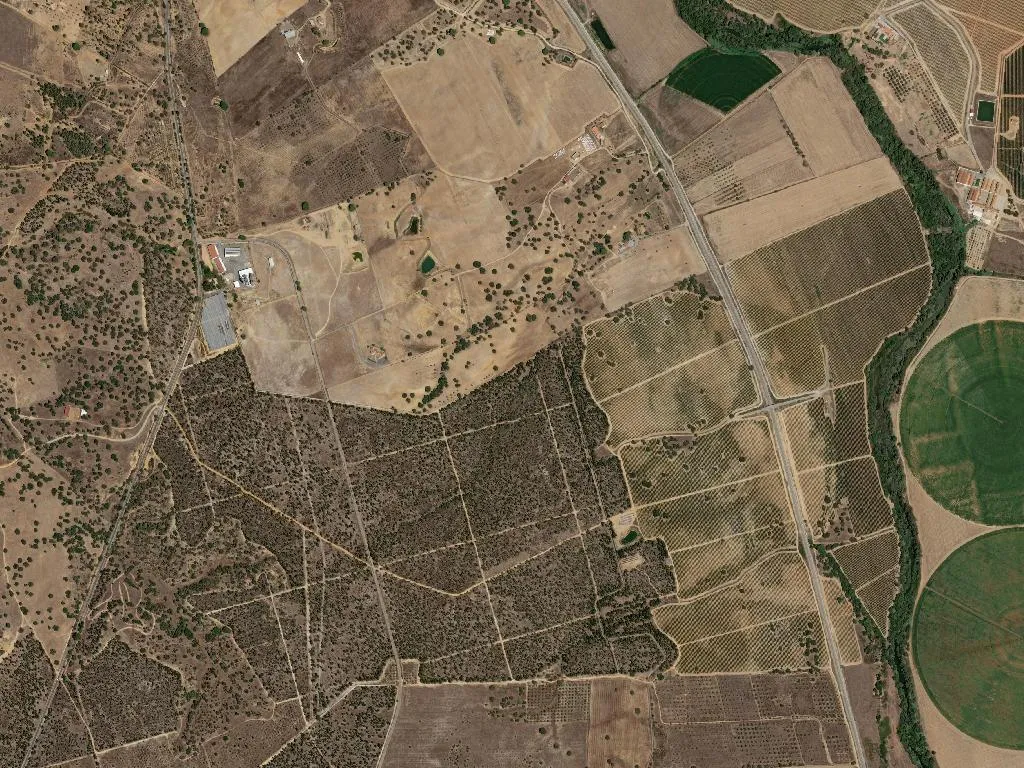
The afternoon sun warms the biscuit-coloured schist of the low garden walls, releasing a resinous breath of rockrose that mingles with the damp-earth scent of cork oak savanna. Alvalade unfurls across the Alentejo’s wheat-sheet plain like a cat after siesta—eleven inhabitants per square kilometre, which translates to roughly half an hour’s search if your neighbour happens to be behind the tomatoes. Sixteen-thousand hectares of stone-pine green stitched into ploughed-land brown, and a silence thick enough to pour: olive-oil dense, it coats the ears long after you leave.
Water & Salt Country
To the west the coastal lagoons of Santo André and Sancha read as though the land has dipped a cup into the Atlantic. Dawn brings pewter mist; by four o’clock the shallows blush with flamingos. Bring binoculars—not for bravado, but because a feeding greater flamingo collapses into a tangle of pink rope impossible to untangle at distance. The egrets are easier, skimming the dykes like parishioners popping to the café for a borrowed coffee.
Back in the village two monuments carry official titles; one is merely “Property of Public Interest”, a label dignified yet vague. They have stood since the 1500s, watching generations hurry past with sickles, pig-killing knives and school-run errands, too busy to read the inscription.
Tastes with Postcodes
Menus here don’t promise “Alentejan cuisine”. They deliver lamb that grazed the very field you drove across, pork that chased acorns until yesterday, and DOP Serpa cheese that tastes of the exact distance between a ewe and its late-afternoon shadow. The wine is red, opaque, served in handle-less terracotta bowls—miniature casseroles that double as cups. There are no pairings, only appetite and what the land produced; the rest is city chatter.
Settlements that Outrun Time
Of the 1 803 residents on the parish roll, 614 have already passed retirement age. They are the ones who can read rain in swallow flight, who fold tomato seeds into silver paper prised from cigarette packs, who remember when the primary school held twenty pupils, not two. Children number 197—enough for a football XI plus substitutes—yet they swarm the almond trees like a platoon and bargain for late-night privileges because “Grandad stays up too”.
There are six places to sleep. None offers cable television; all open windows onto what metropolitan weekenders pay to witness—nothing. Silence. A dog barking two valleys away, occasionally a tractor. Pack a grandfather’s jumper: nights are cold and the electric heaters rattle like ageing Land-Rovers.
At day’s end, when the light settles on the cork oaks as casually as a farmer on the village wall, Alvalade offers no apology for its scale. It simply remarks, “In a rush? The A26 is that way. Got time? Stay for a coffee. The pot’s been on the range since seven; it’s strong enough to last the whole of tomorrow.”