Full article about Cercal: cork-scented hush above Alentejo’s gold
Between lagoon and wheat plain, Cercal exudes the slow perfume of cork, acorn-fat pigs and Atlantic-
Hide article Read full article
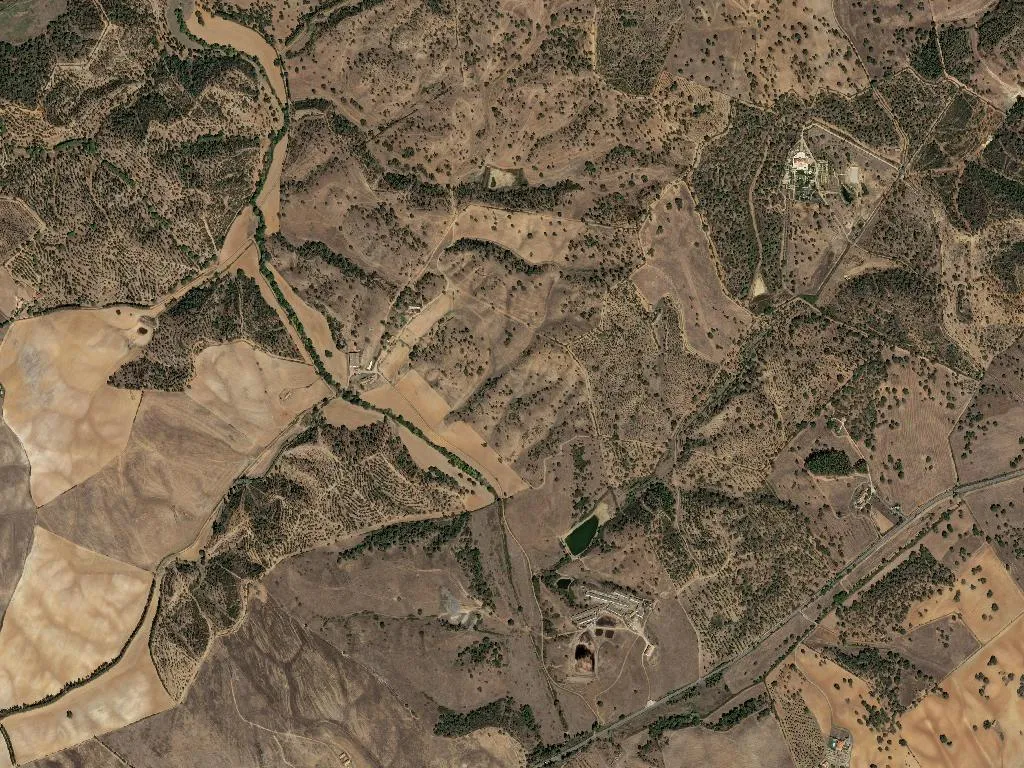
The tarmac lifts and falls through cork oak estates whose colour wheel spins from spring chartreuse to August gold. At 132 m Cercal sits just high enough for the air to rearrange itself: no longer the Atlantic’s salt breath, not yet the Alentejo’s kiln-dry blast. Locals call it “o entre”, the in-between. Step inside Zé’s café and you’ll hear the same conversation veer from last night’s match to next week’s rain—code for whether the wheat can stay in the field another day.
A parish measured in silence
Statistics Portugal counts 2,954 souls spread across 137 km²; what it doesn’t count is the distance between sounds—three minutes of nothing between a dog’s bark and João’s moped on its way to the butcher. Ageing is the other demographic: one teenager for every three pensioners. The arithmetic plays out along the church wall where cane chairs hold their ground and conversations unspool like knitting wool.
Between ocean and plain
Cercal’s money has always been in what lies beneath and beside it. The Santo André and Sancha Lagoon Reserve is ten minutes west—close enough for gorse-scented air to arrive before breakfast. You can’t see the water from the village square, but house martins heading that way give the game away.
Cork oak still rules the skyline, each trunk elephant-grey and fissured like old porcelain. Openings in the canopy reveal sheep and black pigs fattened on acorns, the animals behind the DOP labels you notice in Lisbon delis—Borrego do Baixo Alentejo, Carne de Porco Alentejano. In the grocer’s fridge Queijo Serpa sits like a wedge of satin, the one souvenir that never survives the drive home.
A kitchen without quotation marks
Order lunch at Oásis, Tasquinha do Celso or the tunnel-shaped restaurant everyone simply calls O Túnel and you get the menu that wrote itself: roast black pork with migas of bread and coriander, lamb stew reduced to velvet, sourdough that needs nothing more than a thumbprint of olive oil. Peninsula de Setúbal reds—Herdade do Portocarro’s Touriga-Nacional blend arrives at the table with the same inevitability Eusébio once arrived in the penalty box.
Slow motion by default
Bed-down choices run to 69, from D. Rosa’s upstairs apartment where breakfast smells of her own crusty pão de casa to Monte do Zeca, a cork-farmed hamlet turned guesthouse where the loudest noise is wind riffling oak leaves. This is not an “undiscovered Tuscany” pitch; it’s somewhere for travellers who queue for nothing, who can calibrate a place by the temperature of its 6 p.m. air and the pitch of a gate latch—Mr António’s, just off Rua da Liberdade, clangs at perfect contralto.
What lingers after you leave is not a postcard but a sequence of measurements: the exact slant of ochre light as the sun skims lime-washed walls, the metallic after-ring of that gate, petrichor rising from a road that rarely sees rain. As Zé says, pocketing his tobacco, “Cercal is where time clocks off—and we remember we can too.”