Full article about União das freguesias de Santiago do Cacém, Santa Cruz e São Bartolomeu da Serra
From Moorish rampart to water-mill lane, three hamlets share Atlantic wind and olive terraces
Hide article Read full article
Santiago do Cacém: where limestone meets schist and the montado rolls to the lagoon
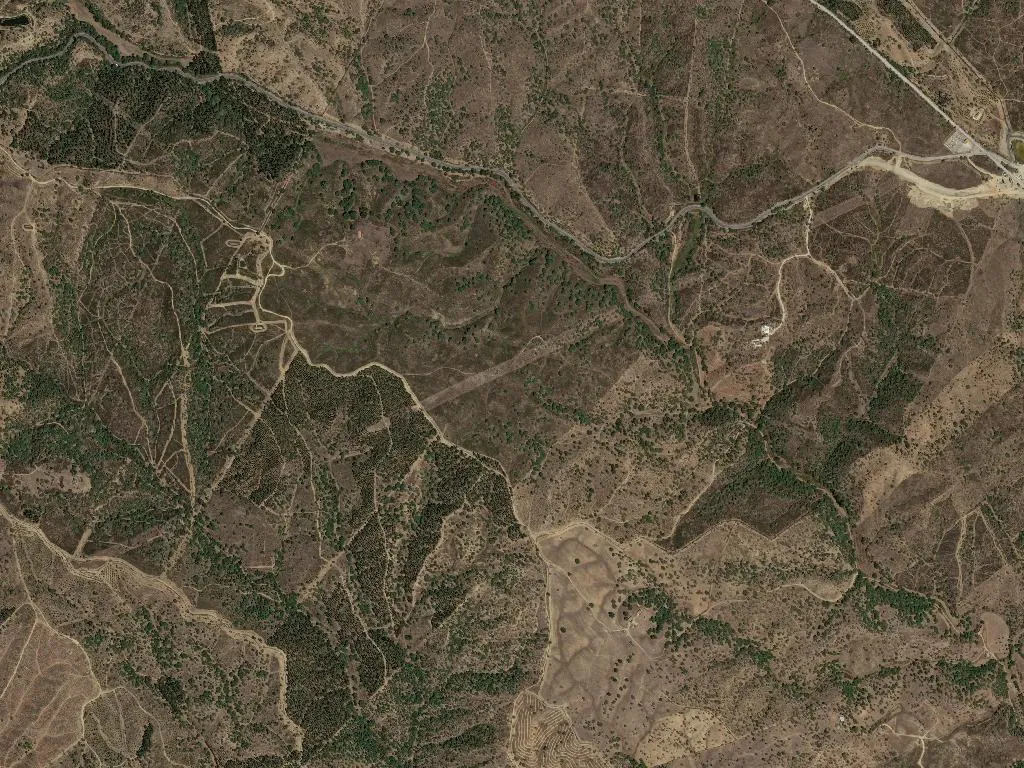
The bell strikes eleven and the echo tumbles downhill, ricocheting off the castle ramparts before dissolving among the terracotta roofs. Up on the limestone spine of the Serra de Santiago the wind carries the resinous snap of rock-rose and, beneath it, the cooler breath of centuries-old cork. Below, in the lane that slips from the main square, morning light bounces off whitewash so sharply you walk half-blind. It is on this gradient—between granite battlements and the oak-and-cork savannah that unrolls to the south—that three parishes were folded into one in 2013: 7,892 souls scattered across 200 sq km where water-mills still turn and olives are planted on moon-shaped terraces to keep the earth from sliding when the Atlantic rolls in with winter rain.
The castle that unlocked the Alentejo
Santiago’s fortress predates Portugal itself. Raised in the eighth century over earlier Muslim foundations—Qaççim to the Moors, Cacém to the Portuguese—it became the first stronghold of the Order of Santiago after the region was wrenched from Moorish control. Lay a palm on the sun-stored stone of the access ramp and you feel the slow furnace of the south. From the parapet the reasoning is obvious: mountains to the north-east, the coast due west, a wheat ocean to the south. Inside, archaeologists peel back chapters—Islamic glaze, Roman brick, Manueline ashlar—like annotating a palimpsest. King Afonso III granted the town charter in 1255; the patron saint, St James, is still paraded on 25 July through lanes that circle the mother church, its present plaster skin disguising what the 1858 earthquake left of Gothic and Manueline ribs.
Three hamlets, three pulses
Eastward, Santa Cruz keeps its memory in a ceiling pierced by an 1847 shell that never exploded. The 3 May procession—children scattering petals from baskets woven at the primary school—follows the same route cattle once took through a riverside gate toward summer pasture. Beyond the ridge, São Bartolomeu da Serra moves to a slower metronome: a church where Father António baptised half a century of infants, a windmill Joaquim still spins on Sundays to show grandchildren, and a store-cupboard of winter masques that see daylight only when the cold justifies a glass of aguardente in the square. It was here that ethnographer Manuel da Silva Gaio spent decades recording cantigas ao desafio—improvised duets that still flicker across olive terraces during harvest, two voices sparring over the dry clack of sticks on branches.
Cork, lagoon and trails between mills
The Mills’ Trail—eight kilometres of tractor-width track linking town to hamlet—threads ancient olives and the hollowed shells of water-mills whose canvas sails vanished when the miller’s grandchildren emigrated to Lisbon. Winter brings temporary waterfalls to the São Bartolomeu stream; you hear the hiss before you see the white thread. Prefer flat land? Head west to the Santo André and Sancha coastal lagoons. Between October and February spoonbills and flamingos mass in numbers that make the 12-kilometre Lagoon Loop worth the binocular weight. Local chronicles insist Santo André once served as an inland port—before Sines’ sandbar sealed the estuary, shallow-draft boats nosed up-river with salt and textiles. Inland, the five-kilometre Petroglyph Route passes Bronze-Age grooves that pre-date every castle and chapel, yet the Sunday pilgrimage is to the Pias—natural rock pools scalloped by the same water that once turned millstones, now the place to swim when the black-sand Atlantic beaches feel too fierce.
Alentejo on a plate
Saturday’s market smells of damp cork and split coriander. At the cheese counter, wheels of DOP Serpa ooze a sunset-orange rind, but it is the fresh goat’s cheese wrapped in cork leaves that sells out by ten. Trays of certified Alentejo pork and Baixo-Alentejo lamb wait for kitchens that still know what to do with them. Açorda—whether cod or tomato—arrives in clay bowls with bread sodden to the crust, olive oil shimmering, a poached egg bobbing like a buoy. Migas with pork carry the density of hand-kneaded fat; lamb stew tastes of bay and garden-grown coriander. Each parish claims a sweet: Santiago tibornas, Santa Cruz queijadas, São Bartolomeu honey cake, yet it is the bolinhos de amor—sold after nine at the central bakery—that scald fingers and tongues. Wash them down with Periquita reds or Setúbal Muscat, tasted in the cooperative winery where barrel oak sugars the air with equal parts tannin and toffee.
The sound that lingers
At dusk, when façades turn amber and the wind drops, the only noise is the groan of a warped wooden shutter somewhere below the keep. Then, from the olive terraces, two voices strike up a desafio—verse against verse, rhyme against rhyme—as if Gaio still walked among the trees with a cassette recorder no one now owns the means to play. That stubborn, fragile duel is what follows you home long after Santiago do Cacém has slipped from the rear-view mirror.