Full article about Santo André: marsh harrier skies & domino hush
Lagoon mirrors, Atlantic roar, pensioners’ café clack—life at sea level in Alentejo
Hide article Read full article
Santo André: where the lagoon breathes with the Atlantic
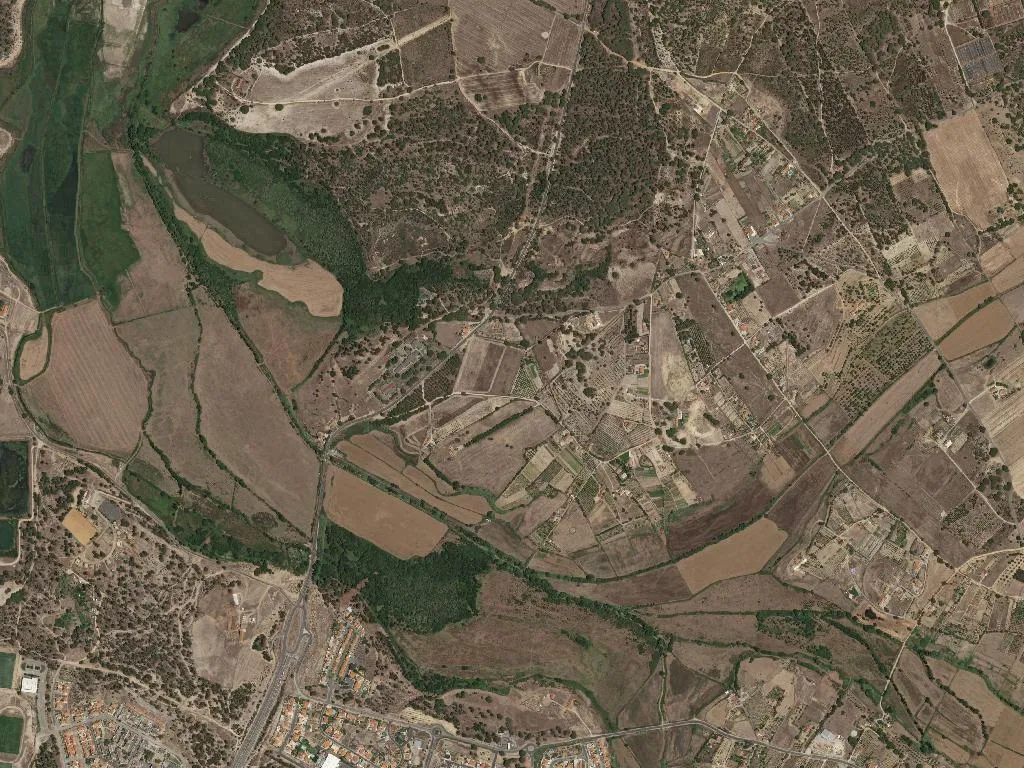
The wind arrives laden with salt and reed pollen. It doesn’t so much blow as shove, slow and damp, across the sandbar that keeps the lagoon from spilling into the Atlantic. Stand here in late afternoon and you see two waters: on one side the ocean, fizzing and thudding even hundreds of metres away; on the other, Lagoa de Santo André, sheet-metal still, mirroring the sky so faithfully that a passing marsh harrier has to check its descent to avoid colliding with its own reflection. Between them, a tongue of sand inhales and exhales each year, a centuries-old pulse that predates every nature-reserve sign.
Santo André sits barely 15 m above sea level on a coastal plain that stretches across 75 km² of Alentejo littoral, within the municipality of Santiago do Cacém. Its 10 309 permanent residents include twice as many pensioners as under-25s, a ratio that tells you everything about the tempo of daily life: café doors open at seven, shutters close at nine, and between those hours the loudest sound is often the clack of dominoes on Formica.
The lagoon that keeps the calendar
The Reserva Natural das Lagoas de Santo André e da Sancha is the parish’s beating sump. In winter, Atlantic storms top it up; each spring the sandbar is mechanically breached so seawater can sluice in, carrying fry, salt and microscopic plankton. Birds mark the date better than any hydrologist. Flamingos arrive first, followed by glossy ibis, black-tailed godwits and the season’s first hoopoe. By June the mudbanks smell of warm organic rot, and the air is busy with dragonflies the colour of oxidised copper.
Walk the eastern shore and you cross an invisible frontier: sand gives way to compressed peat, then to a low scrub of glasswort and sea purslane that crunches underfoot. The only human traces are the parallel grooves of a farmer’s tractor where he cuts reeds for thatch. A purple swamphen flips its tail and vanishes; an osprey circles once, twice, then drops like a stone.
Meat from the interior, wine kissed by the coast
Geography here is deliciously contradictory. The Atlantic is right there, yet the lunch table tastes of the Alentejo interior—sun-baked pasture and cork oak savanna. Look for Borrego do Baixo Alentejo IGP, milk-fed lamb scented with esteva (rockrose), or Carne de Porco Alentejano DOP, black pigs finished on acorns that give the flesh nut-sweet marbling. Even the cheese arrives from Serpa, 90 km east, its thistle-set curd wrapped in chestnut leaves. The single regional outlier is Carne de Bravo do Ribatejo DOP, a muscular riverine beef that turns up in cast-iron stews spiked with clams—an accidental surf-and-turf invented before the phrase existed.
Wine stays hyper-local. Santo André lies inside the Península de Setúbal PDO, where Atlantic nights drag fog over the vines and preserve acidity in the whites—Antão Vaz, Arinto, Verdelho—while the reds (Castelão, Alicante Bouschet) keep a polished, graphite spine. Order a glass at the lagoon-side kiosk and you’ll get a plastic cup, but the liquid inside is precise as a laser: lemon pith, salt, crushed fennel.
Ten thousand souls, sixty-four front doors
The parish council lists 64 legal guest beds—apartments, low-slung villas, a handful of rooms above cafés. No resort compounds, no glass boxes. Population density is 137 people per km², modest for coastal Portugal, which means that come mid-September the car park at Praia de Santo André empties and the place reverts to its factory setting: waders on the tideline, teenagers on mopeds, the evening radio playing fado from a tinny speaker.
Infrastructure is quietly efficient: tarmac roads, cycle paths that follow old salt-pan tram lines, and a 15-minute hop to Santiago do Cacém for supermarkets or to Sines for an out-of-hours pharmacy. The lagoon itself is a natural paddling pool—shallow, warm, free of rip currents—so parents can trade Atlantic surf anxiety for a paperback and a bica.
One listed monument, a thousand living ones
Officially, Santo André possesses a single classified building: the 16th-century chapel of São André, whitewashed, Manueline doorframe, bell the size of a grapefruit. Unofficially, the entire landscape is heritage. The annual breach of the sandbar—timed by moon phase and rainfall—has been enacted since at least 1573, when a royal charter first regulated the fishery. No interpretation board explains it; locals simply gather with rakes and waders to watch the first seawater hiss through the cut, a secular miracle repeated every spring.
When the wind drops
Late on a windless evening the lagoon turns to mercury. Reeds stand vertical, their reflections so exact you can count every seed head. The air sheds its brine and smells of warm mud, of crushed coriander, of something almost honeyed. Then, from beyond the dunes, comes the Atlantic’s muffled heartbeat—not surf on sand, but the low, ceaseless thud of open ocean pressing against a wall of sand. It is the sound you take away from Santo André, a private metronome you will recognise nowhere else.