Full article about Amora: Tagus tides breathe through tower-block streets
Salt-silt air drifts past 1950s azulejos and 24-hour traffic lights in Seixal's dense estuary parish
Hide article Read full article
Amora, where the tide still rules the concrete
The Tagus gets here before you do. Not as a postcard breeze but as a wet exhale of salt and silt that rolls up Rua 25 de Abril and settles on the skin like a damp rugby shirt. At first light the estuary turns molten pewter, and that metallic glare slips straight into the bedroom windows of 49,345 people crammed into barely twenty-four square kilometres. Density you can feel: more than two thousand souls per square kilometre, a tight urban weave where tower blocks shoulder up against what used to be marsh – creeks, tides and salt meadows that still cling to the parish edges.
A town that never meant to stay a village
Amora makes no apology for its scale. Five-storey slabs line the N10, traffic lights tick 24 hours, and the drone of commuter traffic between Seixal and Almada never quite fades. Yet the old topography keeps interrupting. A gentle ridge – only thirty-nine metres at its highest – lifts Rua João de Deus towards the parish church and suddenly gives you a sliver of watery horizon, a reminder that the estuary is still the neighbour that sets the thermostat. Even on the hottest August afternoons, when asphalt softens and façades throw heat back at your ankles, a cool, briny draught slips upriver and rewrites the air.
Overlapping generations, overlapping rhythms
Demography here is something you can see. Just under seven thousand children under fourteen share the same pavements with more than eleven thousand over-sixty-fives. Early evening in Silva Porto park: scooters clatter, footballs bang against rendered walls, while on the adjacent bench four white-haired men sit in absolute stillness, spectators to a life that began long before the Alegro shopping centre opened its automatic doors. Amora grew in surges – 1960s factory labour, 1980s African returnees, 1990s eastern Europeans – and the architecture tells it in layers. A 1950s apartment block with salt-blistered azulejos rubs against the glass balconies of Urbanização das Palmeiras, thrown up in 2018. The join is unpolished, honest.
The estuary as next-door neighbour
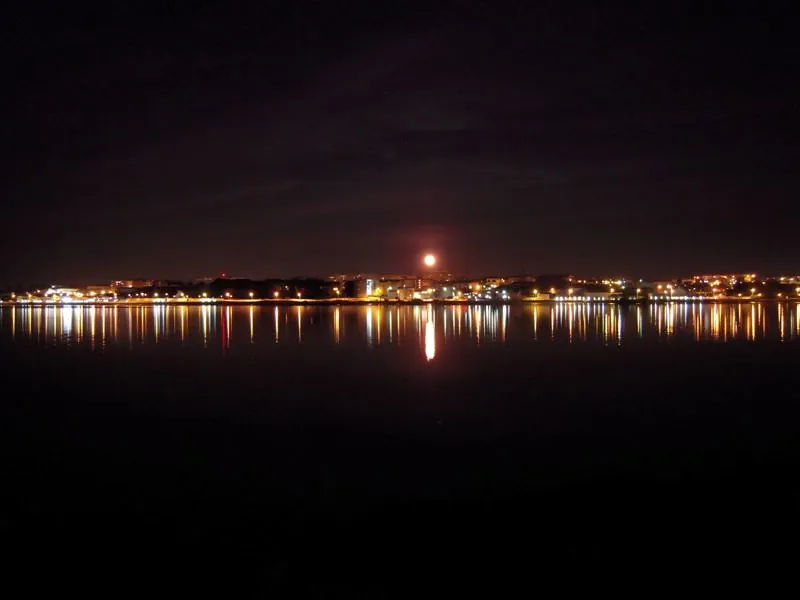
There is no beach, no promenade, no ice-cream stripe of sand. Instead the Tagus announces itself as smell: iodine and estuarine mud at low tide, a faint wrack-line funk that curls into the café and wrinkles yesterday’s Diário de Notícias. On winter dawns sea-fog parks itself between the buildings, erasing their bases so the upper storeys appear to float. When the sun burns through, the south-bank light is sharper than Lisbon’s – whiter, flatter, as if the water were a giant reflector dish angled straight at the streets.
Wine and river on Ti Manel’s table
Administratively Amora is suburb; gastronomically it is still Setúbal Peninsula. Vineyards begin ten minutes south, and the wines turn up locally without ceremony. You’ll find Casa Ermelinda Freitas’ muscatel and Barranco Velho’s chunky reds stacked beside the breakfast cereal in the Rua 1º de Maio Minipreço. At O Gaveto, Ti Manel brings a cataplana of eel to the table, rice slack with estuary juice and pinned together by coriander. Every bite tastes of the place: half river, half sandy soil, the old fishermen’s calendar still dictating the daily specials.
Logistics with the friction removed
Proximity to Lisbon is Amora’s quiet superpower. Drive north and the 25 de Abril bridge drops you in the capital in twenty-five minutes; alternatively, the commuter ferry from Cais do Sodré slips into Seixal harbour in twenty, past rust-coloured reeds and the ghost of the old shipyard slipways. Seventy-seven registered lodgings – mostly spare-room Airbnb flats along Costa Pinto and Dr Alfredo da Costa streets – cater for contract engineers and Erasmus students rather than selfie-stick tourists. Crime figures are low, parking is easy, and the evening bench in Jardim 1º de Maio offers a front-row sunset that turns the water the colour of burnt marmalade.
What you hear last, after the traffic has thinned and windows finally open to the night cool, is a low diesel chug somewhere out on the channel – a fishing boat nosing home, engine note merging with the estuary’s own slow pulse. It is the reminder that this slab-and-brick town was built on mud and salt, and that the river, just out of sight, is still breathing beneath everything.