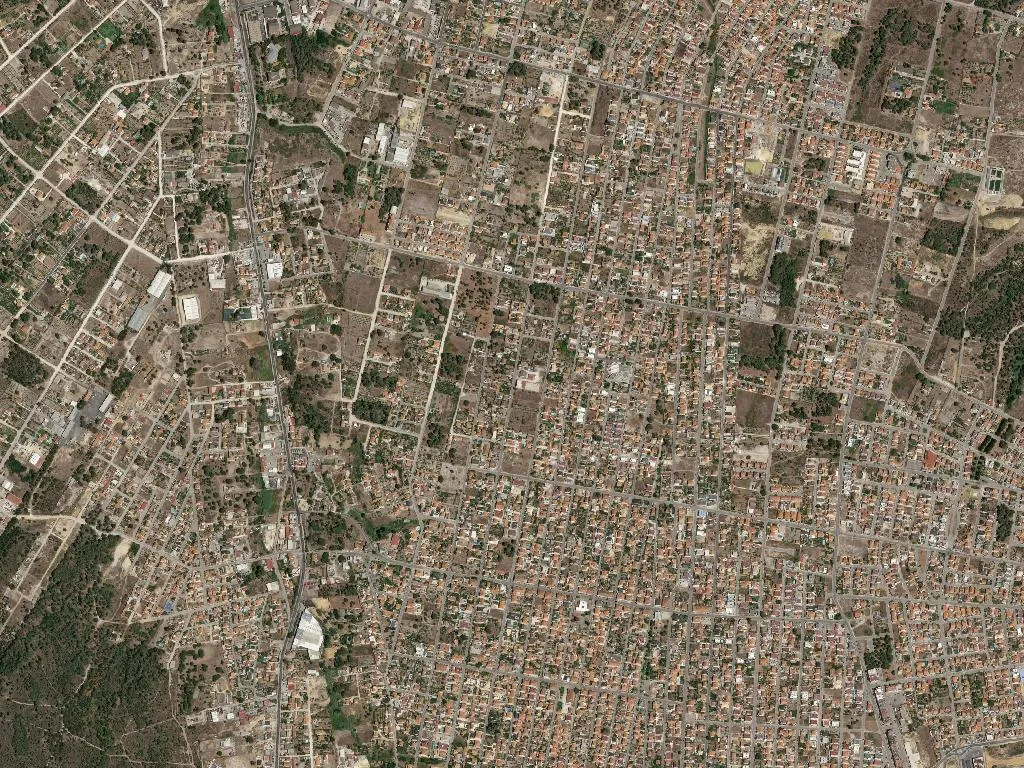
Full article about Fernão Ferro
Fernão Ferro, Seixal: feel the raw edges of a 1990s-born commuter town where pine resin, school-run traffic and estuary winds mingle.
Hide article Read full article
The bus sighs to a halt beside a freshly minted roundabout where three tarmac arteries still smell of warm tar. Step off and the air is a cocktail unique to the south bank of the Tagus: building-site dust, pine resin from the few trees that refused to surrender to bulldozers, and, when the wind tilts south-westerly, a faint metallic whiff of the estuary itself. Fernão Ferro has no baroque church crowning a hill, no waterfront promenade lined with cafés; its monumentality is the raw texture of a place sketched on blank ground in the late-20th century and still wondering what adulthood feels like.
A name waiting for streets
Long before roundabouts or cul-de-sacs, there was only a name on a 1530 charter: Fernão Ferro, a medieval landowner whose estates lay inside the royal hunting grounds of Sesimbra. For the next four centuries the area remained a scattering of farmhouses on sandy soil 67 m above sea level, halfway between the Arrábida ridge and the Tagus floodplain. Low maquis, umbrella pines and silence. The silence broke only when the 1990s arrived with blueprints and mechanical diggers.
The decade that drew a town
What happened here followed the pattern of Lisbon’s outer ring, but faster and more starkly. Whole streets of semi-detached houses appeared almost overnight, aimed at commuters who crossed the river each dawn in return for a three-bedroom house, a garage and a patch of lawn. The population ballooned; in 1997 Fernão Ferro was detached from Amora and promoted to a parish in its own right. The 2021 census counts 20 754 residents spread across nearly 2 400 hectares—868 people per km²—yet it never feels dense. The giveaway is human logistics: Saturday-morning supermarket queues and the permanent game of musical chairs outside the primary schools at drop-off time.
Generations sharing the same pavement
Demography tells the story more bluntly than any sociologist: 3 429 residents are under fifteen, 4 501 are over sixty-five. Fernão Ferro is neither an ageing village nor a hip suburb; it is mid-transition. The first buyers of the 1990s are now grandparents, while their children decide whether mortgage-free life on the south bank outweighs the pull of Lisbon’s inner districts or jobs abroad. Walk any side street and you’ll see the narrative play out: teenagers weaving past on bikes, octogenarians resting on concrete benches, the squeal of brakes mixing with slowed-down Alentejo vowels.
Wine country—just not the postcard kind
Mention Fernão Ferro and “wine region” in the same sentence and most people blink. Yet the parish sits inside the Setúbal Peninsula DOC, the same denomination that gives the world Moscatel de Setúbal and the muscular reds of Palmela. Vineyards are scattered, not scenic—low cordons trained on sandy loam between warehouse units and new apartment blocks. Drive 20 minutes east, though, and the landscape rewrites itself into orderly vineyards striped across the foothills of Arrábida. Local advice: skip the supermarket aisle marked “vinho regional” and head straight to a Palmela co-operative for a barrel-aged Castelão that tastes of graphite and sun-baked scrub.
Where to stay—if you need to
There are exactly 48 places to sleep—Airbnb flats, a handful of guest rooms, one small guesthouse. Fernão Ferro does not pretend to be a destination; it is a practical base for people with family nearby or for travellers who want Lisbon access without Lisbon prices. Ten minutes to the A2 motorway, 20 to the bridge, 25 to the centre of Setúbal and its sardine-canning museums. The parish supplies what a short-stay visitor actually needs: 24-hour supermarkets, a pharmacy every kilometre, parking spaces that haven’t yet been monetised.
The moment you hear the place
Try this: leave the main drag, walk to the end of any residential street that dissolves into a fringe of pineland. Background traffic fades, replaced by the crisp snap of pine needles underfoot, the low throb of a cicada, a dog barking somewhere behind a breeze-block wall. Fernão Ferro lives in that edge-zone—neither city nor countryside, but the pause between the two. Stand still and you can feel the parish weighing up its next incarnation.
Fernão Ferro asks not to be admired but to be decoded. Its defining vignette is not a castle or a miradouro; it is the hour before dinner when the low Setúbal sun stretches the shadows of four-storey apartment blocks across still-empty plots, and in that accidental geometry—half concrete, half sand—you read the story of a place still writing itself.