Full article about Quinta do Conde: thyme-scent between council blocks
Where Arrábida limestone meets Lisbon spill-over, vines still climb bus shelters
Hide article Read full article
Quinta do Conde: the suburb that still smells of must
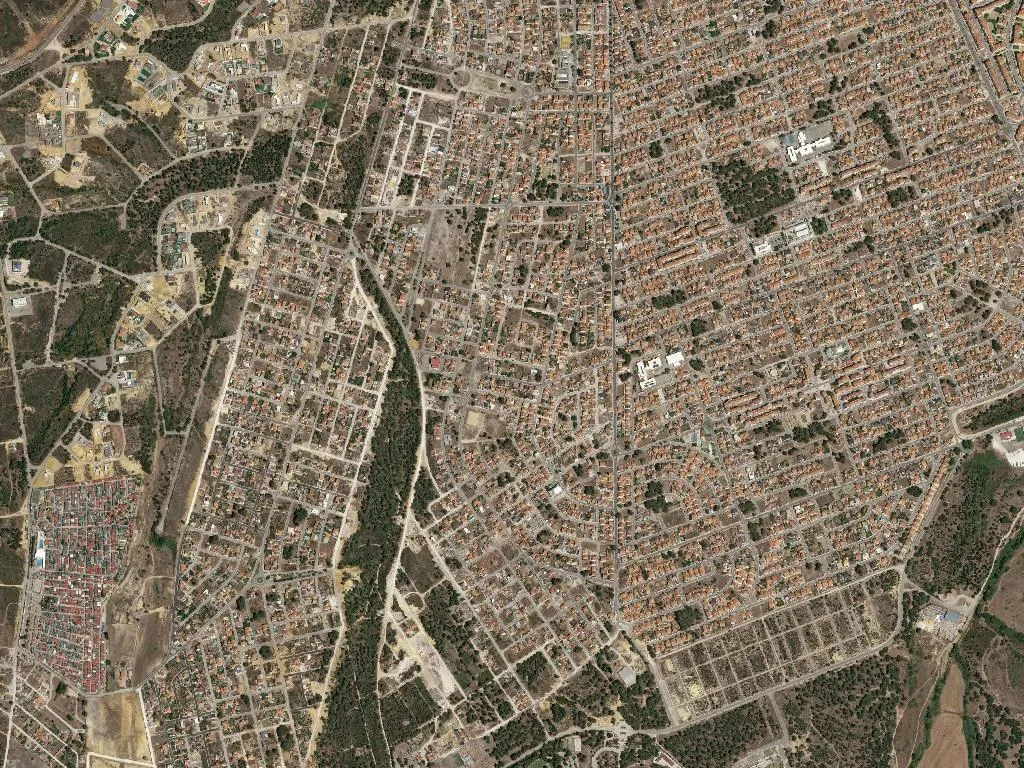
The bus sighs at the roundabout and the doors fold open to a scent that shouldn’t belong between nappy shops and sparkies’ vans: damp earth, warm and vegetal, the sort your grandmother once carried into the kitchen in a wicker basket. It collides with hot tarmac, and, if the wind is in the right quarter, drags in a thyme-laced whiff of Arrábida maquis. Census takers claim almost 30,000 people share fourteen square kilometres here; hard to believe on streets so thick with hush you can hear next-door’s kitchen clock lose time.
A count’s estate, a country’s road
The name is literal—an estate (quinta) once belonged to the Conde (count) of some long-forforgotten title. Vines and vegetable plots covered the slopes until the N10 national road arrived in the 1920s, slicing a scar between Lisbon and the south. Houses crept in: first a modest row, then whole estates in the 1980s when Lisboetas priced out of the capital discovered you could still buy a three-bedroom with garden here for the price of a Bairro Alto studio. In 1997 the parish divorced its mother village Alfarim, moving out with its own parish council and a freshly painted road sign.
Demographers say children and pensioners cancel each other out here—only a hundred-odd difference. Translation: playgrounds rattle, benches gossip.
Between asphalt and limestone ridge
The Arrábida sierra looms so close it feels like a dinner guest who might pull up a chair. On winter mornings the limestone ridge is sketched against the sky like a torn piece of blue paper; in August, when the thermometer snaps 30 °C before ten, its pine shade still tastes of Atlantic salt. Sunday excursion? Locals treat it like a corner shop: evening circuit, back for supper.
Between the housing blocks, agriculture survives as polite rebellion: a cabbage patch wedged against a boundary wall, a fig tree heaving its fruit onto the pavement, a grapevine that has commandeered a bus shelter. The parish still lies inside the Setúbal PDO wine zone, and September evenings carry a fermenting perfume; someone’s garage always rattles with demijohns “for the table”.
Cheese at arm’s reach
Azeitão is barely three villages away, so its buttery, thistle-rennet sheep’s cheese turns up on every table. Slice the 200 g disk and it weeps like a reluctant farewell. Dark rye bread, a thread of local olive oil, a glass of jammy Moscatel—no need for a board; your knee suffices. The trick, mountain cheesemakers insist, is cardoon; the trick, I’d add, is eating slowly enough to let it collapse on your tongue.
A periphery read backwards
Dormitory? Partly. Vans still depart at seven for Lisbon’s bridges, yet daylight life persists: schoolchildren dragging oversized rucksacks, retirees timing the dog to every lamppost, the grocer who cuts chouriço to weight on brass scales. Twenty-eight places to stay—no golf resorts, simply spare rooms and modest villas priced lower than a Saturday night out in the capital. Park without manoeuvres, and within half an hour you’re in Setúbal for grilled red mullet; add ten more and you’re edging past Lisbon’s traffic—though complaining about jams is as Portuguese as sardines in summer bread.
The soundtrack that lingers
When the streetlights flicker on, you hear the brochure never mentions: the iron gate yawning, flip-flops scuffing mosaic calçada, a voice through the fly-screen—“Come in, the soup’s getting cold!” The scene has looped since this was just a string of cottages along the road. Listen closer and you’ll still catch the winter snip of pruning shears: someone insists on cutting the old vineyard each January, “because we did it long before parishes had names”.