Full article about Aboim das Choças: Mist, Granite & Cachena Beef
Stone-roofed hamlet in Arcos de Valdevez where fog lifts over rye terraces and church bells echo.
Hide article Read full article
When the mist lifts over granite eaves
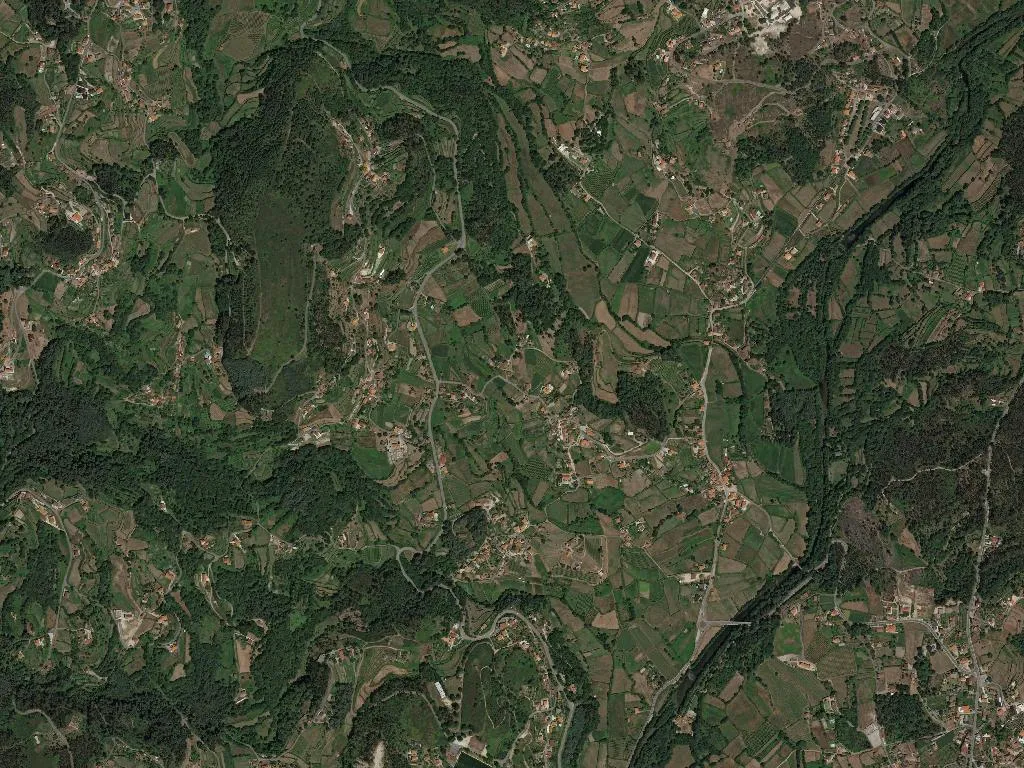
Dawn arrives in slow motion in Aboim das Choças, the fog still clinging to the Vez Valley like a half-remembered dream. Terraces of rye and maize glow an almost violent green against the schist-grey houses whose roofs are weighted with stones against the Atlantic gales. Somewhere below, the river whispers through oak and pine, and the air smells of wet loam and woodsmoke escaping from chimney caps. With only 295 souls spread across 182 hectares, this is the smallest civil parish in Arcos de Valdevez, its name a contraction of “abóio” – the gathering place for cattle before summer transhumance – and “choças”, the thatched huts once thrown up by shepherds on these same slopes.
Stone heart, wooden soul
The parish church of Santo Estêvão rises from an irregular flagstone terrace that has recorded four centuries of footfalls. Granite walls drink in the late-afternoon light; inside, a single nave carries the faint tang of beeswax and the echo of Sunday psalms. Up the lane, the chapel of Nossa Senhora da Lapa keeps watch over a demographic ledger tilted towards age: 112 residents are over 65, only 21 are under 25. Yet the calendar still pulses. On the last weekend of July the feast of Nossa Senhora da Saúde fills the lanes with processions and the slow toll of bells that bounce down the valley like a Morse code to the next parish.
Cachena on the board, Vinho Verde in the glass
Aboim’s kitchen honours the Minho’s micro-budget gastronomy. Cachena beef – from the long-horned, semi-wild cattle that graze the Peneda uplands – is diced, painted with sweet paprika and fried into rojões, the juices mopped with coarse maize bread. Sarrabulho rice arrives the colour of wet earth, its darkness drawn from pigs’ blood and cumin; caldo verde provides a sharper counterpoint, the kale sliced hair-thin so it floats like seaweed in the potato broth. Between courses, a young vinho verde – loureiro or the lightly sparkling espadeiro – rinses the palate with green-apple acidity. Dessert is a dialect of eggs and sugar: pão-de-ló sponge or ovos moles piped into wafer curls, the recipes borrowed from nearby convents.
Bootprints to Santiago
The village sits on the Costa variant of the Camino de Santiago, the coastal route that detours inland here to cross the Lima before pushing west to the Atlantic. Way-marked slabs leave the churchyard, ducking under chestnut trees and threading dry-stone walls towards Gavieira and the river beach at Vez, three kilometres on. For day hikers, the national park boundary is a 15-minute drive: follow the signed trail from Mezio to the wolf-shaded oak forest of Cabana Grande, then drop into the village of Soajo for coffee under the granite espigueiros where corn was once raised clear of mice.
Evening comes sideways, the low sun firing every quartz seam in the granite. Woodsmoke rises again, and the only soundtrack is a dog barking two valleys away and the click of cooling embers. In Aboim das Choças the 21st century is kept outside like a pair of muddy boots: you can step in when you wish, but no one will force you to wear them.