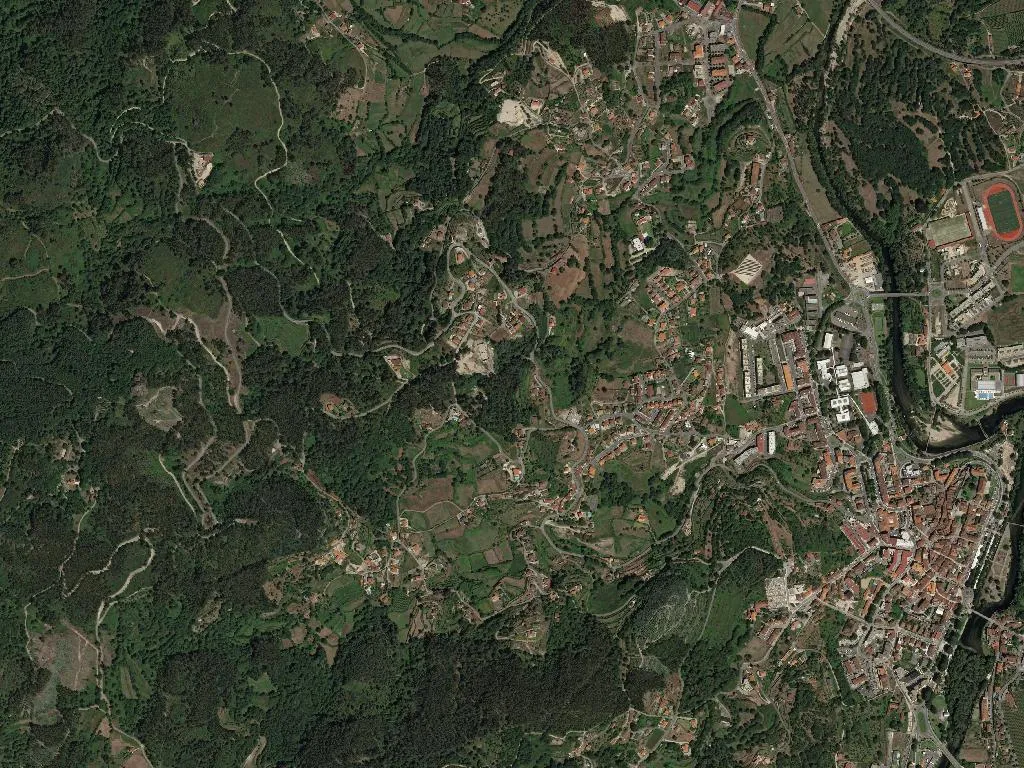
Full article about Arcos de Valdevez: River Vez, granite & Cachena steak
Swim in Poço da Gola, hike PR3 past weirs & São Bento chapel, taste DOP mountain beef
Hide article Read full article
Granite underfoot, water in your ears. The River Vez chatters over polished stone as you cross the 14th-century bridge into the combined parish of Salvador, Vila Fonche and Parada. At 157 m above sea-level, this is the last granite heartbeat before the granite gives way to the schist peaks of Peneda-Gerês. The settlement is unexpectedly dense—513 people per km² when the rest of the municipality averages 78—yet the soundscape is still river-first, human-second.
Thursday is market day. Smoke from chicken piri-piri grills drifts across Praça de Arcos and mingles with the yeasty exhale of padaria Lopes, whose door opens at 07:30 sharp. Locals drink their bica standing up, debating whether the Vez will stay within its banks this winter; the flood of December 2013 peaked at 120 m³/s and still lives in conversational memory.
Between river and ridge
The PR3 “Trilho do Vez” starts on the bridge itself, a 140-metre span of three pointed arches that once carried medieval pilgrims on the inland variant of the Portuguese Camino. Two kilometres upstream, the Poço da Gola swimming hole reflects riverweed in layered greens; on summer mornings the water is so clear you can watch trout finning above the stone.
Follow the trail east and you slip into the national park within twenty minutes. Oak and sweet chestnut replace eucalyptus; stone-walled terraces climb towards the 500-metre contour. The path passes weirs, an abandoned watermill and, finally, the 13th-century Capela de São Bento, its tiny cemetery yielding fragments of Gothic lettering worn smooth by Atlantic rain.
Breed, grape, bell
Order lunch at Tasquinha do Vez and the blackboard lists “Cachena da Peneda—DOP”. The local farmers—28 of them, according to 2023 data—send about 120 of these long-horned mountain cattle for slaughter each year. The meat is briefly aged, then seared over oak embers and served rare, its fibres shortened by a life spent grazing the high bogs. The obligatory accompaniment is Vinho Verde from the Lima sub-region: Quinta do Soalheiro’s 12 ha of Alvarinho planted on schist terraces 200 m above the river.
Sundays sound different. The 750-kg bell cast in 1743 swings above Igreja Matriz de Salvador, its bronze voice rolling across the valley. Below, the baroque high altar—mahogany shipped back from 18th-century Brazil—gleams with newly applied gold leaf. Processions still punctuate the year: Nossa Senhora da Lapa in May, Nossa Senhora da Porta on 15 August, and the candle-lit climb to the sanctuary of Nossa Senhora da Peneda in early September, when villagers trade rosaries for gossip and plastic cups of red Vinho Verde.
Pilgrims and permanence
Way-marked scallop shells lead pilgrims through the parish on the Coastal Portuguese Camino’s inland detour. Most stop only to refill bottles at the São Bento spring, but 2,754 souls (2021 census) have chosen to stay. Demography is fragile—an ageing index of 181—and yet the primary school still runs full classes, the only one in the municipality to do so. Thirty-seven rural lodgings, ranging from an 18th-century manor (Solar dos Arcos) to loft apartments in the 1893 textile mill, testify to a slow but deliberate repopulation strategy.
Evening light turns the granite amber. At 19:30 the church bell counts out the Ave-Marias, wood-panelled shutters close with a soft thud, and the river keeps talking—an unbroken conversation that named the place. Arcos: not the man-made bridge but the natural curves water carved long before Romans camped on these banks.