Full article about Ázere: Bell Tolls in Peneda’s Granite Labyrinth
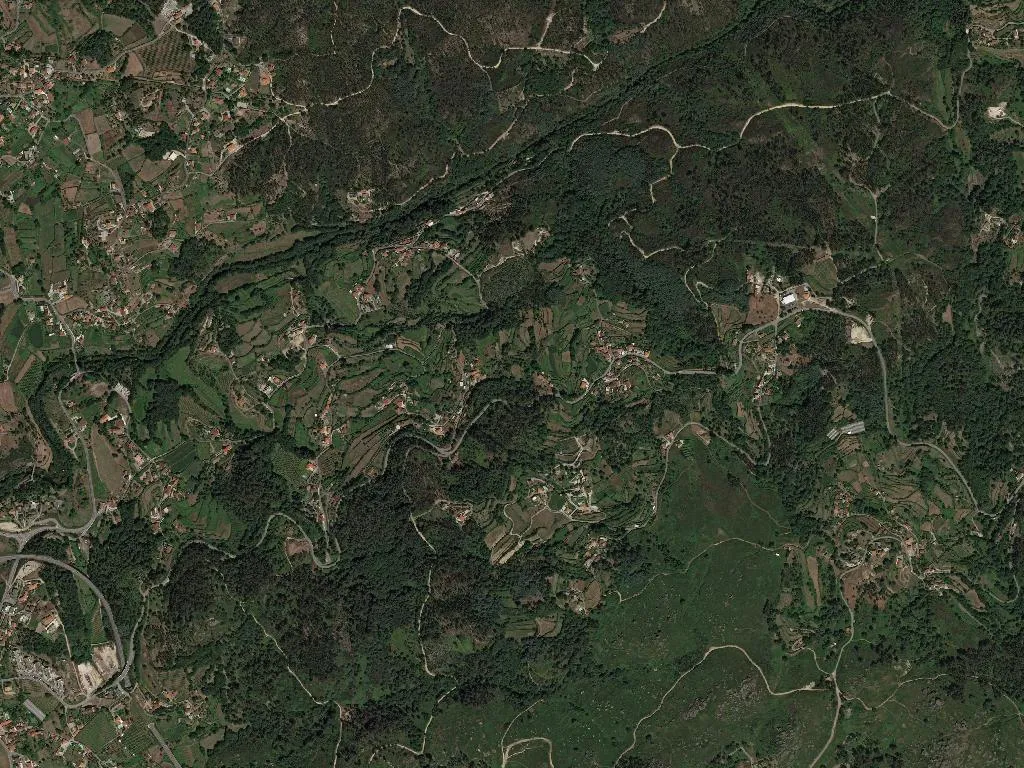
Ázere, in Arcos de Valdevez, Viana do Castelo, Portugal. Evening light slides between 17th-century terraces as Cachena cattle graze above the Vez.
Hide article Read full article
The granite walls are still warm when the evening air cools. In Ázere, late light shears down the valleys that spill from the Serra da Peneda, throwing long shadows over slate terraces no wider than a single misplaced footstep. Below, the Vez river keeps its monologue; above, the church bell counts the hours and loses the sound in gorse and oak. Two hundred and seven souls share three square kilometres of northern Minho where vines grip stair-case stone walls first laid in the 17th century.
Between stone and green
We are inside Portugal’s only National Park. Green here is not ornamental—it colonises. It insinuates itself into mortar, prises roof-tiles apart, reclaims every path that dares to link hamlet with hamlet. Two listed monuments anchor memory to the slope: a 13th-century bridge and a wayside shrine classified in 1910, one national, the other “of public interest”. The boundary of the park is not a line on a map but a thickness of silence at dawn, air you can almost drink, light that needles through sessile-oak canopies.
The Portuguese Central Way of St James crosses the parish. Pilgrims pause at the granite fountain, refill aluminium bottles, let the climb out of Soajo settle in their calves. They leave with dust on their boots and the taste of a place that never once flatters the thigh.
What the hill gives
Cachena da Peneda cattle—small as ponies, long-horned, fine-boned—graze where even the dogs think twice. Their meat carries the resin of heather and gorse; it demands slow chewing, releases the hill itself. When one is slaughtered the village eats together: carcass roasted over laurel and oak, potatoes scrubbed only roughly, salt the size of hailstones. In the smoke-house, chouriças and slabs of bacon hang from chestnut beams, bronzing in the draught like old manuscripts.
When the bells quicken
Three times a year the bell-ringers shift from measured toll to urgent dance. Nossa Senhora da Lapa in April, Nossa Senhora da Porta in August, Nossa Senhora da Peneda in September. The last draws outsiders—cars parked two-abandoned on the EN202—while the first two belong to birth certificates and childhood nicknames. The bell pulls people off terraces and out of Porto offices; they climb the old cobbled path their feet still remember.
Five village houses take paying guests who want the park without the campground. Density: sixty-five humans per square kilometre—room to breathe, and silence enough to chart the river’s pitch. Sixteen children share a single classroom with seventy-seven elders who have watched these slopes shift from rye to eucalyptus and back again.
When darkness seals the valley and green turns matte black, the water keeps talking. Ázere keeps river time: unhurried, ungovernable, forever.