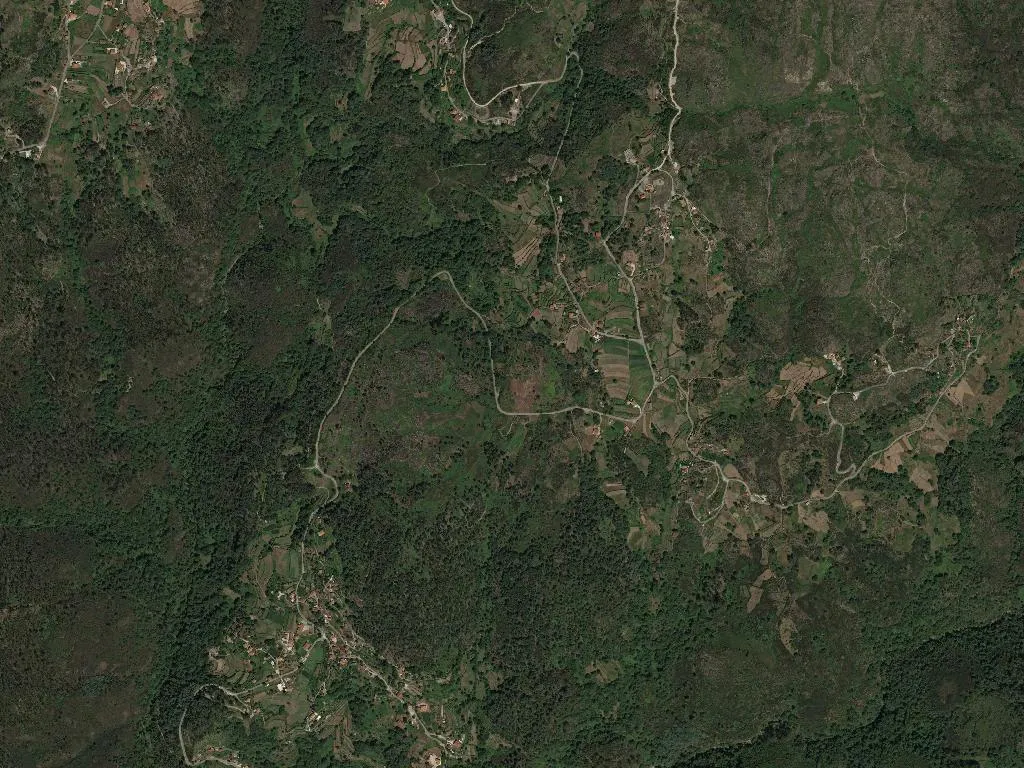
Full article about Grade & Carralcova: Granite Steps to Mountain Shrines
Oak-smoke hamlets, crimson-shawl pilgrim trails and Cachena cattle in Alto Minho
Hide article Read full article
Where granite is still cold at dawn
The first walkers appear before the sun has warmed the stone. Their boots scrape the granite, trekking poles clicking like metronomes against the cobbles of Grade. Grey houses exhale oak smoke; the scent clings to wool and resurrects half-forgotten English winters of chestnuts spitting in pub grates. We are 403 metres above sea level, on a staircase that the Romans would have recognised—gradus, the Latin root that gave this hamlet its name, a ladder of terraces clawed into the Alto Minho escarpment.
When the mountain itself is the congregation
Devotion here is logistical. Three times a year the single-track lanes clog with tractors, transit vans and the last remaining buses of the Viana do Castelo company, all disgorging pilgrims bound for three separate Marian shrines. The most arduous procession climbs 14 km north-east to the Sanctuary of Nossa Senhora da Peneda, inside Peneda-Gerês National Park. Women wear scarlet shawls embroidered with gold thread—patterns memorised in childhood, never written down—while men shoulder 200-kilo oak biers until their collarbones bruise. The hymns are in Mirandese cadence; you learn the melody before you learn the alphabet. Inside the chapels the air is cave-cold, wax-thick, heavy enough to pocket.
Grade and its even smaller neighbour Carralcova were fused into one civil parish in 2013, yet locals still speak of crossing “the bridge” as if passport control waited midway. Each hamlet keeps its own feast day, its own bell whose bronze alloy produces a slightly different D-sharp, its own August fair where the only stall sells hand-knitted baby boots identical to the ones your grandmother bought in 1973.
Between the sacred and the feral
The Coastal Portuguese Way of St James cuts straight through the parish, but few through-walkers divert uphill to where the map turns white. Do so and you enter a network of granite-walled drove roads smothered in neon lichen. Cachena cattle—petrol-brown, the size of large ponies—graze the water meadows. Their meat carries the EU’s PGI seal; taste it as cozido, a broth so dense the spoon stands upright, or as rojões, belly pork and potato punched into submission by smoked paprika. The accompanying red Vinho Verde is deliberately sharp, a blade to cut fat.
A landscape you can chew
Altitude and 2,000 mm of annual rainfall dictate the larder. Smokehouses the size of garden sheds harbour linguiça sausages dripping resinous tar from sixty-year-old roof beams. Cornbread is still baked in the communal wood oven every Friday; if you miss the dough deadline you take your neighbour’s loaf home and settle the debt the following week with eggs or olive oil. On winter afternoons when the Gerês cloud table collapses over the village, the smell of chouriça blistering on the hearth drifts down the lane like an audible breadcrumb trail.
Population 450, median age 67. In the café at 10 a.m. the day’s agenda—muck out the cow shed, replace a roof slate, walk to the post box—has already been negotiated and filed under “might happen, might not”. Thirty-one children race across threshing floors now converted to improvised football pitches, using a flattened olive-oil can as a ball. Eight stone cottages have been restored as B&As (the Portuguese acronym for “rural lodging”). They offer what no coastal resort can vend: the percussion of water in the irrigation channel, a silence so complete you can hear a church bell ring two valleys away—sometimes early, sometimes late, always certain.