Full article about União das freguesias de Jolda (Madalena) e Rio Cabrão
Palaces, silver mine and river mist lace Arcos de Valdevez’s fused parish
Hide article Read full article
A Gentle Current Along the Fields of Jolda
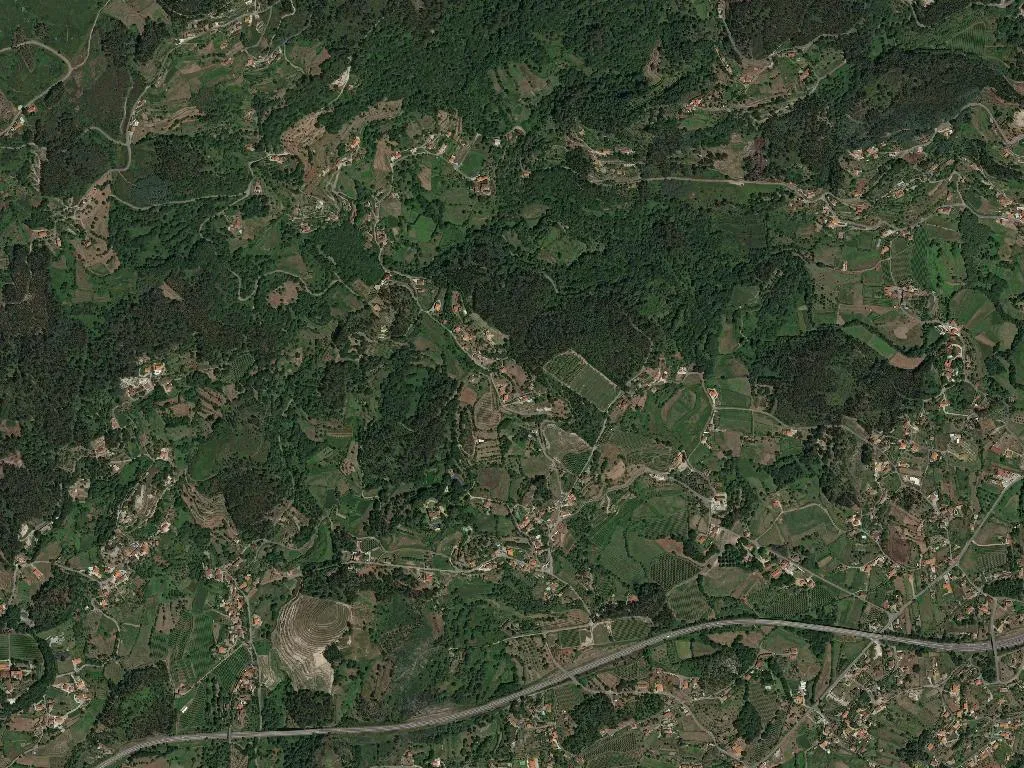
The river Lima slips past Jolda’s meadowlands as softly as silk, and on the far bank the Serra de Cristelo rises in a wall of gorse-scented vapour. Where the water loosens into alluvial flats, the parish bell strikes the hour; its bronze note drifts across kitchen gardens and is answered, lower, by the Cabrón stream as it threads between chestnut groves. Granite manor houses the colour of weathered tweed stand shoulder-to-shoulder with limewashed cottages along the EN 205, neither mountain hamlet nor riverside village, but something suspended between altitudes and eras.
Stone-work and Seigneurial Memory
Paço da Glória still commands the crossroads. The 16th-century façade, its Manueline portal carved like a Lisbon altarpiece, is shuttered today, yet the ensemble—palace, chapel, stables and 35,000 m² of walled garden—remains the most complete seigneurial compound in the Alto Minho. Neighbouring Solar de Quintela and Solar do Casal do Paço complete a triptych of landed power financed, long ago, by maize, linen and the light, acidic vinho verde that once went downriver to Viana’s cod fleets. One estate, registered as National Patrimony, shelters a spring and an 1886 silver mine documented in the Lisbon Mint archives; the gate stays locked, but the escutcheon above it—five stars over a crowned goat—still declares the terms on which this parish learned to tell time.
Two Joldas, One Parish
The 1758 parish memoirs already distinguished “Lower Jolda” (today’s Jolda-Madalena) from “Upper Jolda” uphill. Salmon nets and flood-plain kale plots shaped both, but it was the annual pilgrimage to São Lourenço on 10 August—procession leaving the church at 9.30 sharp, grilled sardines and caldo verde served under the chestnuts—that gave Rio Cabrón its calendar. Administrative reform in 2013 fused the two memories into a single civil parish of 423 hectares and 421 souls, 36 per cent of them over 65. Density: 99 people per square kilometre, and falling.
Beef that Tastes of Altitude, Wine that Tastes of Granite
There are no restaurants; you eat by invitation or you wait for the feast. When the feast arrives, it is Cachena beef—PDO-protected, from the long-horned, auburn cattle that graze the granite uplands of Peneda-Gerês at 800 m. The meat spends eight hours in wood-fired ovens, emerging the colour of garnet and tasting faintly of heather and gorse flower. On ordinary Sundays the dish is fried salt cod, lifted by Alvarinho grown across the Lima in Melgaço. Between pilgrimages, Albertina opens the Tasquinha da Porta to serve rojões—pork belly seared in pork fat—followed by sarrabulho, a mahogany-coloured porridge thickened with blood and cumin.
Drums, Bagpipes and a Priestly Ban
The year turns on three processions. Our Lady of the Cave (second Sunday in May) brings villagers to a rock chapel candle-lit since the 1600s. Our Lady of the Gate (third Sunday in August) fills the churchyard with the metallic rasp of cavaquinhos played by Os Rapazes da Porta, a band once threatened with excommunication by Father Amândio for profaning the liturgy. The October pilgrimage to Nossa Senhora da Peneda draws the faithful 30 km east into the national park, boots crunching through chestnut husks. Between festivals, the Northern Way of Saint James slips through the parish on its detour past the sanctuary of São Bento da Porta Aberta; walkers follow waymarks painted on mill walls, while kingfishers keep pace along the Cabrón. Sit quietly under the alder branches and you may hear the quarry blast at 5 p.m.—Construções Bento Pedroso, founded 1953, still slicing granite for export to Bordeaux and Bradford. The same stone that built the manor houses now paves French squares; past and present leave the quarry yard in the same flat-bed lorry, heading for the coast.