Full article about Jolda (São Paio): River-Small, Memory-Loud
Tiny flax parish in Arcos de Valdevez where tide, herons and azulejos echo lost industries
Hide article Read full article
Edge of the Lima
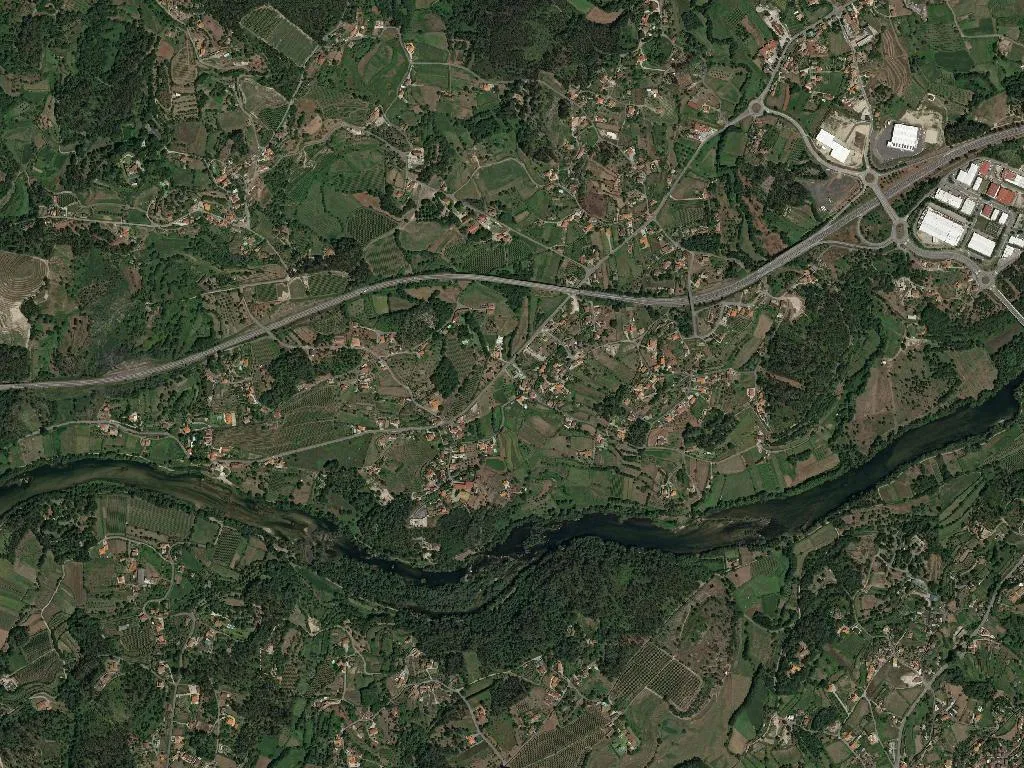
The riverbank is a patchwork of meadow-green where flax no longer flowers. Its memory survives in the names of terraces – Linharia, Lameiras – and in the rectangular outlines of drying plots, once ankle-deep in silver stalks. At just 29 m above sea level, Jolda (São Paio) is the first parish in Arcos de Valdevez to feel the Atlantic tide in the Lima’s pulse. Sluice gates rattle; poplars hiss; water and wind trade frequencies.
A parish you can walk across in 20 minutes
Covering 1.7 km² and 316 souls, Jolda is the smallest civil parish in the municipality. The council office sits in Breia, a hamlet of stone houses and a single communal bread oven. Turnout at elections hovers above 60 % – high enough that the parish president can still greet voters by the timbre of their voice.
Flax, iron and a boat of gold
Approved in 2005, the parish coat of arms is an exercise in lost industry: a hoe blade for iron ore once prised from the valley sides; flax flowers for the fibre that financed dowries; a gold barca for the flat-bottomed skiffs that ferried barrels of wine and bobbins of yarn downstream before the roads arrived. Inside the single-nave chapel of São Paio, azulejo panels show the saint scattering blessing over plague victims; outside, the annual festa turns the churchyard into a dance floor of coloured bulbs and trestle tables.
Threading the Ecovia
The Ecovia do Vez is a 32 km green corridor that stitches Jolda to the mountain village of Sistelo. The Jolda–Arcos section is a 12.4 km ribbon of smooth tarmac shaded by plane trees and monitored by grey herons. At Carregadouro, families unload charcoal grills and rojões (marinated pork) from car boots, spreading picnics under the cicadas.
Cachena beef and vinho verde that bites
Lunch starts with thick caldo verde, the potato-cabbage soup fortified with chouriço from the smokehouse. Papas de sarrabulho – a mahogany stew of pork blood and cumin – arrive still bubbling. The headline is Carne Cachena, beef from the long-horned, semi-wild cattle of the Peneda uplands, served either as slow braise or seared steak. A glass of Lima-sub-region vinho verde, poured ice-cold into a squat tumbler, slices through the fat of alheira and morcela.
Afternoon light skims the valley floor, turning the Lima into moving brass and the whitewashed houses into reflectors. Behind you, the granite ramparts of Peneda-Gerês rise to 1,500 m; in front, the river uncoils westward until it meets the Atlantic at Viana do Valdevez.