Full article about Padroso: where chapel bells toll alone above Lima valley
Corn terraces, sailor-borne Virgin and pre-Reformation stick dances in a 544 m-high schist hamlet
Hide article Read full article
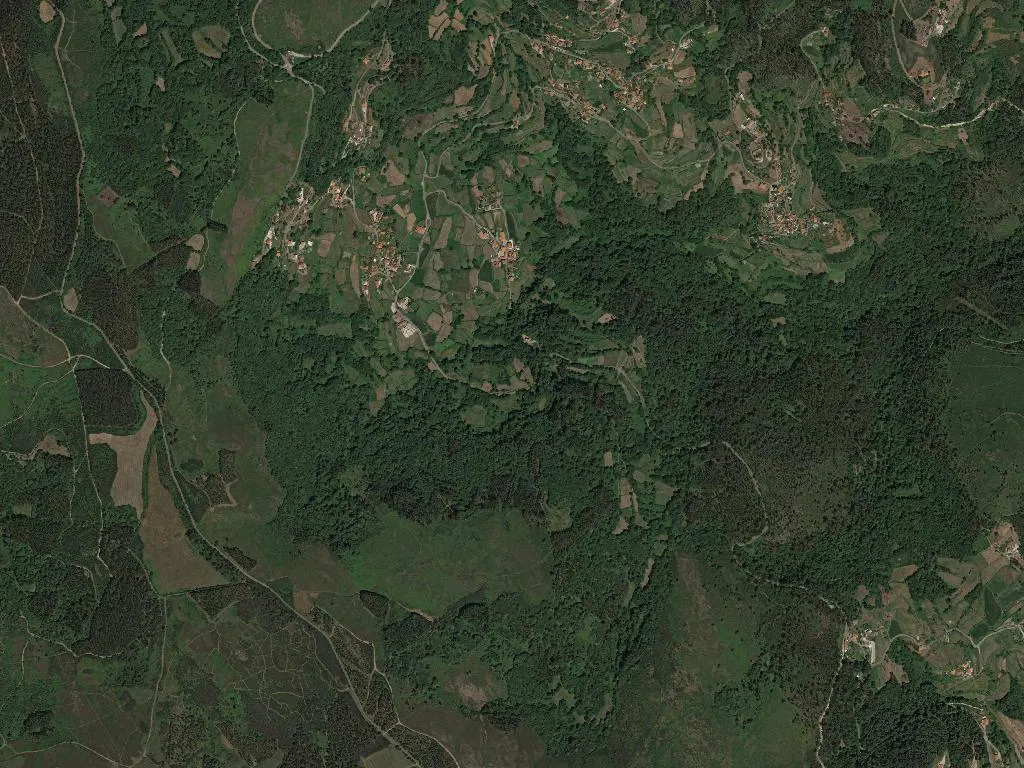
The chapel bell of Nossa Senhora da Lapa is said to toll of its own accord on the eve of the romaria — at least that’s what the old men insist, elbows propped on the granite wall of the forecourt. At 544 m, Padroso clings to the north-east shoulder of the Soajo like a scatter of schist dice thrown downslope. Wind climbs the Lima valley carrying the iodine scent of gorse after rain; below, a stream chatters over stone so lucid you can count every quartz vein.
Stone with a memory
The chapel itself has stood on the knoll since the 1600s. Climb the worn steps, rest on the parapet, and the Lima basin unrolls like a green map: corn plots stitched with maize, rye terraces banking at impossible angles, and the yellow arrows of the Portuguese Coastal Camino slipping past. Pilgrims pause at the spring, refill plastic bottles, mutter a decade of the rosary and leave again. The wooden Virgin inside arrived from Galicia in a sailor’s trunk; the men who carried her swore she calmed a Bay of Biscay storm. These days salvation is measured in smaller currency — 197 souls on the parish roll, yet on the second weekend of August the benches overflow. Arrive before 10 a.m. or bring your own folding chair; no one minds. After Mass the square becomes a stage: bonfires, a circle of drums, and the all-male stick dance whose rhythms pre-date the Counter-Reformation. Try to film it and you’ll be waved away; this is not performance, it’s bookkeeping for an oral ledger.
Downhill, the rebuilt parish church of São Pedro guards two 18th-century tile panels dense as graphic novels. Observe long enough and you’ll notice the apostle’s eyes are slightly crossed — the rosy glow of too much vinho verde, locals wink. In the yard stand two Manueline crosses; children dare each other to touch the left-hand one because a grimacing face is carved on the shaft. Harmless superstition, but the limestone has been polished by small palms for five centuries.
At the hamlet of Vilar the hermitage of São João opens only on 24 June. Embers are raked into a thin carpet at dusk; the brave leap barefoot, burns salved immediately with a medal of St John and a splash of red wine. Bring a bottle — you’ll need it before, during and after.
Beef that tastes of altitude
Weekends, the parish council runs a tiny tasca. Phone first (they’ll give you the number of Dona Lurdes, who keeps the key). Order cachena beef — from the small, long-horned mountain breed granted DOP status in 2020 — either as a seared bife or a slow stew thick with smoked paprika. The colour is almost bovine burgundy, the flavour heather and wild thyme translated into protein. Potatoes are punched (“à murro”) rather than peeled, and a glass of Loureiro from Quinta da Casa Nova arrives clouded with lees, smelling of lemon verbena.
If the communal oven has been fired — twice a month, weather and firewood permitting — you’ll find broa de milho, a dense rye-and-corn loaf the diameter of a steering wheel. Tear it open while still too hot, spread with requeijão and local honey. At festival time Dona Antónia’s neighbour makes pumpkin-doce with almonds; bring Tupperware or go home empty-handed. The clear aguardente appears only on Epiphany night when boys serenade door-to-door with the Janeiras. Drink, grimace, say thank you.
Paths through oak and orchid
Padroso’s signed loop is eight kilometres, starting at the chapel and contouring round to the Lima’s miniature headwaters. No café en route, only the stream — potable if you’ve remembered chlorine tablets. At the Miradouro do Outeiro the plateau drops away; hold your hat, the Atlantic wind arrives unfiltered. Roe deer bark in the oak scrub; if you see none, the silence edits your pulse.
In the marshy bends look for wild orchids — Dactylorhiza, Ophrys — but leave them. Every year someone tries to pot one; every year it dies. Three kilometres downstream the river pools into the municipal swimming area of Sequeiros: stone weirs, changing rooms, grass towels. Treat it like a beach: pack it in, pack it out.
End the day on Penedo da Cabra Montesa, a granite whale-back above the village. Legend says couples who climb it together stay faithful as stone. I make no promises, only note that the view west runs clear to the ocean, and the smoke rising from chimneys smells of carvalho and tonight’s sarrabulho — pork blood stew thickened with cornmeal, the colour of terracotta. Padroso keeps no Michelin stars, no key-handling concierges. It keeps its bell that rings itself, its beef that tastes of altitude, and the unspoken agreement that if you arrive you will, for a few hours, stay.