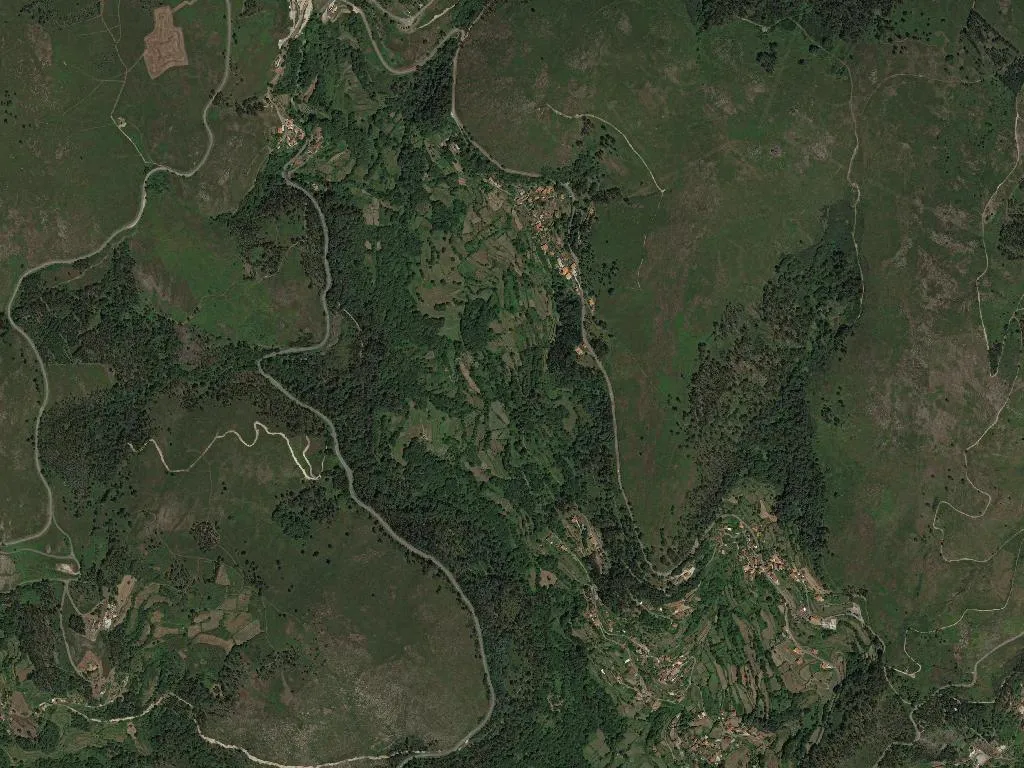
Full article about Portela e Extremo: Lima Edge-land of Echoing Hoofbeats
Visit Portela e Extremo for sunrise on chestnut trunks, medieval granite bridges, river beaches and Peneda trails where Cachena cattle graze above the Lima
Hide article Read full article
Morning Light on Chestnut Trunks
Dawn slips through the sash windows of Portela, cutting the chestnut trunks into bars of gold and charcoal. Below, the Lima glides south-west, doubling the slopes that climb to the granite brow of the Serra da Peneda. Silence here is almost physical: the church bell that never strikes on time, Senhor Arménio’s dog three hamlets away, the crackle of oak logs in Dona Rosa’s bread oven where the maize loaf still picks up a ghost of walnut-leaf ash.
Where the Mountain Keeps its People
The civil parish of Portela e Extremo was stitched together in 2013 from two villages that share the same edge-land fate: the last scrap of Arcos de Valdevez council before the Spanish frontier. Portella—Latin for a narrow gate—was the medieval way station on the pack-mule road from the Lima valley up to the high pastures. Extremo simply confesses what it is: the end of one world, the start of another. Both lived off rye, maize and the small, auburn Cachena cattle that still wear brass bells. The 1960s and 1980s drained away half the population; today 323 souls remain, 56 per cent over sixty-five, and the calendar still rules—chestnut blossom in May, the phantom grape harvest in August that no one now bothers with.
Where Stone Meets Water
Cross the dark-granite medieval bridge—moss-polished, treacherous after rain—and you follow the hoof-scars of transhumant herds that came down from Peneda until the 1920s. A hundred metres on, the river beach unfurls a white tongue of sand between two alders where children learn to swim during the São João fireworks. Upstream the Poço do Inferno sinks into a throat of schist; water slams the rock bowl, whipping up green funnels that local teenagers dive across on dare. The signed Peneda Trail climbs six kilometres from Extremo to the pilgrimage sanctuary, crossing meadows where Cachena graze untethered, wild Garrano ponies bolt at the first footfall and red kites wheel over the plastic water bottles shepherds forgot.
The Year in Processions
Time is measured by romarias. During the first fortnight of September, Nossa Senhora da Lapa brings a brass band, an open-air mass and Avó Aninhas’ chestnuts roasted in the same iron pan since 1953. In May, Nossa Senhora da Porta blesses the rye fields with holy water and promises no one believes. Early August sees barefoot processions to the Peneda sanctuary in neighbouring Melgaço—blood in the socks, vows in the eyes. October belongs to Broa Cake Day: maize flour, heather honey, cinnamon. November smells of singed chestnut skins and plastic cups of mulled wine refilled until the resin tap runs dry.
What the Mountain Puts on the Table
The kitchen still obeys a farming rhythm no one keeps. Star plate is Cachena beef stew, the animal grazed on the same upland selfies are now taken from. Lurdes is the last woman who will fire up her wood oven for kid goat; Zé Manel marinates goat in last year’s red. Quinta do Espadanal opens for tastings of Lima-side Vinho Verde—Loureiro that rasps the throat, Arinto that makes you laugh for no reason. The parish’s single restaurant runs a Cachena & Chestnut menu from October to December: three-hour stew, ember-baked potatoes, chestnuts that crack like porcelain. Dessert is suspiros—meringue kisses made with spare egg whites from Extremo pumpkin pastries no one has touched since 1997.
Footprints of Pilgrims
The Northern Way of the Camino de Santiago slashes twelve kilometres across the parish on cobbled lanes that sprain ankles. Overnight is the six-bed parish albergue in Portela; breakfast is the priest’s paper-bag loaf from the café. The trail squeezes between schist walls that slump a little more each winter. In Extremo, the Casa do Guarda museum keeps a 1920 carpenter’s kit—saws António’s grandfather still sharpens, planes that knocked together coffins during the 1918 flu. Now only German hikers cross the threshold, recording kilometres on smart watches while the exhibits wait for anyone who remembers what a twybil was for.
At dusk the low sun floods the valleys with copper light no one notices—televisions glow behind curtained windows. Oak smoke rises straight from chimneys, carrying a scent the grandchildren can’t name. Far below, the Lima keeps going, carrying chestnut leaves, energy-drink bottles and the echo of a bell that tolls more for the dead than the living.