Full article about Souto & Tabaçô: smoke, cattle and mountain time
Oak scrub, curing hams and Cachena cows above the River Vez in Arcos de Valdevez
Hide article Read full article
Between Pasture and Tobacco
The valley wakes to the hush of the River Vez and a single bell tolling the hour in a tempo no-one keeps time with. Mist uncoils uphill through the maize terraces, thinning as it meets the oak scrub. From the granite eaves of Souto and Tabaçô, wood-smoke threads out, laced with the sweet-acrid perfume of chestnut logs and curing hams. You are on the lip of Peneda-Gerês National Park, where the mountain dictates the timetable and the 913 inhabitants still negotiate daily life on its terms.
Names that Still Smell of Work
Souto derives from the Latin sudetum – a place where animals graze – and the slanted meadows above the village explain why. Tabaçô keeps the hiss of its final syllable and the memory of tobacco leaves once pinned to balconies to dry in the sun. Administratively the two villages have formed one parish since 2013, yet the landscape always read them as a single sentence: slopes folding to the river, stone paths linking chapels to springs, Cachena cattle moving across centuries-old holdings with the slow gravity of an endangered breed.
Faith You Can Walk
Religious festivals punctuate the year like extra seasons. On 15 August the Festa de Nossa Senhora da Lapa and the Festas de Nossa Senhora da Porta haul emigrants back from France and Switzerland, fill the chapel yards and turn the lanes into processions where rosary murmur blends with half-finished gossip. The big pilgrimage, however, is the Romaria à Nossa Senhora da Peneda in September: hikers leave at dawn, rucksacks stuffed with chorizo sandwiches, climb 700 m to the granite sanctuary above the treeline. Effort is part of the bargain; no coach parties, just locals and the occasional stray walker on the coastal variant of the Camino de Santiago, way-marked by discreet yellow arrows.
Beef that Tastes of the Ridge
Cachena da Peneda DOP beef is not a marketing slogan but the sum of altitude, heather and centuries of selective grazing. The cows are small, almost bonsai, yet they graze above 1,000 m where the wind tastes of granite and gorse. The meat is dark, short-fibred, its flavour carrying notes of mushroom and wet stone. In Arcos de Valdevez kitchens it becomes rojões à minhota – nuggets of shin seared in lard, served with roast potatoes punched open and a glass of sharp vinho verde that scissors through fat. Order arroz de sarrabulho if you arrive hungry: a thick, claret-coloured rice stew of pork offal spiced with cumin and lemon, ladled from a copper pot that refuses to cool.
Vertical Green
Inside the National Park contour lines bunch like tightened cord. Walking trails rocket upwards between schist walls padded with moss, cross streams that run ice-cold even in July. Oak and chestnut knit a green gloom overhead; suddenly a clearing shears away to reveal maize plots stitched by hand along the gradient. Wooden boardwalks groan over the Vez’s tributaries; Roman bridges carry slabs polished smooth by hooves and tractor tyres. Average elevation is only 148 m, but the perpetual pitch gives the illusion that every field, every vine, was won from the slope with a mattock and a prayer.
Quiet Industry
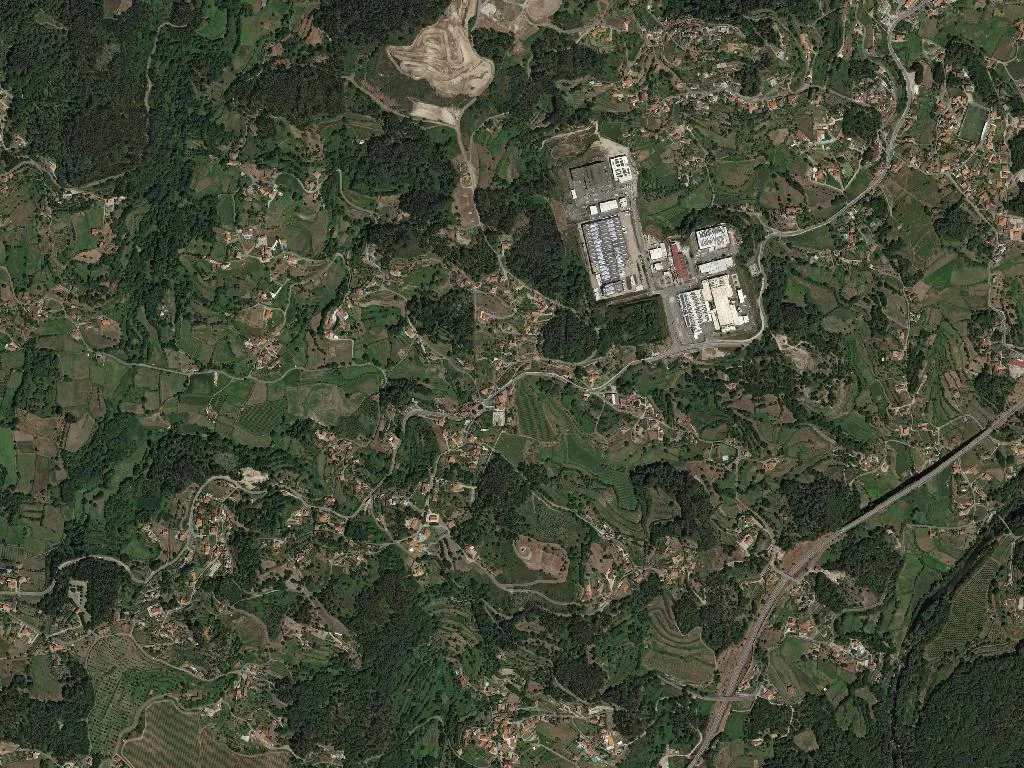
Drive ten minutes downstream to the Mogueiras business park and you will find Sarreliber, a plastics-and-metal workshop employing 120 locals. The plant is a low white warehouse among eucalyptus, proof that the parish is more than scenery. Shift patterns coexist with hay-making season; women who sing in the church choir pack syringe moulds by day. Four granite cottages have been licensed as rural lodging: no reception desks, just freshly baked maize bread on the table and the unspoken rule that someone will phone ahead to book you a table at the only restaurant still serving Cachena steak at nine on a Tuesday.
Dusk arrives early when the sun drops behind Cabreira. The final bell of Igreja Matriz of Souto scuds across the valley, ricochets off granite and fades uphill, leaving wood-smoke, river-cold air and the certainty that distance here is measured in footsteps, not megapixels.