Full article about União das freguesias de Arga (Baixo, Cima e São João)
Climb 600 m through chestnut, gorse and ghost hamlets to São João d’Arga chapel
Hide article Read full article
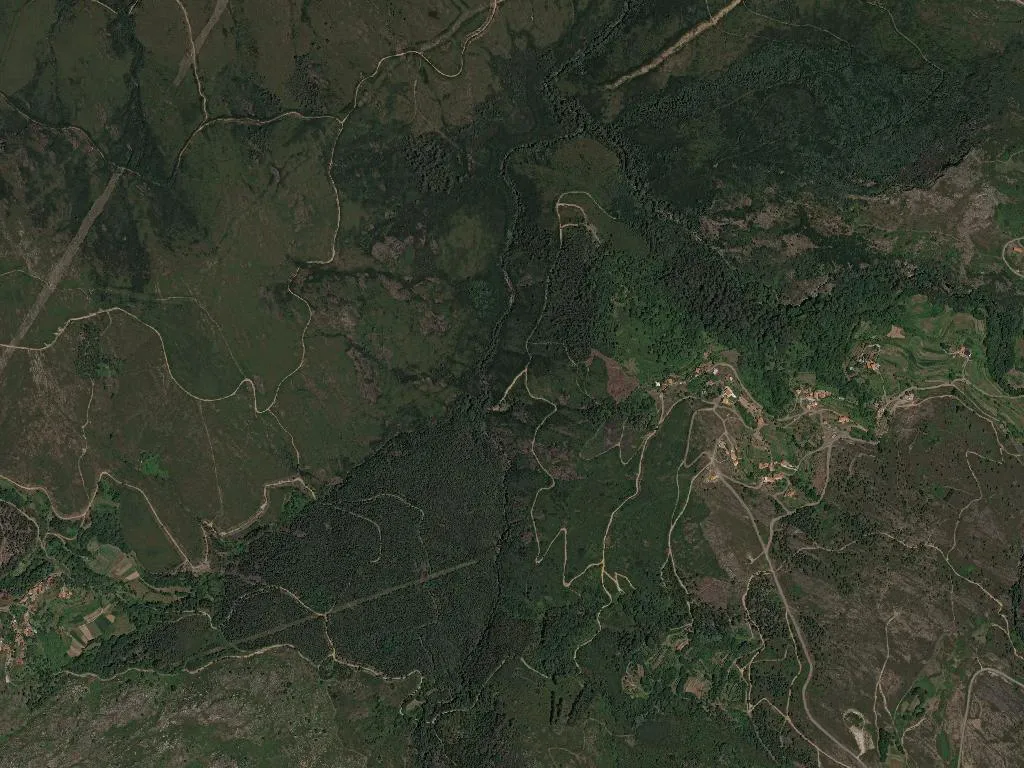
Morning mist lifts like a theatre curtain from the granite flanks of São João d’Arga, exposing a stage that rises 600 m in four short kilometres. One hundred and fifty-nine souls and 450 sheep share the slopes; the sheep have right of way. From the hamlet of São Bento at 180 m to the 800 m summit chapel, every metre is a negotiation between schist, gorse and gravity.
The name “Arga” predates Rome—linguists trace it to a Celtic root meaning simply “high rock”. Royal surveys of 1258 already list summer grazing settlements here, seasonal punctuation marks on an otherwise empty map. The three medieval parishes—Arga de Baixo, Arga de Cima and São João—were fused in the 2013 municipal shake-up, sealing into one administrative unit a landscape that once supported 1,200 people and now drifts just above the threshold of statistical extinction. Emigration has sculpted the built fabric as surely as ice and wind: stone houses with locked gates, granaries raised on stilts for corn that no one harvests, silence dense enough to ring.
Stone, Water, Height
Crowning the massif, the classified hermitage of São João d’Arga has drawn midsummer pilgrims since at least the 14th century. On 24 June townsfolk climb through night-cooled granite to a candlelit mass, then light hill-top bonfires that prick the darkness as far as the Minho estuary. Lower down, the parish church of Arga de Cima shelters a Mannerist altarpiece gilded in the 1550s and, on its south wall, a sundial that has kept time to the minute since 1789. The little chapel of São Bento marks the spring equinox with a field-blessing and slices of sponge cake handed out after mass. Between settlements a Romanesque pack-horse bridge, its parapet eroded by centuries of hooves heading to Galicia, fords the Franqueira stream.
Altitude stacks ecosystems vertically: Atlantic oak on the north face gives way to sweet-chestnut coppice threaded by the seven-kilometre Currais de Gelo trail, then to heather moorland where red kites ride thermals above stone circles once used to store winter snow. The Poço do Inferno waterfall drops 25 m into a black basin cold enough to numb skin within seconds.
Linen, Wine, Flame
High-altitude Loureiro and Azal vines yield a brisk, lime-edged Vinho Verde pressed in the communal lagar of São João d’Arga. Tables in the single café groan with caldo verde thickened by local kale, papas de sarrabulho (a cinnamon-dark pork stew) and kid roasted over eucalyptus embers. The Sunday after the saint’s day the entire parish eats together on a single stone hearth: bread, wine and kid circulated until the last bone is picked clean. The feast ends with folar—sweet loaf sheltering soft-boiled eggs—eaten in the chapel yard while the priest mutters the final litany and wood-smoke drifts overhead.
Inside two remaining workshops wooden looms still clack, turning flax into linen tablecloths sold to Porto decorators. On 6 January the Cortejo dos Rapazes winds downhill: boys in hand-carved masks, cowbells slung across shoulders, chanting king-songs door to door in exchange for coins and wine.
The Climb
Start the ascent an hour after dawn, when dew silvers the gorse and the only sound is your own breathing. The signed trail (two hours out-and-back) threads abandoned sheep pens, skirts a working water-mill whose paddle-wheel dates from 1893, then climbs through humid oak to the waterfall’s echo. From the summit cairn the Minho valley unrolls westward to the Atlantic; early light ignites the granite and picks out the thin white line of waves beyond Caminha. Far below a single plume of wood-smoke rises straight as a ruler. Somewhere a bell tolls the hour the sundial announced an hour ago.