Full article about Caminha’s Bell Rings with the Tide, Not the Clock
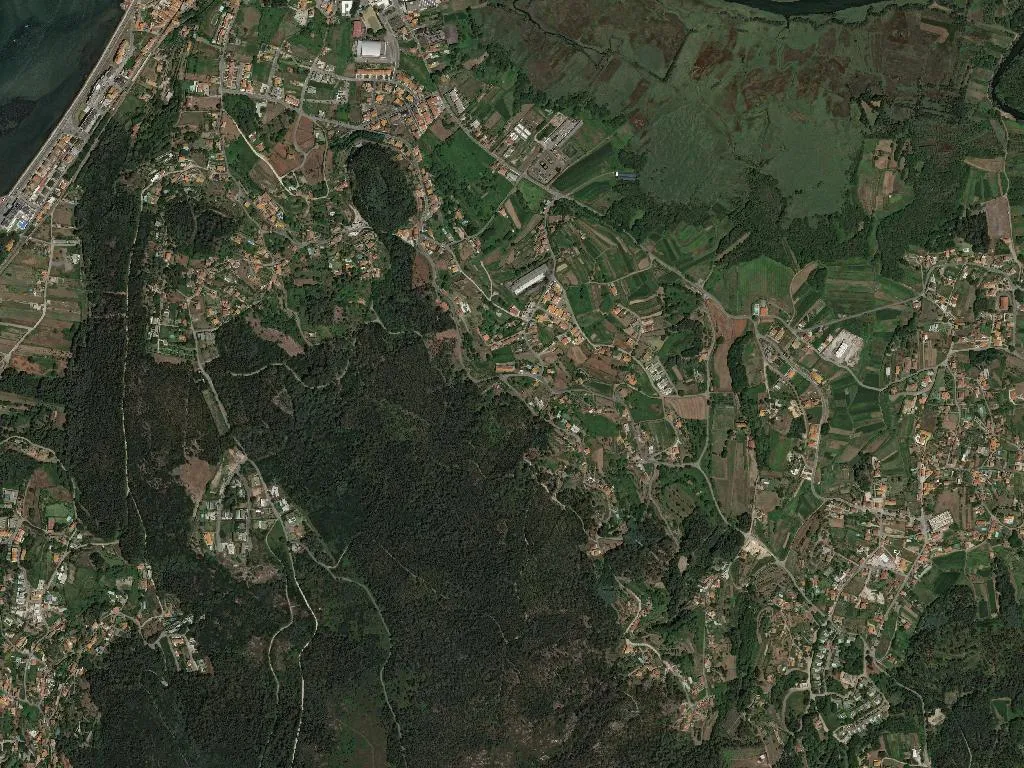
Granite lanes, salty air and maize-drying circles knit Caminha-Vilarelho to the Minho estuary.
Hide article Read full article
The Bell That Keeps Maritime Time
The bell in the parish tower never strikes on the hour; it runs early or late, tugged by the same Atlantic wind that fills the square-sails painted on Caminha’s coat of arms. When it does ring, the note ricochets off the granite slabs of Largo da Matriz like a startled gull, then slips downhill to the Minho estuary where it dissolves into river noise. Light here carries salt as well as shimmer: you taste seaweed on the air, see microscopic fish-scales glinting where nets have dried on the stone jetty. Walk Rua Direita at dawn and you’ll find corn-bread crumbs scattered on the steps—children pinch them up before mothers notice, the same broa that will reappear at lunch, toasted and rubbed with tomato.
Walls That Outlived Their Purpose
King Dinis ordered walls raised in 1284; one short stretch survives behind the old Carneiro house, upholstered in ivy that shelters tabby cats. The pillory stone still stands, but the true village clock is the wooden bench beside the 17th-century cross: pensioners occupy it at sunrise, earbuds-sharing teenagers after school, both squinting at the same tidal river their great-grandparents watched for smugglers. Step inside the so-called “half-houses” and geometry turns comic—diagonal beds, cooker handles within arm’s reach of the lavatory—evidence of medieval plots later sliced by inheritance laws.
From Alto de Santo Antão to the Sea
Climb to the hermitage terrace and the estuary looks like a crumpled sheet of tin-foil. Out on Ínsua island the fort—once a prison, then a customs post—has shed its roof but keeps a courtyard where children collect cowries at low tide, pockets clinking like illicit doubloons. The Coastal Camino funnels pilgrims through the arcade on Praça Conselheiro Silva Torres; they ask for a galão and “just a glass of water”, astonished to learn Moledo’s beach is still four kilometres south.
Vilarelho Measures Life in Maize
Head east and maize-drying circles punctuate every smallholding. When the romeria climbs Serra d’Arga each July, women balance tin basins of raw sardines on their heads; they descend with broom for the linen cupboard, proof of pilgrimage completed. Santa Rita’s Sunday (nearest the 22nd) queues form for caldo verde ladled from an iron pot the brotherhood stores in the church loft all year. Loureiro or Trajadura vinho verde is served in rigid plastic cups that double as rice measures once washed and taken home.
Lunch at Tasquinha da Praça
The fish stew arrives—hound’s tongue, ling, a single crushed garlic clove swirled in last so it never turns bitter. Eels thrash in a river-water pail; the owner scoops them mid-air like a goalkeeper. Merengue “sighs” (soft-centre, crack-shell) are sold in 50 g paper twists and rarely survive the walk home. Bico blood-pudding, cured over a beech-wood fire, perfumes an entire wardrobe without asking.
Bedrooms With Dates Carved in Oak
Of 123 places to stay, half are back-of-house conversions: one attic beam is dated 1720 in charcoal, another floor slopes so dramatically that a wheelchair rolls from the landing to the door unaided. Last summer census clerks asked whether grandchildren still live with grandparents. “Yes,” replied the parish council, “until they find work elsewhere.”
Dusk on the Jetty
Evening brings a silent gathering on the quay—no greetings, just a collective stare at the Atlantic. The tide swallows the fishermen’s stone staircase; when it retreats it leaves a seaweed wig that smells of iodine and raw shellfish. Across the water, A Guarda’s streetlights switch on first—the sun drops behind Spain’s Sierra de A Groba. Caminha stays in the middle, in no hurry to choose between river and sea, while the broa’s corn sweetness still burns the throat and, somewhere in the dark, the bell finally decides to ring.