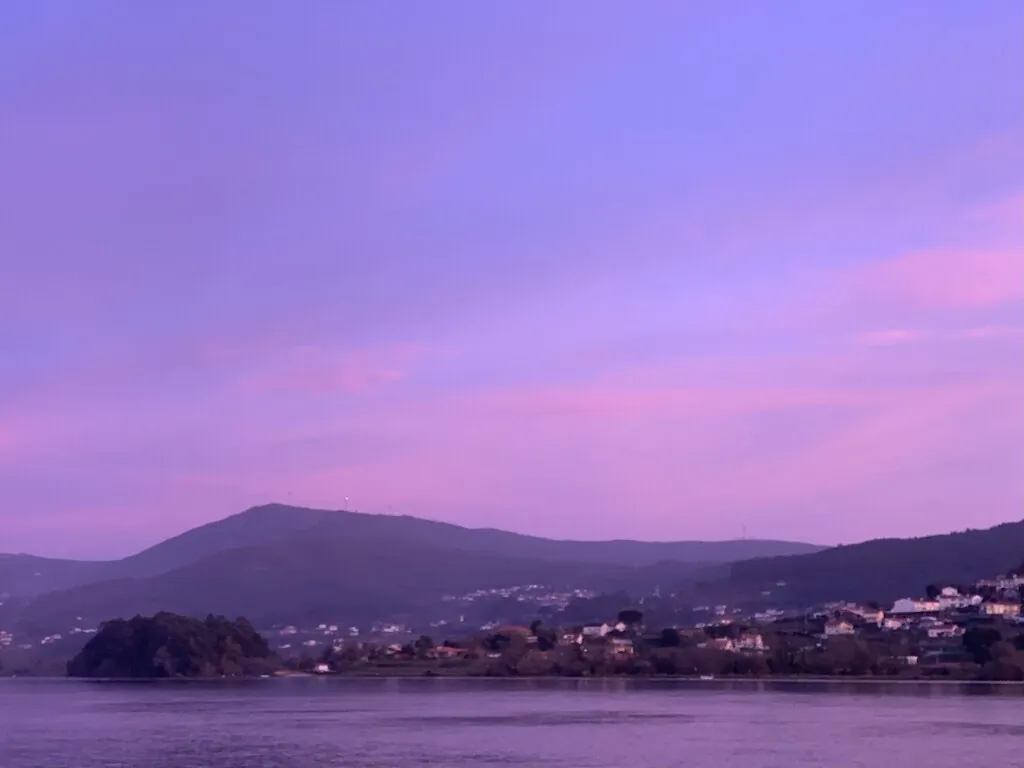
Full article about Lanhelas: Maize Terraces, Bells & Secret Alvarinho
Granite village in Vinho Verde country where 13th-century bells echo above pergola vines and Paris-f
Hide article Read full article
Morning Bells Between Maize Rows
The bells of Lanhelas ring at seven-thirty sharp, their bronze voices rolling down the terraced slopes until they bump against the granite outcrops that seam the maize plots. Each terrace is only a boot-width wider than a John Deere’s wheel-track, so the stalks grow like soldiers on a parade ground designed by someone with a geometry fixation. From the church tower you can count 897 roofs—red pantiles fading to salmon, slate here and there where a cousin sent money from Paris—wedged into 5.2 km² that Portugal’s statisticians call “rural fabric”.
Stone That Remembers
Two buildings carry state plaques. The Igreja Matriz, 13th-century with a Manueline door somebody once tried to spirit away to Brazil, is National Monument grade; the old watermill, now sign-posted as Moinho de Lanhelas, is merely “Public Interest”, which locals translate as “the uncle who got mentioned in the will but only inherited the rusty tractor”. Both are built of the same grey granite that warms up like a bread oven when the afternoon sun hits it. Sit on the low wall opposite the mill at four o’clock and you can feel yesterday’s heat seeping through your jeans while the village men debate whether SC Braga will finish above Sporting this year.
Green Wine on Red Earth
Lanhelas sits inside the Vinho Verde demarcation, so every south-facing slope is laced with pergola-trained vines. Underneath, the maize squeezes up what light is left—an intercrop marriage that has survived since the Jesuits kept ledgers here. Come mid-September the air smells of crushed grapes and chestnut smoke; you hear the metallic kiss of pruning shears and the low murmur of harvest gossip that stops the moment a stranger rounds the row. The resulting loureiro and alvarinho are bottled a kilometre away in Caminha, but the locals still keep a demijohn under the stairs “for the cough”.
A Coastal Detour for Pilgrims
The Portuguese Coastal Way of St James crosses the parish in 3.4 km of cobbled lane and muddy footpath. Walkers arrive hungry for Atlantic views and a phone signal they won’t get; they leave with a stamp from the chapel of São João Baptista and, if they’re lucky, a slice of sponge cake from D. Rosa who watches the path from her kitchen window. In June the romaria to São João d’Arga pulls thousands up the mountain; those who stay behind celebrate Santa Rita with a procession and the unspoken hope that the priest keeps it short enough for dinner not to burn. Demography is blunt: 312 residents are over 65, only 77 under 25, yet the church benches fill faster than a Ryanair flight to Faro.
Rooms Between Generations
Stone houses with rotten woodworm beams are listed on Idealista for €90,000; beside them, 25 new lodgings—some Scandi-flat rentals with fibre-optic that fails whenever the Minho wind howls, others granite cottages where the woodworm is on holiday—host weekenders who want Moledo beach ten minutes away without the Moledo prices. Check-in is often handled by a daughter studying in Porto, the key handed over while grandmother keeps an eye on the simmering caldo verde.
At dusk the smoke rises straight: no Atlantic breeze, just the smell of eucalyptus burning and the certainty that Júlia opposite has lit her stove. Adérito’s dog barks at the same obstinate crow; a wooden gate shuts with the dry thud of iron latch on stone, a sound that hangs in the cooling air like a full stop. The village is not asleep—someone is still awake, counting time by the carnations painted on the kitchen wall.