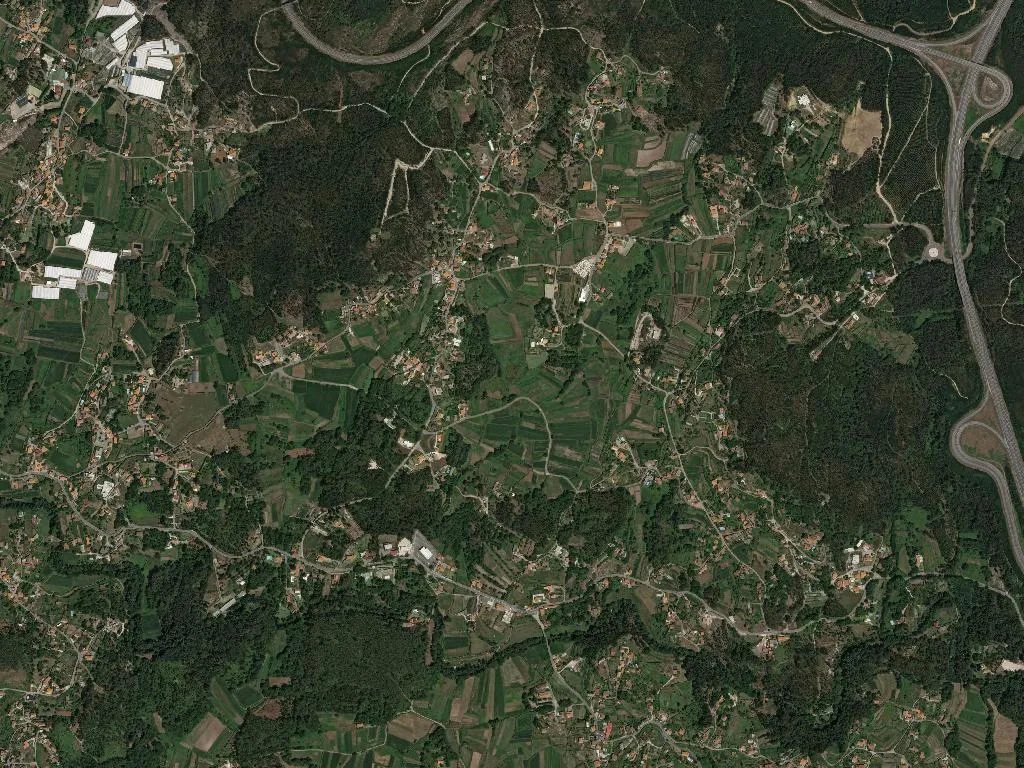
Full article about Riba de Âncora
Salt wind, granite crosses and cockle beds shape this Minho hamlet of 680 souls and six festas
Hide article Read full article
The river arrives first
The Âncora speaks before it is seen — a cold inhalation that climbs the valley and rattles the lemon leaves. Only afterwards does the colour appear: river-green darkened by algae, the smell of silt still clamped to willow roots after the tide retreats.
Stone and lime devotion
Six chapels for 680 people. That is not excess; it is how time is parcelled out. Each keeps its own festa, its procession, its brass band rehearsing in back rooms through the month before. Nossa Senhora de Guadalupe perches on the hilltop; five kilometres from the sea, the wind still carries salt. The Espírito Santo shrine owns the finest granite cross — pink stone carved with a dove so lifelike children try to feed it crumbs. The mother church opens at night for the rosary, but it is the scent of pooling wax, mingling with boiled ham someone has carried from the butcher, that says you are home.
Between water and worship
The river bends beside the stone quay where xávega seine-boats once tied up. Their grandsons still hang the nets under the same asbestos roof, sheets groaning when the norte blows. At low tide the estuary’s stone fish-traps look like a mosaic; inside, cockles wait for the fingernail that will prise them open before the sardines hit the grill. Pilgrims on the coastal Camino pause at Ponte café for a milky coffee while Zé Manel explains that the São João d’Arga hostel sheltered two German cyclists who did not know a mountain existed here.
The calendar is announced by smell. When fried sardine and warm lager drifts through the lanes, São João is near. Women spend the week spreading linen over parish tables; men sharpen knives for the piglet that turns on its spit from five in the morning. After mass the village climbs the ridge in procession, but the saint himself waits in the chapel porch — a soot-blackened wooden figure with glass eyes that track every passer-by.
Tastes of the Alto Minho
Cod appears on Fridays — thick ‘posta’ baked in the wood-fired oven of a restaurant that opens only when António remembers to rake the embers. Sarrabulho rice needs fresh pig’s blood, not the frozen blocks the co-op delivers; Tina’s mother fetches it from Vila Nova de Cerveira in plastic bags hung from the larder ceiling, just above cat height. The wine is loureiro, served in council-issue glasses that shatter if you grip too hard; its sharpness slices through pork crackling and buys breath for the vira danced to an out-of-tune concertina.
In the cafés order canudinho da avó — spirals of puff filled with copper-pot custard that D. Lourdes began making when the local monastery closed. Eat three, sugar lacquering your lips, then knock back a short bica served with the spoon already inside “so it cools slower,” says Zeferino.
Tracks and silence
The riverside path goes quiet after seven. Children have traded stones for tablets, tethered to the café Wi-Fi, yet parents still shout them indoors when fog climbs from the estuary. Sound migrates to the EN1051: Sr Joaquim’s tractor returning with eucalyptus, the priest’s horn as he drives to give extreme unction to D. Idalina, the Garrida dogs who have learnt to recognise a stranger’s footfall.
At dusk, when the church loudspeaker tolls, the river keeps the last of the day — no longer green but polished pewter, a mirror that swallows the reflection of the Serra de Arga. House lights click on in order: kitchen, corridor, finally the yard where the cat vaults the wall. Riba de Âncora offers no explanations; it simply persists, between the creak of the granary door and the Atlantic salt that has not yet arrived.