Full article about Morning bells & melon terraces, Venade–Azevedo
Honey-granite villages breathe Atlantic fog into sun-warmed vinho verde
Hide article Read full article
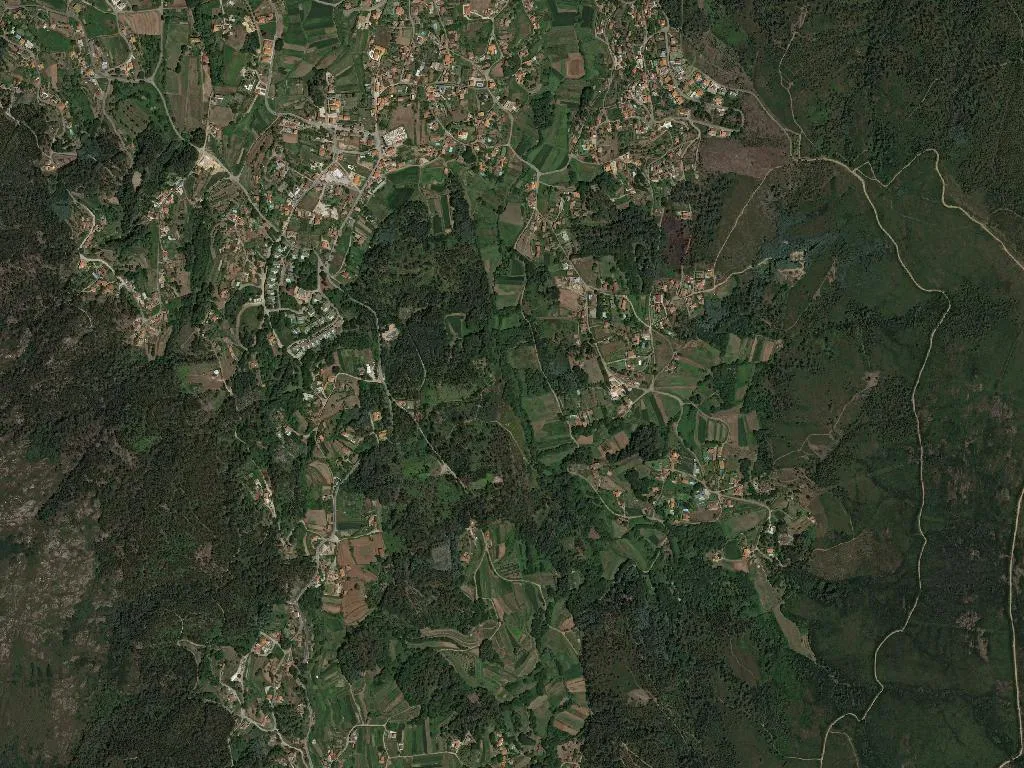
The morning cobbles are slick with dew, mirroring the green that stretches to the edge of sight. At half past seven the bell in Venade’s mother church strikes twice, pauses, strikes twice again — a code every villager recognises. Sr Armindo’s cockerel answers on cue, even in drizzle. Four kilometres inland from Caminha the light behaves differently: softer than the coastal glare, thickened by evaporation from the maize terraces and the tangled vineyards that quilt the hills.
When the valley breathes
Administratively, Venade and Azevedo have shared a parish council since 2013, yet their identity was forged long before cartographers drew lines. Both churches — Romanesque volumes of honey-coloured granite — still carry scorch-marks on their portals: Azevedo’s right jamb is lighter, the result of a 1924 lightning strike that toppled the bell-tower. Half-way to the Serra d’Arga ridge, the chapel of Nossa Senhora do Caminho keeps a spring where Coastal Way pilgrims rinse the mud from their boots; dried footprints ghost the stone for days.
Sheltered by the 400-metre wall of the Serra, the parish enjoys a micro-climate locals can read like a watch. When Atlantic fog pins Moledo beach to 15 °C, thermometers here climb to 25 °C. Sunlight pools against granite terraces, then slips downhill on a breeze that smells of oak tannin and wet schist. The terraces themselves are medieval retaining walls, built to stop the iron-rich soil sliding into the Minho and to cradle the winter melons that chefs in Braga will later dice into chilled soups. Inside the stone quintas, this year’s vinho verde finishes fermentation in 500-litre oak pipas; visitors are served it in wafer-thin crystal that hisses when the wine hits the sides.
Population 881 on paper, fewer by daylight. Weekends swell when Porto's children return, turning the lone café in Vilar de Mouros into an improvised co-working space. Density is 77 souls per km², low enough for silence to be broken only by eucalyptus crowns knocking together and, at seven sharp, Zé Carlos’ diesel tractor heading for the vineyard rows.
Festas and full tables
The calendar is still moved by saints. January’s São Bento draws neighbours from Tourais for Dona Alice’s tomato rice, but the year pivots on the Romaria de São João d’Arga. Starting in Caminha, worshippers climb in procession through Venade and up to the 740-metre summit, carrying white-wine cântaros and cornbread wrapped in checked napkins. Half-way up they halt for the antiphonal chant “Ó São João, ó São João”, concertinas and bombos echoing across the saddle while sardines blacken over portable grates.
In kitchens, Minho cooking happens without recipe books. Caldo verde is scissors-sliced Galician kale; the chouriço comes from António’s pig, killed always on the first Saturday of December. Arroz de sarrabulho uses blood drawn the same morning, not the stabilised supermarket sort, and rojões are the jowl strips, reddened with massa de pimentão. Feast-day sponge cake is baked in a wood-fired oven whose timer is the nightingale that nests in the backyard poplar.
Between river and ridge
Two kilometres west, the Minho slides broad and slow, Portugal on one bank, Galicia on the other. At Arga’s river-beach children launch bikes off a concrete ramp into the current while grandmothers knit under eucalypts, counting heads every few minutes. A way-marked trail follows the irrigation levada uphill to the Côvo water-mill where Zé Manel still grinds maize for broa; above it, the Poço das Freiras is a plunge pool cold enough to make molars ache.
Caminha’s ferry terminal, surf schools and 80-cent espresso are ten minutes away by car, yet evenings pull you back to the twin villages. As the sun grazes the granite, the bell of Venade begins again, answered a moment later by Azevedo’s lighter peal — a call-and-response that needs no translation, only the understanding that life here moves to the rhythm of struck bronze and the scent of fermenting grapes.