Full article about Vila Praia de Âncora: dawn where river meets Atlantic tide
Fishermen land sea bass beneath 17C Forte da Lagarteira as petunias bloom across Praça da República
Hide article Read full article
Dawn at the rivermouth
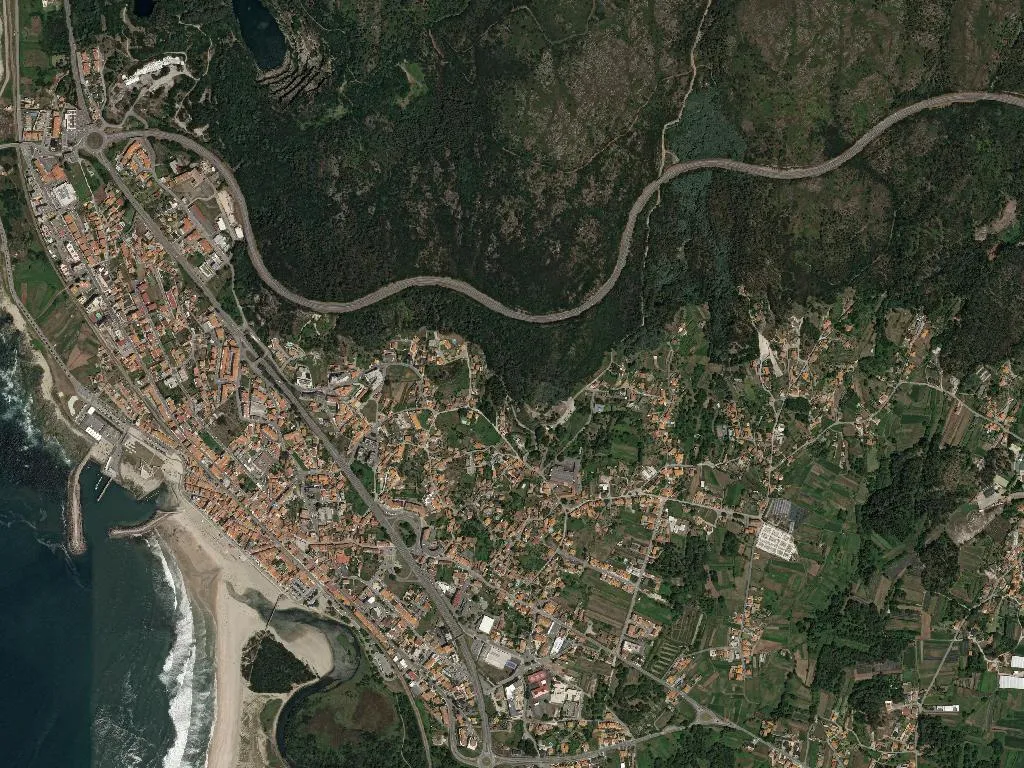
First light slips through the mouth of the Rio Âncora with an Atlantic clarity that turns the salt marsh into molten glass. The scent of iodine drifts uphill and collides with the first espresso of the day rising from terrace cafés along the Avenida dos Banhos. Fishermen in navy jerseys step ashore with boxes of sea bass and red porgy; gulls tilt overhead like weather vanes. The half-moon bay arcs gently north until it meets the 17-century Forte da Lagarteira, while the tiny 1890 Capela de Nossa Senhora da Bonança – Our Lady of the Calm Sea – keeps vigil over nets drying on the sand. Between dunes and star-shaped bastions, the old fishing hamlet of Gontinhães has grown into a seaside town without ever surrendering its tide-timetable heartbeat.
The name that rode the tide
Recorded as Villa Guntilanis as early as the ninth century, Âncora refers both to the bay’s anchor-shaped curve and to the iron hooks that once moored medieval cargo vessels. By 1640 the crown added the star-fort of Conceição, part of a coastal necklace designed to deter Spanish privateers and North-African raiders. Climb the 332 stone steps of the Escadaria do Calvário – originally a penitential path – and you reach the hilltop chapel of Senhor do Calvário, its Mannerist Via Crucis flanked by fourteen granite crosses. Next door, a 1920s Lourdes grotto is candle-scented and cool even in August. From the 150-metre lookout the view stretches east to the terraced Loureiro and Alvarinho vineyards that produce the district’s zesty DOC Vinho Verde.
Petunias you can see from space
Since 2018 the parish council has carpeted Praça da República with such dense petunias that the purple stripe shows up on satellite images. At the end of April the “Vila Praia em Flor” contest turns balconies, doorways and even fishing boats into competitive flower boxes, while craft stalls and rabeca fiddles take over the streets. The obligatory selfie, however, is captured on the ramparts of the Forte da Lagarteira where a Hollywood-style sign spells “VILA PRAIA DE ÂNCORA” in metre-high aluminium letters. Further south, swing seats hang from wooden frames on the sand; at high tide the rivermouth forms a shallow natural lagoon warm enough for toddlers and paddle-board novices.
Faith, fire and all-night fiddles
Maritime devotion still organises the calendar. On the second weekend of September, the Festa de Nossa Senhora da Bonança (first recorded 1753) sees the statue rowed out to sea in a procession of beribboned boats, then carried through streets carpeted with sweet-pink camellia petals. Midnight on 23 June empties the town: cars, boots and grandparents head up the Serra d’Arga for the Romaria de São João D’Arga. Bonfires are lit, voices trade improvised couplets, and the Atlantic sunrise is greeted with bagpipes and breakfast wine. Folk traditions are kept alive by the Grupo Etnográfico e Orfeão Ancorense, founded 1926, who rattle out pauliteiro stick-dances at the May festival of Santa Rita and the July fair of São Bento.
From estuary to earthenware
Caldeirada – the fisherman's stew – is slow-simmered in clay pots: sea bass, red porgy and razor clams bound with coriander and early-harvest olive oil. At Restaurante Fortaleza, posta mirandesa beef is grilled over vine prunings and arrives black-edged and butter-soft, rivalled only by spring-run shad escabeche. Whelk-feijoada, clams Bulhão Pato style and rice laced with locally raked cockles follow. For pudding, ask for bolas de São Bento (orange-and-cinnamon fritters) and cavacas de Âncora, a brittle sugar-crusted biscuit whose recipe is tattooed on the collective memory of three village matriarchs. Up on the serra, small producers sell heather honey, quince jam and fire-coloured medronho brandy that knocks the chill off January nights.
Where the train misses the tide
Opened in 1886, the Linha do Minho halt sits barely 50 m from the beach – one of the few places in Europe where you step off the carriage straight onto sand. From the platform, the traffic-free cycleway of the Coastal Camino hugs the promenade to Moledo, then threads along raised boardwalks over the bird-busy estuary. Inland, marked trails climb into the Serra d’Arga protected landscape, threading oak and laurel woods to the Poço das Caldeiras waterfalls where you can plunge into granite pools before cycling back for a sunset kayak across the mirror-bright rivermouth. Copper light ignites the fort walls, gulls settle, and the smell of grilled sardines drifts down the Avenida. Somewhere in the dusk the Orfeão rehearses a century-old chant; a fisherman folds nets at the chapel door. The anchor that gave the town its name may never have weighed anchor, and neither, quite often, do its visitors.