Full article about Vile: Coffee & granite on the Caminho da Costa
Vile, Caminha—where the Minho valley narrows, pilgrims pause for scalding espresso, vineyards give way to maize and an 18th-century cross keeps its secret.
Hide article Read full article
Where pilgrims pause for coffee before the mountain
The granite underfoot is still slick with last night’s mist when the first boots echo through Vile’s single street. At 149 m above sea-level, the parish sits exactly where the Minho valley floor begins to tilt toward the Serra d’Arga, and the air carries both the salt of the river and the cool breath of the uplands. Smoke lifts from one or two chimneys, carrying the scent of oak logs into a sky that is still deciding what sort of day it will be.
A way-station on the Coastal Way
What looks like the village high street is actually a segment of the Caminho da Costa. Pilgrims bound for Santiago discover here a place of transition: maize terraces behind them, the first heather-clad slopes ahead. Two small guesthouses have lately opened in restored stone cottages; if you’ve miscalculated your stage, you can still find a bed without negotiating. The café serves espresso that meets the Camino’s only real requirement—scalding, cheap and available before eight.
Three dates that still matter
The calendar revolves around three feasts. The processions for São Bento (March) and Santa Rita (May) draw the neighbouring parishes, but it is the Romaria de São João d’Arga in late June that briefly turns Vile into a thoroughfare. Thousands climb the ancient track to the chapel on the ridge; the village becomes the friend’s house you always pass on the way to the beach—everyone stops, everyone needs water.
Between vineyard and maize
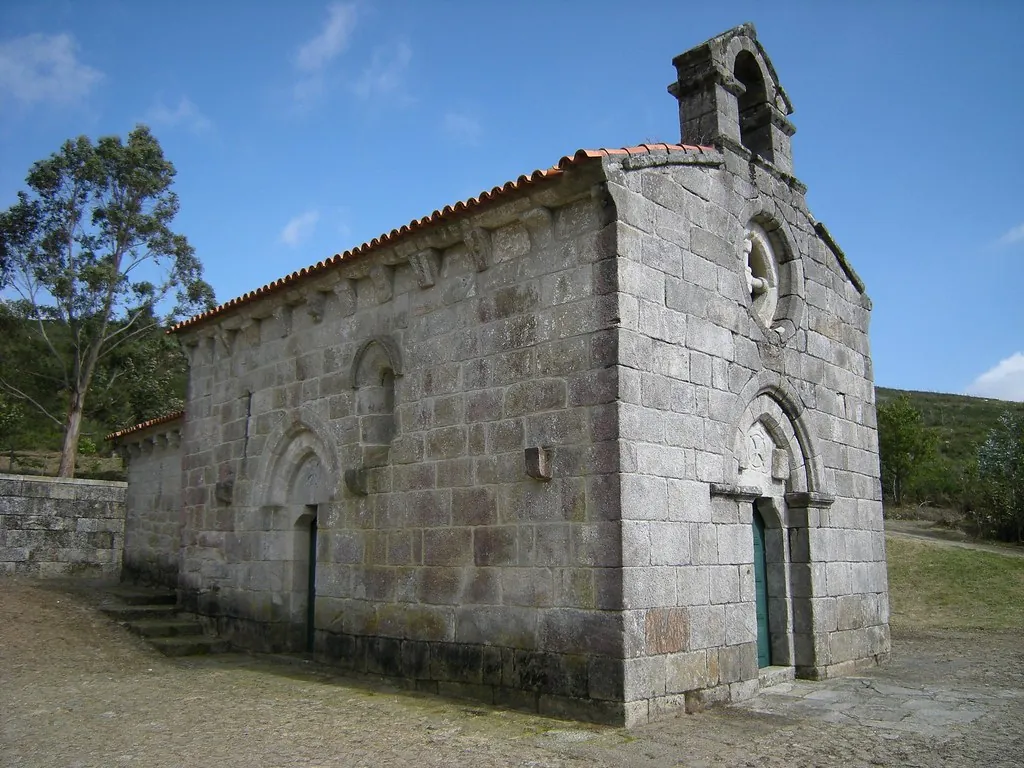
Dry-stone walls parcel the hillsides into narrow terraces. We are inside the Vinho Verde demarcation: Loureiro and Alvarinho occupy the sun-facing ledges, the lower ground is reserved for corn and potatoes. The only listed monument stands beside the churchyard—an eighteenth-century granite cross whose bas-reliefs have been softened by rain to the texture of a bar of soap. No one can tell you what it commemorates without walking over to look.
Arithmetic you can do in your head
288 inhabitants, 84 of them over sixty-five, 29 under fifteen. Work the ratio any way you like; the answer is always departure. The density—102 people per square kilometre—sounds generous until you walk the 280 hectares and realise how steeply most of them tilt. Each terraced plot, every stone water trough, records someone who stayed long enough to claim it.
The church bell still keeps the day: seven for the morning mass, twelve for the Angelus, three short strokes for the Ave-Marias at dusk. When the wind drags cloud down from the ridge, the bronze note arrives muffled, as though wrapped in wool. In the hush between strikes you hear the irrigation channels—an unhurried continuo that reminds you time here is measured in seasons, not seconds.