Full article about Castro Laboreiro Where Granite Wolves Still Guard the Sky
Roam the 972-metre roof of Portugal: dolmens, wolf-dogs and echoing silence.
Hide article Read full article
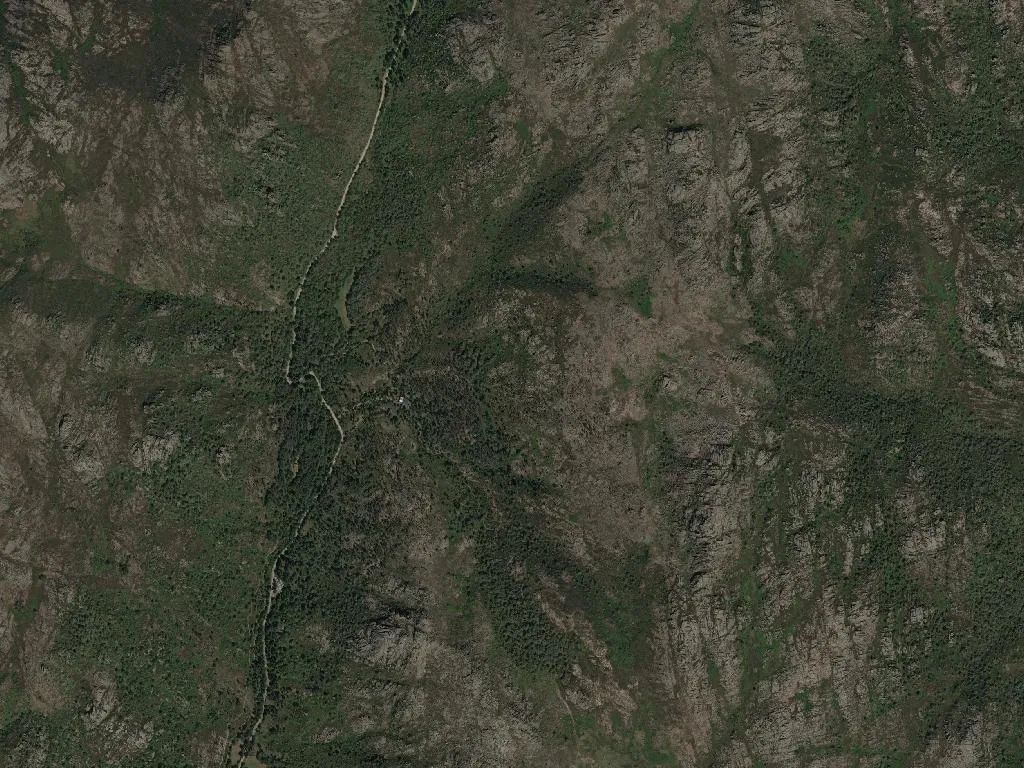
The engine cuts out at 972 m and the plateau swallows every decibel. For a moment there is nothing but the hush of altitude – a cotton-wool quiet that makes your ears pop. Then the granite itself begins to speak: wind scouring the outcrops, the Laboreiro river muttering somewhere far below, the bass-note bark of a dark-haired mastiff echoing between boulders. You have just crossed into the parish union of Castro Laboreiro and Lamas de Mouro, on the roof of northern Portugal. Resident humans: 503. Resident wolves: rather more.
Stones older than the monarchy
The plateau is an open-air library. One hundred and twenty dolmens – the densest megalithic scatter in the country – lie among gorse and Pyrenean oak, their capstones balanced like oversized bookmarks. Bronze-age petroglyphs pre-date any written charter. When the first king of Portugal needed a frontier lookout in 1141 he simply re-roofed the Roman castrum on the hill; its five square towers still stand, rainwater collecting in the medieval cistern as it did for Templar sentries. Below the keep, a slender pillory with a pyramidal top marks the spot where Castro Laboreiro governed its own municipality from 1271 until 1855. The 2013 merger with neighbouring Lamas de Mouro changed nothing on the ground – identity here is quarried into the granite, not inked on an organogram.
Summer up, winter down
Until the 1950s families lived twice a year. In May they trekked uphill with their cattle to the high granite villages – the brandas – where thin soils dried fast. October’s first frost reversed the migration to schist-and-boulder hamlets – the inverneiras – tucked into warmer valleys. Most roofs have swapped thatch for slate, yet the PR4 “Castle & Rock-Art” trail still follows the old transhumant calendar, linking deserted summer folds to winter quarters where smoke once rose from the same hearthstones.
A dog shaped by wolves
The Cão de Castro Laboreiro was never meant to be agreeable. Bred to face Iberian wolves across the midnight paddock, it carries the same basalt-dark coat and citadel-broad shoulders as the local rock. A municipal kennel below the castle keeps the bloodline pure; on 15 August the Festa Crasteja subjects each hound to a medieval inspection of jaw, gait and nerve. Watching one patrol the escarpment is to see the landscape sculpt its own guardian.
Bread, beef and alvarinho
At a thousand metres food is ballast. Rye loaves the diameter of steering wheels come out of communal wood-ovens with crusts that crack like crème-brûlée and crumb so dense it tastes almost mineral. Cachena and Barrosã cattle – mahogany, long-horned, DOP-protected – graze the high bogs; their meat appears as slow-cooked rice or a cumin-scented stew. Smokehouses perfume the lanes with oak: Melgaço’s IGP hams, air-cured salpicão, blood-and-garlic chouriça. To drink there is alvarinho grown on the lower valley terraces – a green-wine with the snap of apple skin and river stone – followed by arbutus brandy or a chestnut liqueur that tastes like liquid marron glacé.
Waterfalls and watermills
The PR3 “Mills & Cascades” track shadows the Laboreiro through moss-draped gorges where the river folds into natural tanks cold enough to numb ankles in July. At Fechas do Malho the water dives ten metres into a granite punch-bowl; further downstream Poço do Contador is so clear you can count every pebble on its polished bed. In Lamas de Mouro a Roman-medieval pack-horse bridge and a cluster of watermills mark the official gateway to Peneda-Gerês National Park. The visitor centre doubles as the first (or last) Portuguese hostel on the Northern Way of St James, the pilgrim route that slips across the Mouro river from Galicia.
Daffodils for no one
Evening light turns the plateau to molten stone. A red kite tilts overhead, wings fingered against a sky rinsed clean. In spring, white daffodils push up beside the unvisited dolmens, bloom, wither and seed without witness, exactly as they have for five millennia. You leave Castro Laboreiro carrying the same sensation: the calm certainty of a land that will rearrange its wolves, its shepherds and its wild narcissi long after the last engine note has faded.