Full article about Cousso: Where Rio Mouro Murmurs Through Granite Time
Bronze Cachena bells echo above the slate roofs of this Minho mountain hamlet.
Hide article Read full article
Between granite and water
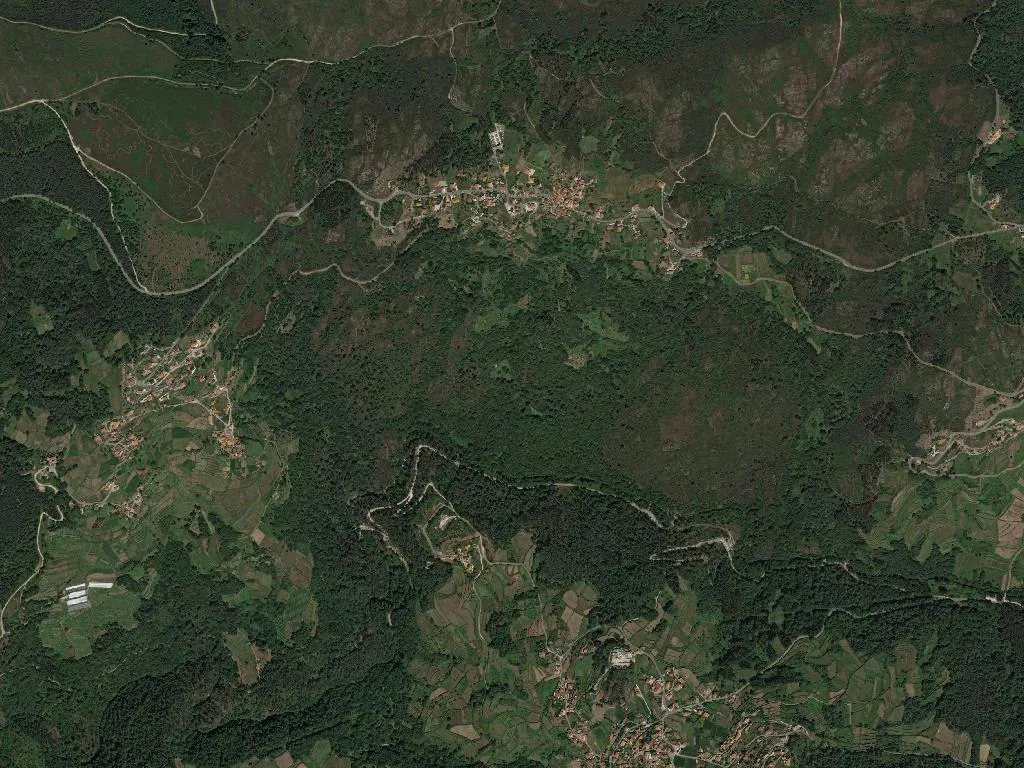
The Rio Mouro is heard before it is seen, a low, constant hush that climbs the slope and threads itself between the slate roofs of Cousso. At 405 m on the south-western shoulder of the Serra da Peneda, the village is cooled by the river even in August, when the Minho lowlands swelter. Tiny bronze bells—each no larger than a conker—tinkle from the leather collars of Cachena cattle, a breed so small you could rest your chin on their caramel-coloured backs. Below the settlement, terraces of maize and rye stitch the valley in green corduroy; above, chestnut trees pre-date the first Portuguese charter.
A name that means “far from everywhere”
The earliest written record appears in 1220, but the name itself is older: Cousso, from the Latin colisium, a diminutive place, isolated. Houses were never clustered; instead they straggle along the contour line, granite barns shoulder-to-shoulder with dwellings whose threshing floors still double as front gardens. Part of Melgaço since the thirteenth century, the parish profited from its position on the Minho valley drove-roads that funnelled cattle between summer bridlepaths above 1,000 m and the winter pastures of the Lima estuary. Today only 239 people remain—151 of them over 65—yet the parish council still flies the bicolour flag every morning outside the primary school that has just eight pupils.
Following the river downstream
The €300,000 Trilho do Rio Mouro, way-marked in duck-egg blue, drops 18.4 km from Cousso to Parada do Monte, shadowing the water from its spring at Lamas de Mouro to the Minho. Ride it on a hard-tail and you’ll ford granite slabs polished by centuries of hooves; walk it in late May and you’ll wade through drifts of wild garlic that smell of wet Camembert. Kingfishers clack over the deeper pools; Iberian emerald lizards sunbathe on broom branches. Spain is a charcoal line of sierras on the horizon, close enough to make out radar domes.
What the plateau puts on the table
Altitude sharpens flavour. Cousso’s cooks braise Carne Cachena da Peneda DOP for four hours with bay from their own trees; the breed’s muscle, toughened by climbing, relaxes into threads that taste faintly of juniper. The same wood smoke that cures the joint also flavours Chouriça de Carne de Melgaço IGP, its paprika coming from peppers dried on every kitchen roof. Alvarinho grown 5 km north appears in frost-cold bottles that sweat at the table, poured into bowls with salt cod fritters during the Festa de São Bento each July. By ten o’clock the plaza is candle-lit, elders dance the vira to a single accordion, and the river’s white noise acts as metronome.
A breathing space on the pilgrim road
Cousso lies inside Peneda-Gerês National Park, so Iberian wolves are tracked less than an hour’s walk above the last house. It is also an optional stage on the Caminho da Costa, the coastal variant of the Camino de Santiago: walkers detour inland here to avoid the industrial outskirts of Valença, trading tarmac for granite cobbles and the knowledge that the next bed is a 400-year-old threshing loft converted by the parish tourism cooperative. Projecto Actividade—run from the old primary school—offers yoga, bread-making and forest-bathing mornings designed to keep retirees off blood-pressure pills and to coax their grandchildren back at weekends.
When the sun drops behind Castro Laboreiro, the stone walls glow like hot iron and wood smoke drifts across the lane in slow-motion. The Rio Mouro keeps talking, an undertone you only notice once the car doors slam and the engine note fades downhill.