Full article about Fiães: Portugal's rooftop village where silence cures
At 930 m, granite cottages exhale wood-smoke over terraced meadows where Barrosã cattle graze
Hide article Read full article
The church bell strikes half past three, its bronze note rolling down the valley until the mountain air swallows it whole. At 930 m, Fiães inhales slowly. June sun warms the granite slabs, yet the stone cottages still cling to last night’s chill; moss cushions every schist wall, and terraced fields stitch oak woodland to pasture where Barrosã cattle graze, their auburn coats the only flash of heat against the green.
Between ridge and quiet
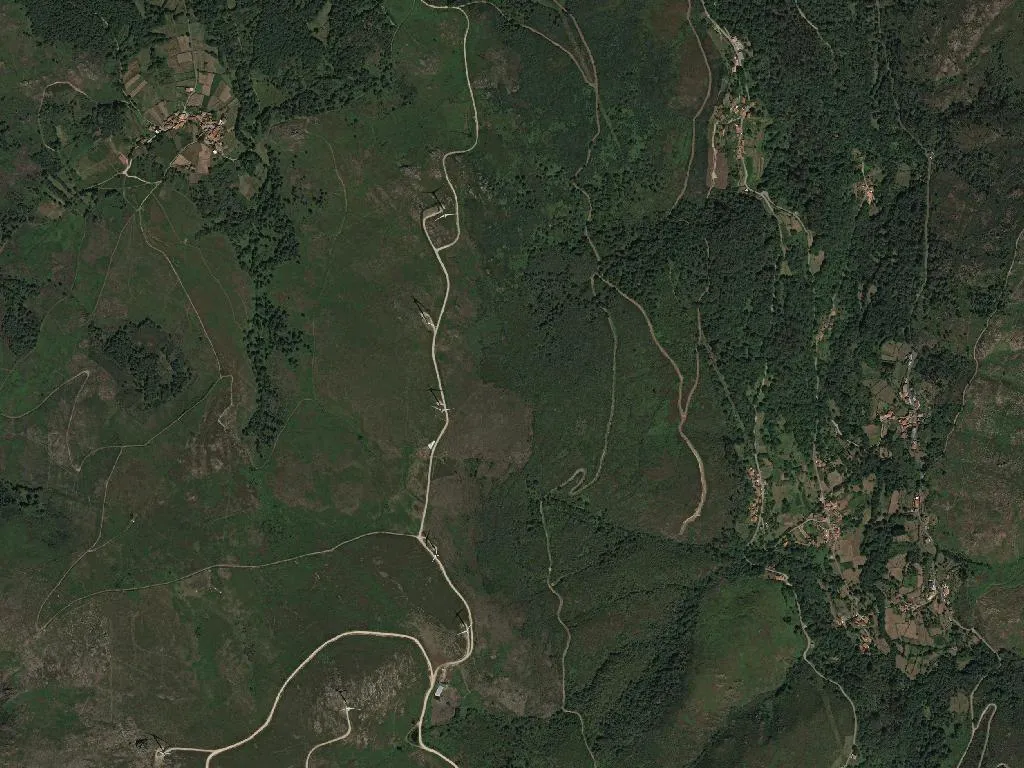
Fiães is the roof of Viana do Castelo district, a buffer zone between the Minho lowlands and Peneda-Gerês National Park. One hundred and forty-six people share 11 km²—thirteen souls per square kilometre, the lowest density in mainland Portugal. Emptiness here is deliberate: generations have refused to trade altitude for convenience. Houses remain low, doors modest, windows postage-stamp small to keep winter where it belongs—outside. Inside the fumeiros, oak smoke drifts over dangling salpicões and blood sausages, curing just enough to survive the short, sharp winters.
The parish church, São Bento, rises in sober baroque at the village centre, its whitewashed façade bouncing light like fresh snow. Candle wax and cold granite greet you once through the door; every July the Festa de São Bento hauls expatriates back for a mass that spills into a procession accompanied by the drone of transmontana bagpipes. Granite crosses still mark crossroads where grandparents once paused to murmur an Ave before continuing uphill.
Taste of height
The mountain dictates the plate. Cachena beef—meat from the small, long-horned cattle that graze the surrounding meadows—stars in winter cozido and lamb stew thick enough to spoon vertically. Melgaço ham, air-dried for up to two years at this altitude, arrives translucent, its sweetness tightened by mountain draughts. Sharp, almost water-white vinho verde cuts the fat, while wood-oven corn bread cracks open to release the scent of toasted grain and oak bark.
Trails and pilgrims
Since 2017 Fiães has sat on the Northern Way of the Camino de Santiago. Walkers leave the tarmac of the EN-202, refill bottles at the 1942 stone font and climb toward the park. Footpaths link the village to oak forests where wild Garrano horses flit between the trunks and roe deer watch from the shadows. From the Miradouro do Pisco, at 1,080 m, the Minho valley unrolls westward until the serrated outline of Spain’s Serra do Soajo dissolves into dusk. Night erases every light but the stars; Orion feels close enough to snag a sleeve.
Long after sunset the granite walls hold a last blush of pink. Wood smoke rises straight, draping the village in an invisible, resin-scented veil. When the bell tolls once more, darkness is complete—and the echo takes longer to die than you expect.