Full article about Prado & Remoães: Minho mist, Roman bridge, alvarinho
Prado e Remoães in Melgaço serve Roman bridges, oak-smoked IGP sausages, citrus-edged alvarinho and 10,000-year-old hilltop silence.
Hide article Read full article
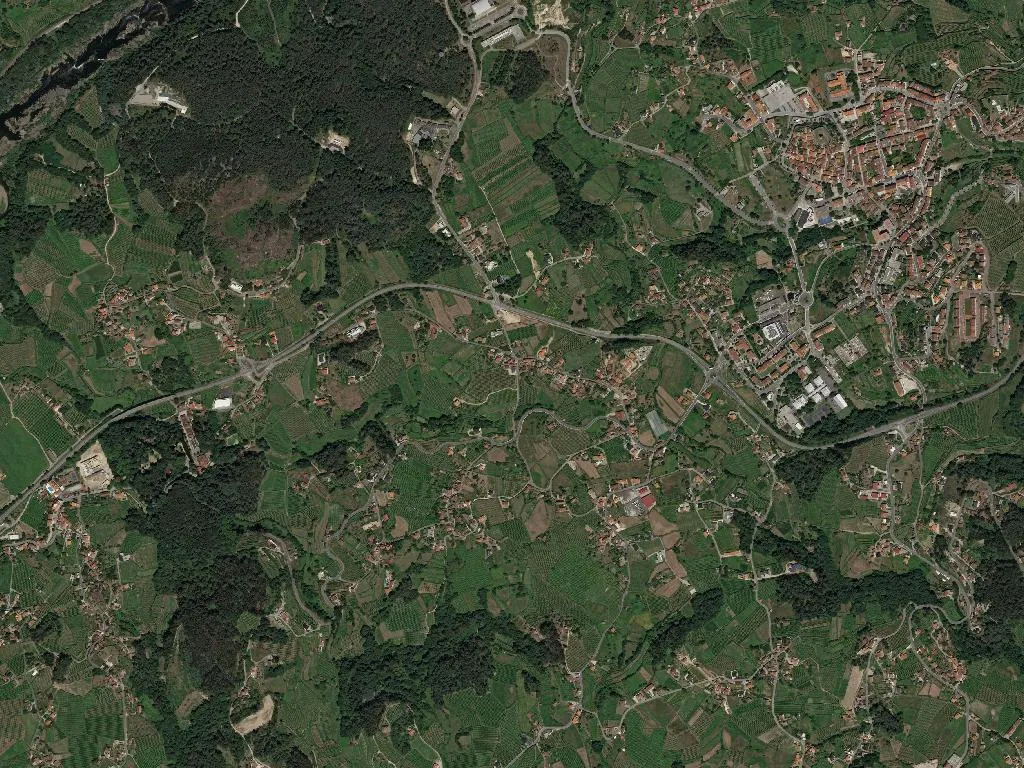
The Minho’s current is a low, unhurried bass line under morning light that slips across terraced vineyards like liquid glass. On the Portuguese side of the river, where Galicia is only a suggestion on the opposite bank, silence has texture: blackbird arpeggios, water turning over stones, the soft click of pruning shears. Between the hamlets of Prado and Remoães the palette is reduced to two colours—moss-green and granite-grey—until a lime-washed chapel flares white on a crest.
Stone that remembers
Ponte da Folia demands a slower stride. Roman engineers threw a single arch across the gorge; later centuries added two more, so the bridge flexes like a short spine above the waterfall that gave it its name. Teenagers use the parapet as a noticeboard for gossip and tentative romance; their grandparents simply call it “the crossing”, as if nothing before or after really counts. In the 1288 royal enquiries of King Dinis, Remoães was elevated to the rank of “honra”, a medieval version of a Michelin star for settlements. Prestige lingers in the slate-and-granite manor houses of Quinta do Pombal and the Cavencas, where snow-white render meets schist the colour of wet charcoal.
Higher up, on Monte de Remoães, amateur archaeologist José Maia Marques picked Palaeolithic chert and pottery from the topsoil in the 1980s—domestic débris 10,000 years older than the parish itself.
Smokehouses and vines
Oak-burning smoke announces the curing sheds before you see them. Inside, sausages hang like burgundy silk ties: Chouriça de Carne, Chouriça de Sangue, Salpicão, all protected by the Melgaço IGP stamp that functions as a passport for pork. The cattle are even better credentialed: Carne Barrosã and Cachena da Peneda carry DOP status, a bureaucratic way of saying the animals have pedigree papers most people would envy.
The local antidote to so much richness is alvarinho-based vinho verde, poured at 8 °C without ceremony or decanter. Its citrus edge slices fat the way a sharp friend cuts through pretension.
Rural chapels—Santa Bárbara, Santo Amaro, the hillside trio known as Capelas da Serra—serve as seasonal beacons. On 15 January Santo Amaro pulls the scattered population of Prado into one tight knot; São João Baptista does the same for Remoães on 24 June. During São Bento’s July feast the churchyard fills with smoke from bifanas grilling over green vine cuttings; even the Atlantic wind forgets to interrupt.
Thermal water and the Jacobean drift
The Melgaço thermal baths sit on a parish boundary so ambiguous that Prado and Paderne still politely argue over ownership. Sodium-bicarbonate water emerges at 38 °C, good for arthritic fingers and hangovers in equal measure. Modernists arrive with spa vouchers; pilgrims on the Caminho de Santiago follow the river murmur and the promise of a coffee laced with local aguardente.
A few hundred metres away, the municipal training centre has turned surplus schoolrooms into athlete dorms. Runners thud along dirt tracks once used by smugglers; families borrow kayaks and disappear up the Minho’s minor tributaries. The permanent population is 445, of whom 183 are over 65. They have watched generational tides the way meteorologists watch clouds, secure in the knowledge that Peneda-Gerês National Park is their back garden, its ridges disguised as gentle folds until you try to cycle them.
Evening light ignites the south façade of Prado’s parish church; the single bell tolls twice and the echo lingers like a held breath. Below, the river keeps its prehistoric pulse, smoothing stones that were here before the first shepherd crossed from the sierra—and will remain long after the last pilgrim steps onto Ponte da Folia, heading for the compostela beyond the horizon.