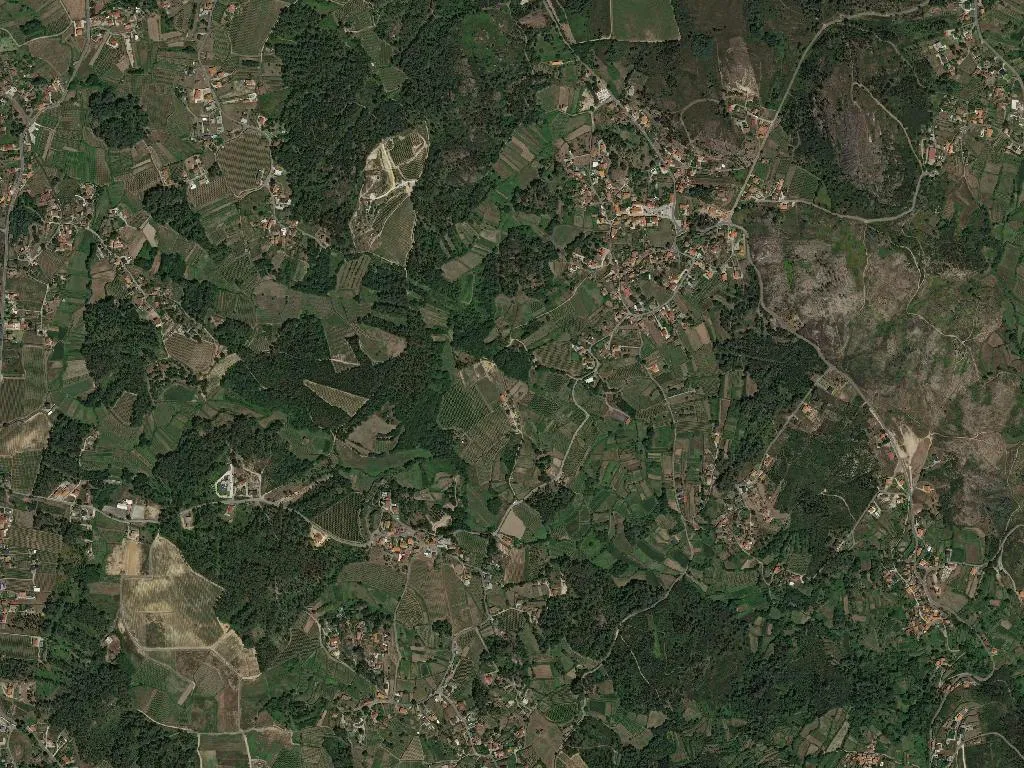
Full article about Cambeses: Minho village where roses predict weddings
Red mud floors, silent organs, 496 souls—Cambeses keeps its own slow time.
Hide article Read full article
Burnt wood at seven, red mud on the floor
The morning begins with the snap of eucalyptus twigs catching fire. By the time you open the shutters the smoke has already drifted across the lane, carrying yesterday’s rain up the chimneys. The soil here is laterite – iron-rich, rust-coloured – and it will follow you indoors, marking every white grout line like a wine stain.
A council that voted itself out of existence
Until 1836 Cambeses answered to its own town hall. Lisbon’s Liberal reforms rolled the parish into Monção and never gave the keys back. The name survives from the Cambes, a Roman family who terraced the hills with olives; their boundary stones still surface when the plough catches. Four-hundred-and-ninety-six residents now occupy 405 hectares – a density lower than most Scottish isles. Half the holdings are owned by Paris masons who fly home for the August fair, lock the gates, and leave the keys with Sr. Armando the butcher.
One church, two chapels, no choir
Mass starts at eight on Sunday; the organ fell silent in 2018 when the diocese pooled clergy from Gandra. Nossa Senhora da Rosa sits 1.2 km south: fifteen minutes on a tarred footpath between kiwi trellises. Local lore claims three white roses delivered to her altar before Carnival guarantee a wedding by year-end. Smaller, shadier Nossa Senhora das Dores offers a granite bench and a view back over the Minho. On the third weekend of August her statue is carried, feet first, behind Baltar’s silver band; the round-trip is three kilometres with 150 m of climb – carry water.
What to eat and where
Ask at Armando’s for “acém para rojões” – blade steak from Barrosã cattle, dark as burgundy, €8 a kilo. His wife will dice it while you wait and toss in a fistful of bay. If blood-rich arroz de sarrabulho isn’t your idea of comfort food, say so when you order. Vinho verde is stacked in the Intermarché at Monção, but turn up at Quinta de Fernando with an empty five-litre flagon and you’ll leave €7 lighter, the wine drawn straight from stainless steel.
Walking the PR3 Cambeses–Moreira–Trute
The signed loop begins behind the cemetery where chestnut trees double as a car park. Seven kilometres later you’ll have crossed the medieval pack-horse bridge at Trute – its granite slabs greasy after rain – and climbed through gorse to a plastic picnic table at 340 m. From here Monção’s keep squats above the river like a stone ship; beyond, on the Spanish horizon, the Xurés ridge flickers in and out of heat haze. Wild boar root the path at night; a walking pole doubles as early-warning system.
Last orders at the café are 8 p.m. sharp. If you miss the last train south, Dona Alda rents a spare room for €25 including coffee and toast; ring two days ahead and bring cash.