Full article about Pias: Where Vinho Verde Hides in Smoke-Blackened Stone
One-stone-bridge village of Monção, scented with Cachena stew and Loureiro must
Hide article Read full article
The smoke-cured beams above the adega door are almost black; your boots settle on the uneven granite lip where generations have paused to wipe grape juice from their fingers. In Pias, silence has a thickness. It breaks only for the faint hiss of the ribeiro slipping under the single-lane bridge, bound for the Minho three kilometres downstream. Afternoon light ricochets off whitewashed walls, throwing the lintels – hand-polished by decades of shoulders – into gun-metal relief.
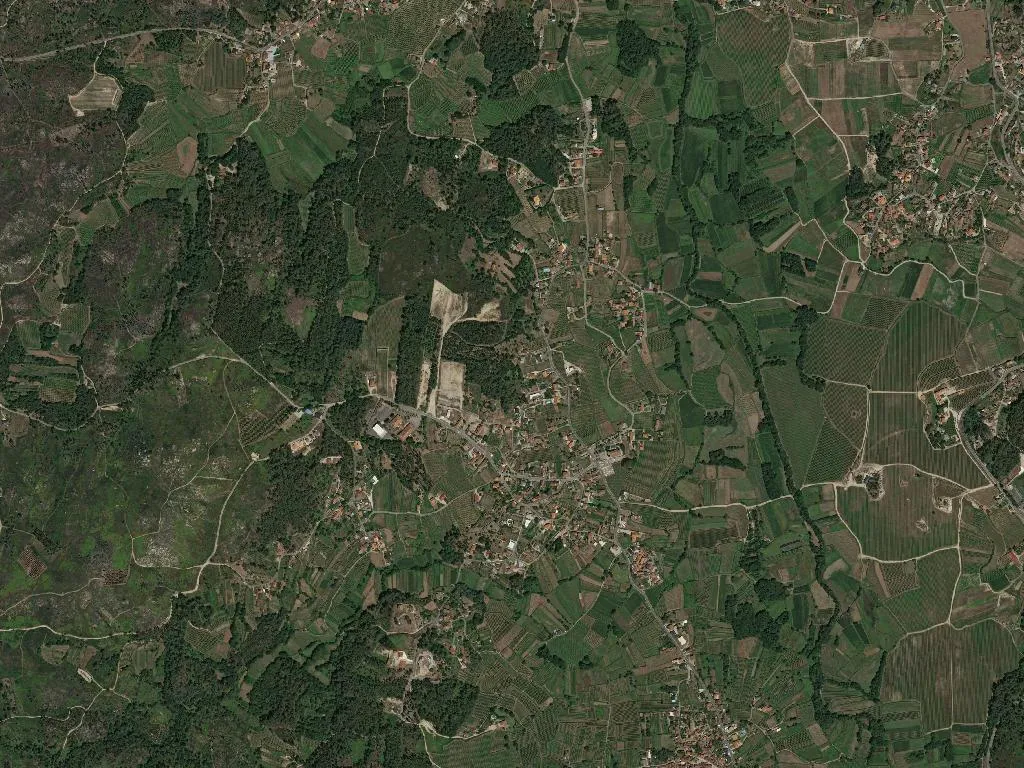
Pias occupies 1,112 undulating hectares at a mean altitude of 113 m, a mosaic of small holdings stitched together by chestnut-wood posts and galvanised wire. Vineyards tilt south-east, the preferred aspect for Loureiro grapes that will become Monção’s sharpest Vinho Verde. At last count, 763 people share the parish; two-thirds are aged over 65 and remember when the stone lagar steamed at dawn and the must ran in open channels. Density is 68 souls per km², which translates as breathing room: gardens large enough for a pig, a pergola and a vegetable plot, plus an unfenced view of the Galician hills.
The meat that maps the land
Two protected breeds define the local table: Barrosã and Cachena da Peneda, both reared on the valley’s dew-soaked meadows. Barrosã cattle – mahogany coats, lyre-shaped horns – yield well-marbled joints that roast slowly in wood-fired ovens. The smaller Cachena, adapted to the Serra’s granite scarps, grazes on gorse and wild fennel; its meat is lean, almost herbal, best simmered into a winter stew with juniper and a glass of red Vinho Verde. Acidity meets fat, the region’s oldest conversation.
Summer devotions
The calendar hinges on two Marian feasts. On 15 August, Nossa Senhora da Rosa draws emigrants back from Paris and Neuchâtel; processions weave through maize fields, brass bands competing with cicadas. The second procession, Nossa Senhora das Dores in late September, marks the safe return of the hay-making crews. Between hymns, trestle tables appear under ancient oaks: linen cloths, ceramic bowls of caldo verde, and the first roast chestnuts of the year.
The rhythm that stays
September mornings rattle with tractors hauling lug crates of Loureiro. Aproned women peg sheets to wire lines strung between schist walls; a cockerel keeps its own time. There is only one place to stay – a low-slung quinta turned guesthouse overlooking the Minho valley – so most visitors base themselves in Monção, five minutes west, and drift here for an afternoon’s slow loop through the vines. The parish council still meets in a former primary school; the café sells newspapers from the day before yesterday. Yet Pias needs nothing more than the sound of wind worrying the poplars and the river’s low murmur, a soundtrack that makes every English ringtone feel suddenly absurd.
As the sun tilts, the vines catch fire – gold, ochre, copper – and the air smells of wet schist and woodsmoke. A single bell tolls, not for prayer but to announce the hour. Stone keeps its own counsel; centuries press down, unhurried and unbothered.