Full article about Portela: Minho Ridge Hamlet Above the Vinho Verde Vines
Portela, Monção: slate-roofed ridge village, Vinho Verde vines, Cachena cattle, August feasts and Paris-returned emigrés.
Hide article Read full article
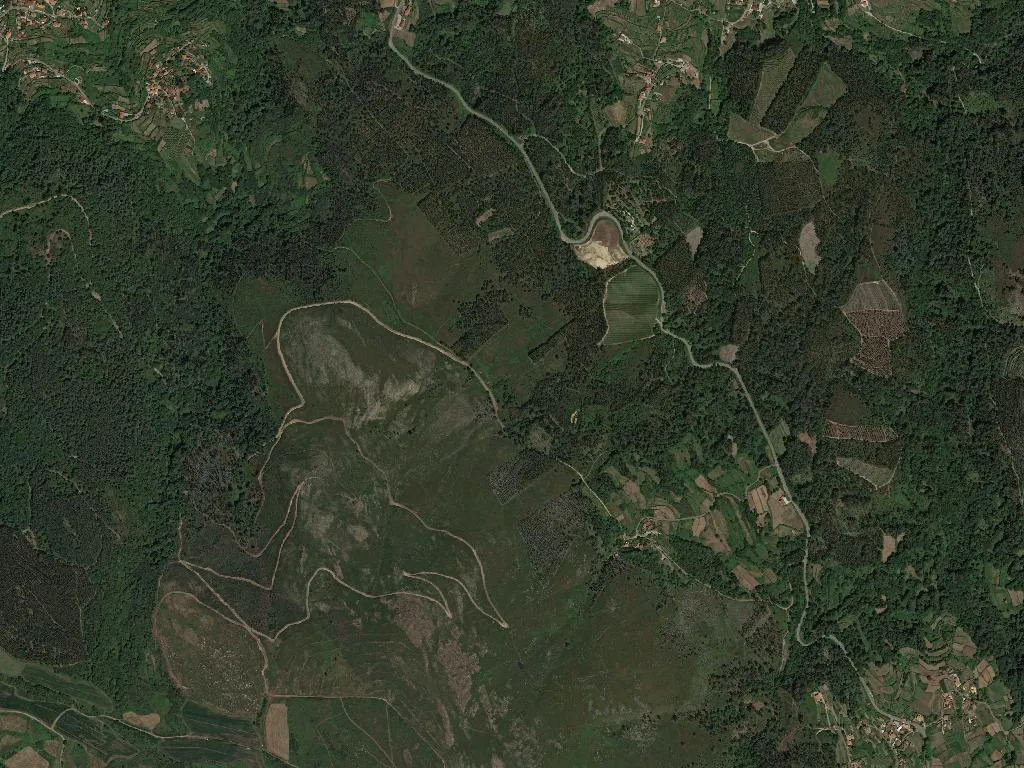
The incline is so severe the engine growls in second gear. Then, without warning, the hill flattens and Portela appears: a single-lane ripple of slate roofs clamped to the ridge at 397 m, halfway between the Minho river and the Spanish border. Census ink says 202 residents; count the mongrels and the escaped hens and you might nudge three hundred.
The vines that keep score
Below the tarmac, the first thing that fills the windscreen is vines. They are trained low to cheat the Atlantic gales, their trunks corkscrewed like arthritic fingers pleading for sunlight. This is 100 % Vinho Verde country, but leave your tasting-note jargon at the petrol station. Here, grapes taste of the January pruning cuts still healing on calloused hands; the finished wine has the bite to slice through rojão pork fat and enough alcohol to persuade Zé António to dance on a plastic chair at 02:00.
Two feast days and an exodus
Every calendar hinges on two pilgrimages: Nossa Senhora da Rosa (late August) and Nossa Senhora das Dores (mid-September). They function as the village’s Christmas and birthday rolled into one. Émigrés who now tile bathrooms in Paris or mind children in Zurich reverse down the lane in rented Clios, eat charcoal-grilled bifanas until the lemon runs down their wrists, pretend nothing has changed, then disappear again. Portela exhales and returns to library-quiet.
Slate, smoke, absence
Houses are the colour of wet gunpowder, the local xisto that drinks in light. Some still wear December’s smoke in their chimneys; others have been locked since Manuela boarded the coach to Lyon in 2004. Yet the doors remain, hinges oiled by superstition: one day she might turn the key.
Cows that apologise
Between the rows, diminutive Cachena cattle graze untethered. They look like extras from a Studio Ghibli film—honey-brown, white-belted, perpetually sorry for something. Their meat needs nothing more than coarse salt; a sauce would feel like an alibi.
Six o’clock gold
When the sun tilts, the ridge turns the colour of oxidised riesling. There are no monuments, no selfie decks, no gift shop. Just the certainty that tomorrow another row wants pruning, another beast wants hay, another bottle of cloudy white will sweat on the café table. Sometimes that is already more than enough.