Full article about Riba de Mouro: granite hush above Minho
Riba de Mouro, Monção—stone lanes, Barrosã cattle, Vinho Verde terraces and August’s Festa da Rosa in Portugal’s loftiest Minho parish.
Hide article Read full article
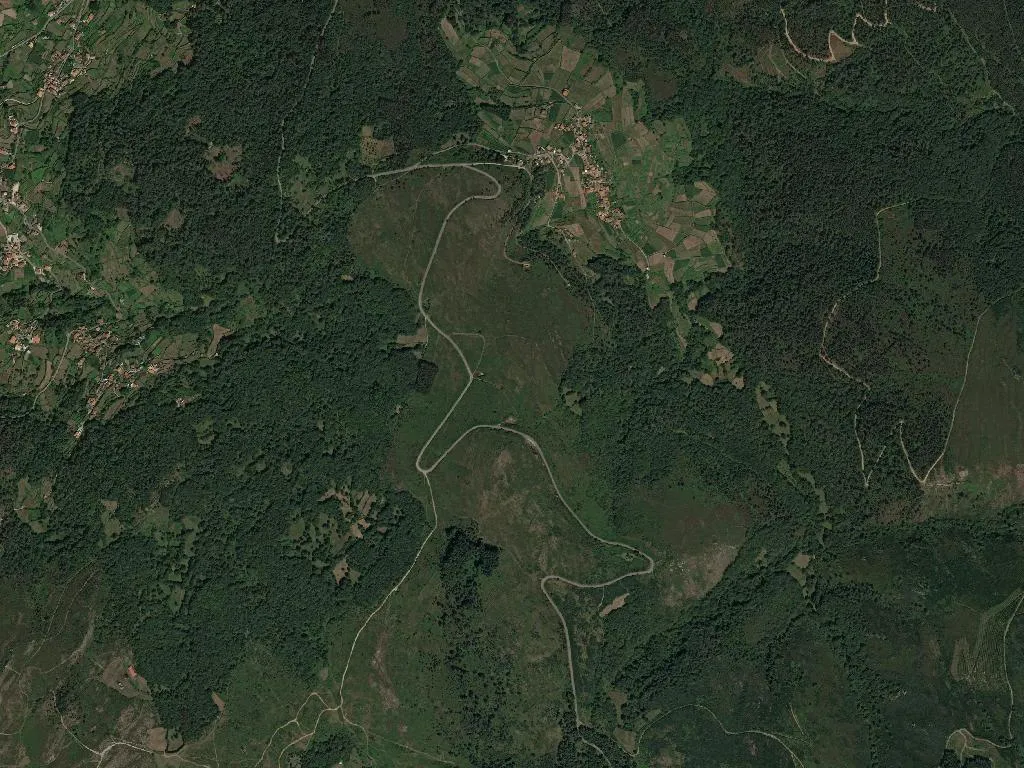
The church bell counts the hours and the sound rolls down the valley like a slow-motion echo. At 732 m above sea level, Riba de Mouro unrolls across a granite spine where gorse pushes through rye fields and the air keeps a pocket of mountain chill even when the sky is brass-bright. Wool jackets stay on the peg by the door; no one is fooled by sunshine here.
802 people share 14 square kilometres, a density so low that conversation travels farther than traffic noise. Walk the single main lane at dusk and you’ll meet more cattle than neighbours. The 2021 census spelled out the arithmetic: 42 children under 14, 209 residents over 65. By the low stone wall of a cottage someone born in 1953 is explaining to a teenager how the ox-carts used to polish the granite ruts you still see on Rua da Igreja. The teenager listens, because there is no rush to be anywhere else.
What the land gives
Riba de Mouro has belonged to the Vinho Verde demarcation since 1908, but vines occupy only the friendlier slopes. Thirty-five smallholders plant Loureiro and Trajadura; the rest of the land is kept for the region’s two protected breeds: Barrosã beef cattle, grazing the communal meadows since 1996, and the dwarf Cachena cows that wander down from the Peneda hills each May to fatten on the parish’s lush river flats. The meat, veined with sweet intramuscular fat, appears at Café Central as a lunchtime bife and at Ti’Lena’s back-room tavern as rojões, nuggets of pork seared in lard and wine. On Fridays Sr Armindo fires the wood oven in Lamas de Mouro and bakes rye loaves that taste of smoke and malt; they are the right vehicle for chouriço that spent winter evenings dangling in someone’s chimney.
August devotion
The Festa de Nossa Senhora da Rosa is held on the first Sunday of August, timed to coincide with the return of children who now work in Switzerland, France, Manchester. At 4.30 p.m. sharp—an hour fixed in the 1954 parish-council minutes—bearers shoulder the painted cedar statue up the hill. After dark the old primary-school yard, closed since the last seven pupils left in 2009, becomes an open-air canteen: sardines at €3, plastic cups of Basílio’s lemon-scented white for €1.50, and a brass band that keeps families dancing until the dew settles.
A clock without hands
There are no listed monuments, no viewpoints with orientation boards. Instead you get the EM525, a lane where cows have right of way; the low whoop of cuckoos moving through the camarinha scrub; and the feel of granite warming then cooling beneath your boots as you climb to trig point 122 at 834 m. Seven small guesthouses—five cottages, two flats—registered in 2023 are almost invisible among the terraced houses. At 18.30 the west light strikes the stone façades on Lameiro and shadows climb the walls built in the local “jeira” pattern, courses pitched to shed rain. Joaquim, 87, still shows grandchildren how to read the angle of a stone by eye; he learnt it from a man born in 1898.
The day ends when the last Barrosã cow clatters into the byre and wood smoke lifts from the chimneys. Forty-three per cent of the working population still draw their wages directly from soil, hoof and leaf. Dona Amélia, born the year after the road from Lamas was tarred, can trace the old footpaths on the palm of her hand. The future arrives here at walking pace, announced by the same bell that measured her parents’ days and now measures hers.