Full article about Tangil: Vinhão vines & granite lullabies
Red Vinho Verde flows through tiny terraces and 18th-century water-mills above the Rio Mouro.
Hide article Read full article
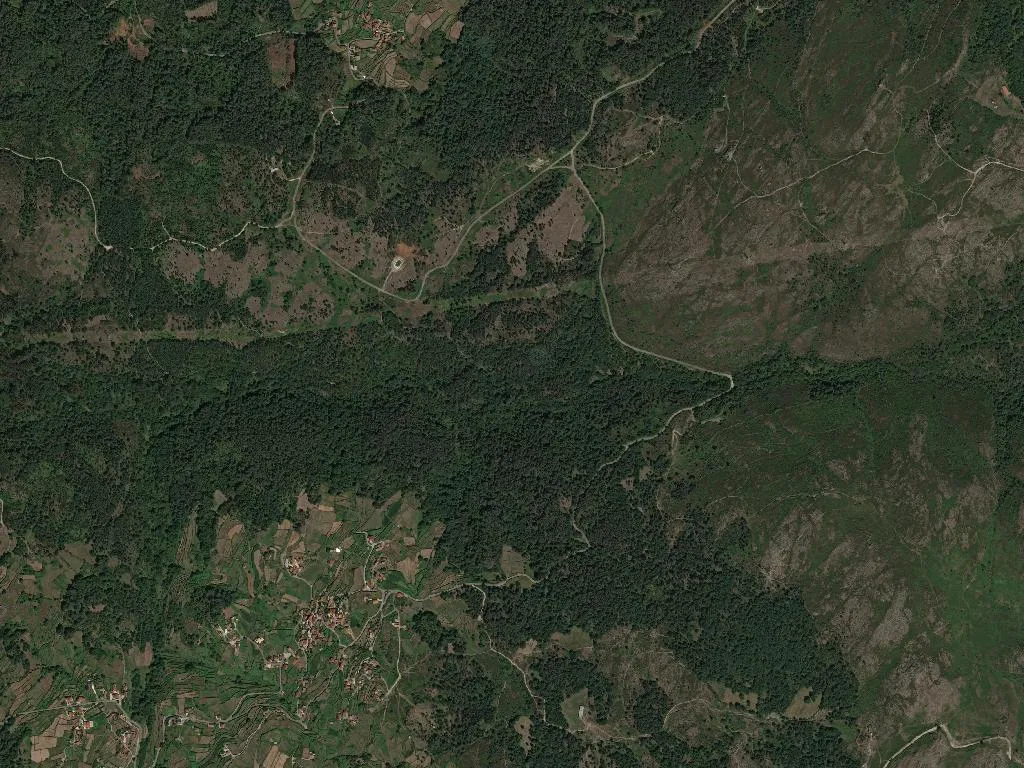
The river announces Tangil before anything else. A low, steady hush rises from the granite bed of the Rio Mouro, travels across slanted meadows, and meets the single asphalt lane that climbs to the village. By midsummer the water lies glass-still, reflecting the pollarded willows and the tiny terraces of vines that stitch the slope like green ladder rungs. At 375 m the settlement arranges itself by gravity’s logic: schist cottages whitewashed at the corners, a pair of water-mills still wearing lichen, and croplands that change colour with the liturgical calendar of plough, prune and pick.
Where the Vinho Verde is red
Tangil sits inside the Vinho Verde demarcation, yet the local instinct is to bottle red. That anomaly is celebrated every August when the village stages its Red Wine Fair — a weekend devoted to the inky blend of Vinhão, Borraçal and Brancelho grown in plots rarely larger than half a hectare. At opening dusk the village choir steps into the square and trades “challenge verses”, a call-and-response custom last heard at threshing-floor dances in the 1970s. During harvest the air is thick with crushed grapes, wood-smoke from chorizo-curing sheds, and the faint cinnamon note of the grandfather drink caldo de pipas — fresh must poured over crusts of rye bread, now almost extinct.
The parish church, rebuilt in 1728 after its tower collapsed, anchors the upper cluster of lanes. Inside, a mahogany altarpiece carved by Valença craftsmen in 1745 shelters a small rose-painted Madonna that a farmer carried home from Santiago de Compostela in 1652. Two feast days still organise the year: Our Lady of the Roses on the last Sunday of August and Our Lady of Sorrows on 15 September. On both, eight men shoulder the heavy “anda” down Rua do Cruzeiro while the São Gregório brass band — founded 1887 — keeps slow step behind.
Mountain beef, river water
The menu is governed by two protected breeds: Barrosã and Cachena da Peneda cattle that graze the high heaths above the valley. Sundays at Café Central (open since 1952) revolve around a wood-fired stewpan of oak-smoked lamb set at five in the morning. Across the river, Tasquinha do Rio grills Cachena pork belly until it dissolves on the tongue, but the house sangria of red wine, lemon and cinnamon died with Dona Aurora — “People just ask for lager now,” shrugs her granddaughter. Of the 629 residents, 294 are over 65, yet every Friday they fire the 2018-restored communal oven for mixed-grain loaves: half wheat, half rye, the dough still carried in wicker trays.
In 2017 the council opened a 120-metre river beach monitored for water quality — a rarity this far upstream. An 8.3-kilometre trail shadows the Mouro past ten granite mills: Penedo, Carril, Meio — all erected between 1780 and 1820 when grain arrived by flat-bottomed boat from Melgaço. Mr António, 83, still grinds maize twice a month at Carril for broa flour, the way his father, and his father’s father, did before him. Stone walls wear emerald moss; heather lights up the cuttings; silence is broken only by blackbirds and the susurration of poplar leaves.
Density here is 27 souls per square kilometre, which leaves generous room for the eye to wander to the ridge line, for the foot to own the dust track for an hour without meeting another tread, for the night sky to reveal the same constellations plotted on Fernão Vaz Dourado’s 1603 atlases. Monção is seven kilometres away, but tour coaches turn west towards Melgaço’s thermal spa. Six carefully restored houses — four in Lugar de Cima, two in Lugar de Baixo — belong to Paris masons who return for August; the rest of the year their shutters are latched and the keys stay with Dona Rosa behind the coffee machine.
At sundown the angled light gilds window panes and stretches shadows across the terraces. Smoke from curing sheds rises straight into still air. The scent is of ageing beef, new wine, earth exhaling after heat. And beneath it all the river keeps its low conversation, indifferent to centuries.