Full article about Trute’s granite terraces glow at dawn above the Minho
In Monção’s highest hamlet, vines, cattle and church bells keep slow, fragrant time
Hide article Read full article
First Light above the Minho
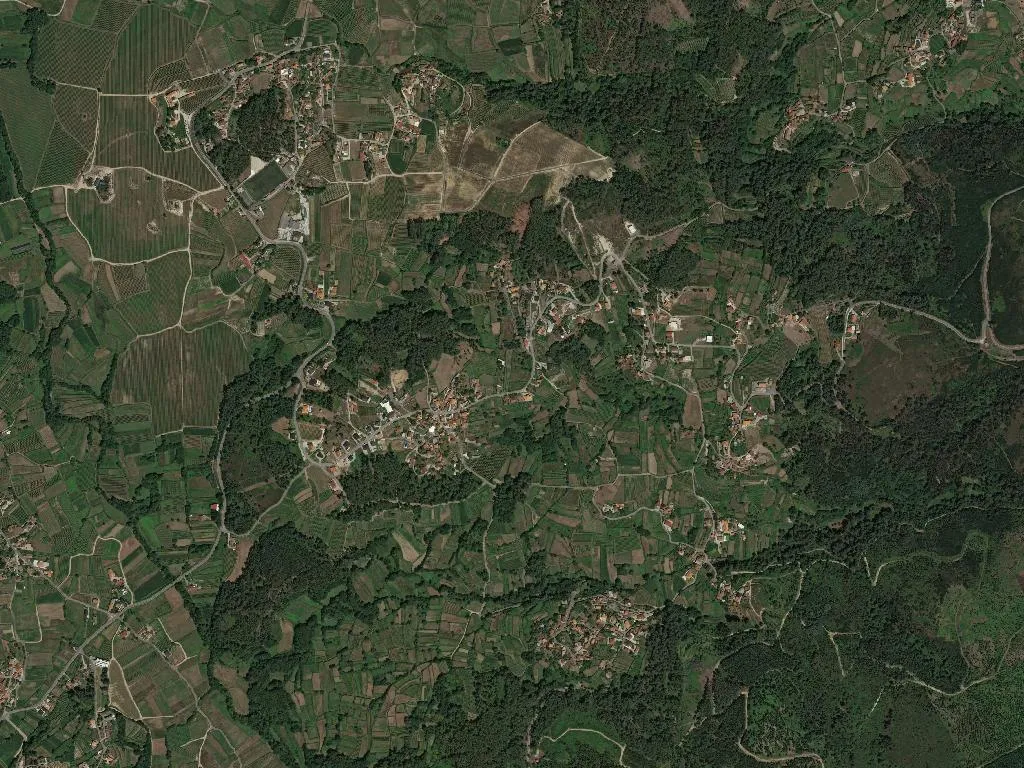
Wood-smoke rises arrow-straight from chimneys while the morning hesitates between mist and the first weak sun. At 146 m above the river that slips invisibly below, Trute wakes slowly – 246 souls across six square kilometres of granite-walled vineyard terraces. The hush has body: only the church bell keeps time, a bronze metronome that makes wristwatches redundant. The school bell opposite has been mute for years.
An Atlas of Everyday Space
Forty-one inhabitants per square kilometre translates into physical elbow-room. Houses do not huddle; they breathe. Between them, the socalcos – narrow terraces first hacked by Romans, then perfected by Benedictine monks – descend in irregular steps, each vine trained on a pergola of chestnut poles and granite posts that throw chess-board shadows at noon. This is Vinho Verde country, and the land is read like a viticulturist’s map: southern exposure for ripening, schist seams for drainage, windbreaks of poplar to blunt the valley gales. To the untrained eye the slope looks casual; to a local it is a manuscript of micro-plots, some no wider than a London double-decker is long.
Two Feasts, Two Rhythms
The parish calendar still pivots on Our Lady of the Roses (last weekend of August) and Our Lady of Sorrows (third Sunday of September). Return flights from Paris, Geneva and Newark thicken as the dates approach. The churchyard overflows, trestles colonise the threshing floor, and the air knots together smoke from Barrosã- or Cachena-breed beef – both PGI-protected mountain cattle – with the wheeze of a two-row diatonic accordion. You learn who has married up, who has bought land, who has stayed away. Absence, too, is noted.
Beef that Tastes of Heather, Wine that Tastes of Now
The kitchen is geography made edible. Cattle browse the same high heather and gorse you can see from the village, their meat dark-fibred, almost garnet, from a life on granite and gradient. It meets its counterpoint in wine fermented in the same morning it was picked: loureiro and trajueira grapes that barely tint the must, sharp enough to shear fat, light enough to invite a second glass. Cellaring would ruin it; the point is immediacy, like cider in Somerset or txakoli in the Basque country.
Dusk re-threads the smoke columns skyward. They dissolve into the same darkness that has folded over the Minho since the iron-age castros on the opposite ridge were lit by peat fires. Only the smokers change.