Full article about União das freguesias de Bico e Cristelo
Bico e Cristelo parish, Paredes de Coura: climb Corno de Bico for Roman roads, baroque chapels, Barrosã beef and mist-soaked vineyards
Hide article Read full article
The Sound Before the Sight
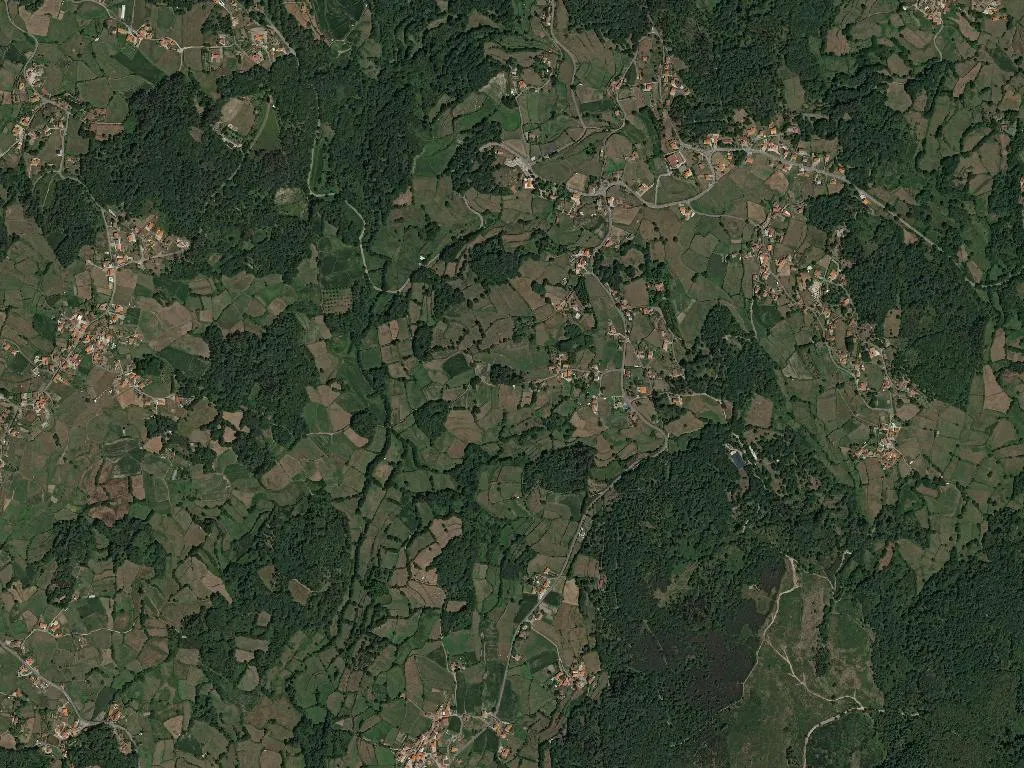
You hear the Coura before you see it: a whisper of snow-melt threading through granite, cold enough to make your teeth ache even in August. At 883 m on Corno de Bico the wind drags dawn mist across terraces of olive-grey schist and over waist-high walls that climb the slope like a giant’s staircase. Here, where the municipality tilts into the sky, the merged parish of Bico e Cristelo survives on granite, vines and the lingering smoke of curing hams.
Stone that Talks, Water that Tells
The names are a geological clue. Bico – from the Galician for “beak” or point – is exactly what the hilltop resembles, its blocks thrown into human silhouettes against the light. Cristelo recalls crystallum, the Latin for quartz flash or the clarity of the springs. Human time is shallow here: mile-stones of the Bracara–Astorga Roman road still shoulder the verge, while Iron-Age castros on neighbouring ridges prove the ground was contested long before Rome reached the Minho. Both villages belonged to the powerful Benedictine priory of Tibães until 1834, then served as separate civil parishes until the 2013 merger left their identities intact if not their boundaries.
Gilded Altarpieces and Manueline Crosses
Inside Cristelo’s parish church baroque gilt explodes towards the ceiling and 18th-century azulejos narrate scripture in cobalt. Bico’s 1700s church of São Tiago keeps a 1603 Manueline cross in its yard – moved there in 1937 after a bullock cart knocked it flat in the lane. Higher up the slope, the chapel of Nossa Senhora do Livramento perches like a stone swallow’s nest; on the first Sunday of May farmers carry the baroque Virgin here in procession – legend says a shepherd found her inside a hollow oak. Behind the hamlet of Cristelo a grid of stone granaries on stilts still air-dries maize, slate roofs flashing after rain – a Minho countryside scene virtually unchanged since the 19th century.
Cooking at Altitude
Barrosã-PDO beef appears as rich stew, rojões punched up with smoked paprika and potato, or simply as thick loin steaks that reach the table still sizzling. The local cozido mixes Galician kale, wine-cured sausage and smoked belly in a clay pot broad enough to dominate the table. Bico’s maize bread, baked in a wood-fired oven, offers a brittle crust and airy crumb – the correct foil for bacalhau à Braga, the cod fried first, then braised with onions, peppers, olive oil and dried oregano. For pudding, powdered-sugar cavacas from Cristelo and little milk cakes arrive with a glass of Loureiro-Pedernã Vinho Verde, faintly pétillant, tasting of green apple and wet slate.
Trails between Granite and Sky
The PR3 loop “Corno de Bico – Source of the Coura” runs eight kilometres past granaries, watermills and six ridge-top viewpoints. Within the 2,170-hectare Corno de Bico Protected Landscape oak, ash and strawberry-tree forest shelter wild boar, roe deer and the circling Bonelli’s eagle; the rose-chafer beetle, otherwise recorded only in northern Europe, turns up here. Narrow irrigation levadas link Bico to Cristelo through citrus orchards and terraces of grafted vines that grip the schist like claws. From the Casal da Azenha lookout the sinking sun ignites the valley’s greens and briefly turns the local slate copper-coloured.
When the church bell strikes six the echo slips down the terraces and dissolves in the valley. Smoke lifts from the ham-curing sheds, the scent of oak logs blends with damp earth, and the Coura keeps sliding – cold, transparent, insistent – from the ridge to the sea.