Full article about Castanheira: Where Chestnut Smoke Scents the Minho Dawn
Walk ancient chestnut groves above Castanheira, hear the twin bell toll and taste warm broa.
Hide article Read full article
The Smoke of the Hearth
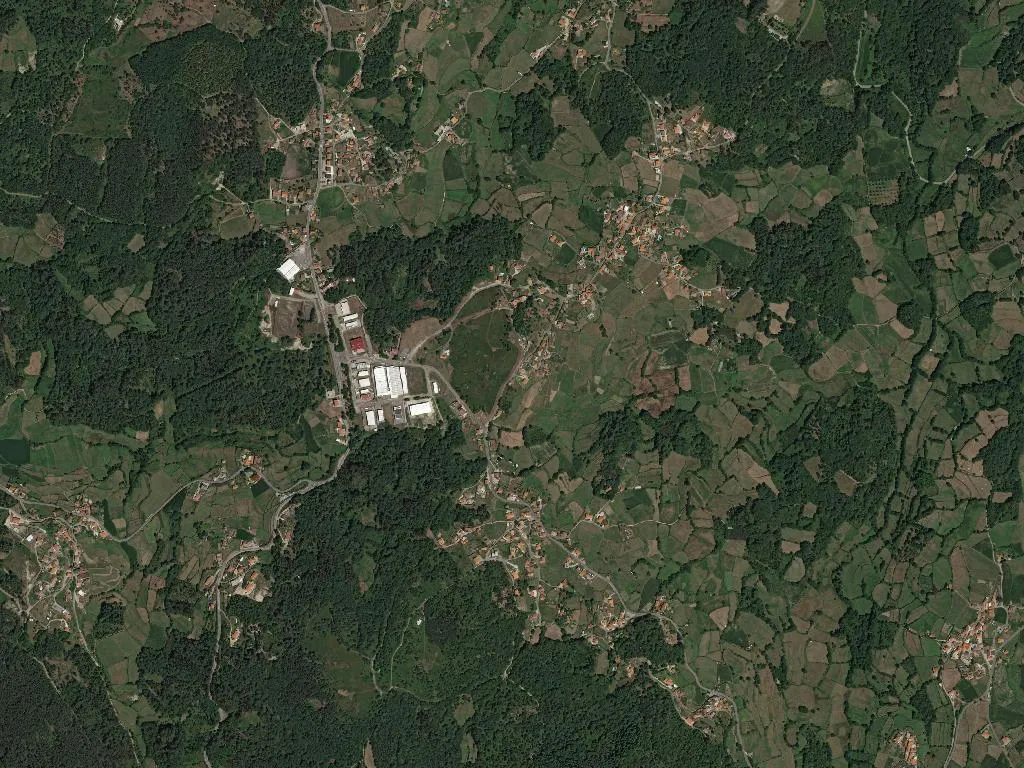
A ribbon of wood-smoke corkscrews into the dawn above Castanheira. Inside a single-storey cottage of dark schist, a loaf of broa cools on a slab of granite; the warm scent of maize drifts towards a bowl of chestnuts still crackling from the souto, the communal chestnut grove that gives the village its name. At nine o’clock the parish bell tolls twice, a low bronze note that feels older than the clock face. Here, 572 m up in the northern folds of Portugal’s Minho region, time is gauged by the sun’s climb over the chapel of Santo António and its descent behind a granite outcrop known locally as Cepo da Vaca.
The Trees That Remember
Castanheira sits on a ridge where chestnut roots prize apart stone. The highest grove in the municipality—at 650 m—lies just beyond Cepo; its trees still bear the spiny burrs that fed my grandfather during the lean years. Between 1890 and 1940 a solitary farmer, Manuel da Cunha, nicknamed “O Castanheiro”, planted five thousand seedlings on common land. Octogenarians now rest their hands on the trunks and swear the same trees carried them through the Spanish Civil War and the lean post-war decade that followed.
Stone That Holds Centuries
The main church, tiled in the blue-and-white azulejos beloved of photographers, is merely the postcard. The village gathers in earnest at the tiny Capela do Livramento, raised in 1856 after a vow made during the last great cholera wave. On the first Sunday of September the procession still climbs the gradient—women in black lace veils, men shouldering the palanquin of Nossa Senhora—until the open-air mass is said among the chestnut leaves. Afterwards, D. Lourdes distributes her festival cakes: flaky massa podre scented with cinnamon and mountain butter.
Down-valley, a granite bridge carries the lane across the Coura. No coat-of-arms proclaims a king; no date is chiselled into the stone. Yet the parapet has been polished smooth by centuries of clogs heading to rye fields or to the single-room school in Paradela. Where the path forks, a wayside cruciform marker still points the way for anyone who doubts the next turn.
Taste of the Serra
You can tell when a Barroso pig has really ranged these slopes: the fat is ivory-white and smells faintly of hazelnuts. My uncle fries his rojões in my grandmother’s iron pot—thick coins of pork, rings of onion, a thread of olive oil—until the edges caramelise. Papas de sarrabulho follow: cornmeal loosened with fresh blood, sharpened with cumin. Sunday’s kid goat is slid into the bread oven after the chestnut logs have burned to embers; the skin blisters to an audible crackle.
By December the smokehouse is busy. Salpicão hangs for three weeks, paio for five; the bacon stays until the day it is diced into a Transmontana bean stew. The wine is loureiro, made in the stone lagar of the Sequeiras and drunk, unchilled, at cellar temperature. Add a sliver of aged goat’s cheese from D. Albertina and a wedge of warm broa and lunch is complete.
October brings Dia da Castanha. Lisboetas descend with woven baskets; cars with Galician plates nose uphill behind them. After a short service the priest blesses the harvest in the Tapada grove; then the fires are lit, metal pans rattle, and someone uncorks the first of many bottles of quente—red wine mulled with aguardiente and orange peel—while a fiddle keeps the circle dancing until the frost forms.
Paths of Water and Green
The River Coura slides below, pooling into swimming holes where teenagers still leap in pants on August afternoons. The Soutos footpath starts at my mother’s gate—up through oak, across the Visconde grove, then down to the Lage stream. Six kilometres that my father walked twice daily when the only classroom was in the next parish. The longer Coura Trail shadows the old irrigation channels; water glides between dry-stone walls padded with moss.
From the Senhora do Livramento lookout the entire Lima valley unrolls. On very clear winter mornings you can pick out the cathedral tower of Tui across the Spanish border, near enough to shout and wait for an echo. Instead, the wind carries eucalyptus resin and the dull clap of cowbells from the Chã de Lamas.
Dusk settles. The potter’s last customer leaves with a still-warm clay bowl. In the square Joaquim and António are locked in the eternal debate over who masters the canto ao desafio—the improvised duet of Minho song. Maria da Conceição, the final great singer, died years ago, but a granddaughter has begun to echo her cadences. Wood-smoke rises again, now carrying sardines grilling on a makeshift tripod. Chestnuts burst on a hot plate as the cold night drops over the soutos. And on the granite bench in front of the church, time keeps its own pace—neither hurried nor slow, simply the rhythm of a ridge that was here long before us and will outlast us all.