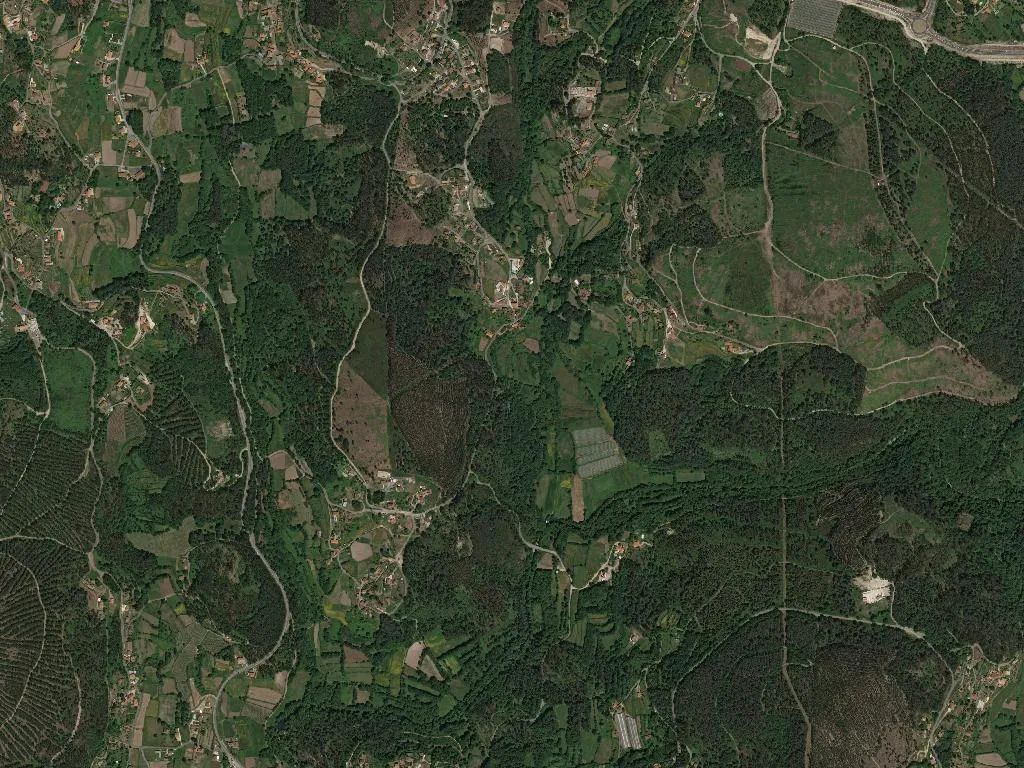
Full article about União das freguesias de Cossourado e Linhares
Hear Iron-Age walls hum with Livramento hymns while Carne Barrosã smokes in Paredes de Coura.
Hide article Read full article
A Granite Chronicle
The grey granite above the café terrace isn’t scenery; it’s the oldest regular at the counter, pulling up a chair between espressos to point out the bedroom window where it was born. The walls of the Cossourado hillfort spill down the slope like the creases on a farmer who still hoed potatoes at eighty – folds that look geological until you realise they are memory. When the church bell strikes noon, the wind carries the last bars of the Livramento hymn and a reminder: climb another hundred metres and you might still arrive at Dona Rosa’s in time for pudding.
Stone that remembers
Between the 5th and 2nd centuries BC someone had the same idea that José-Manuel has today for casting his fishing net: pick the highest ground and watch what approaches. The Cossourado castro straddles two modern municipalities – half in Paredes de Coura, half in Caminha – the way neighbours split a gas bill. Walking the three concentric ramparts is like leafing through a photo album: every slab is dog-eared, every wall etched with a Iron-Age “I was here”. No one carries a map; you follow the scent of rosemary and the blackbird’s fluting.
Calendar with a pulse
The Festa do Livramento is officially 8 September, but the parish starts gathering the night before. The procession drifts down the lane more slowly than a driverless tractor – pausing to greet an aunt, waiting for a dog to cross, stopping to knock dust from a suede shoe. When the brass band strikes up the 1834 Hymn to the Charter, even the priest taps the beat with his spoonful of lamb rice. In June attention shifts to Linhares: Santo António is the excuse to open the cellars early and taste the red before the censer leaves the sacristy. Saints are optional; dinner invitations are not.
A plate that tastes of parish
Carne Barrosã (PGI) is no marketing slogan – it is what remains when the smoke-house has sung its last chorus. The local rojões are tinted with a neighbour’s paprika and fried in another’s lard; the potato is there to mop up the sauce and to prove no crust of bread is wasted. If winter fog lifts from the Coura valley, the bowl that arrives is papas de sarrabulho, so thick that the wooden spoon is the only utensil that won’t melt. To drink, a “little white” that looks harmless but steadies you the way an older sibling does when hoisting you onto their shoulders. Finish with ovos-moles de caneca and a coffee that the doctor prescribes.
Paths that forgive Sunday lunch
The hillfort trail begins opposite the primary school (shut for twenty years, yet the sign still looks freshly painted) and climbs through the wood where children once swapped acorns for marbles. Half-way up, a dry-stone wall cradles a fig tree your grandfather swore was ancient even in his day. From the top the Serra d’Arga lies like a sleeping crocodile across the horizon. There are no “keep out” boards – only Sr Aníbal’s dog, who barks once, then stretches out in the sun again.
When the afternoon sharpens, the smell of burning eucalyptus announces that the caldo verde is about to leave the pot. The granite cools, the bread is soft enough to bend, the wind walks straight through the kitchen. Cossourado and Linhares are not on the map by accident; they sit on the tip of the tongue of anyone who passes through and suddenly remembers an unpaid round of coffees.