Full article about Cobalt doors, chestnut smoke and Loureiro in Cunha’s granite
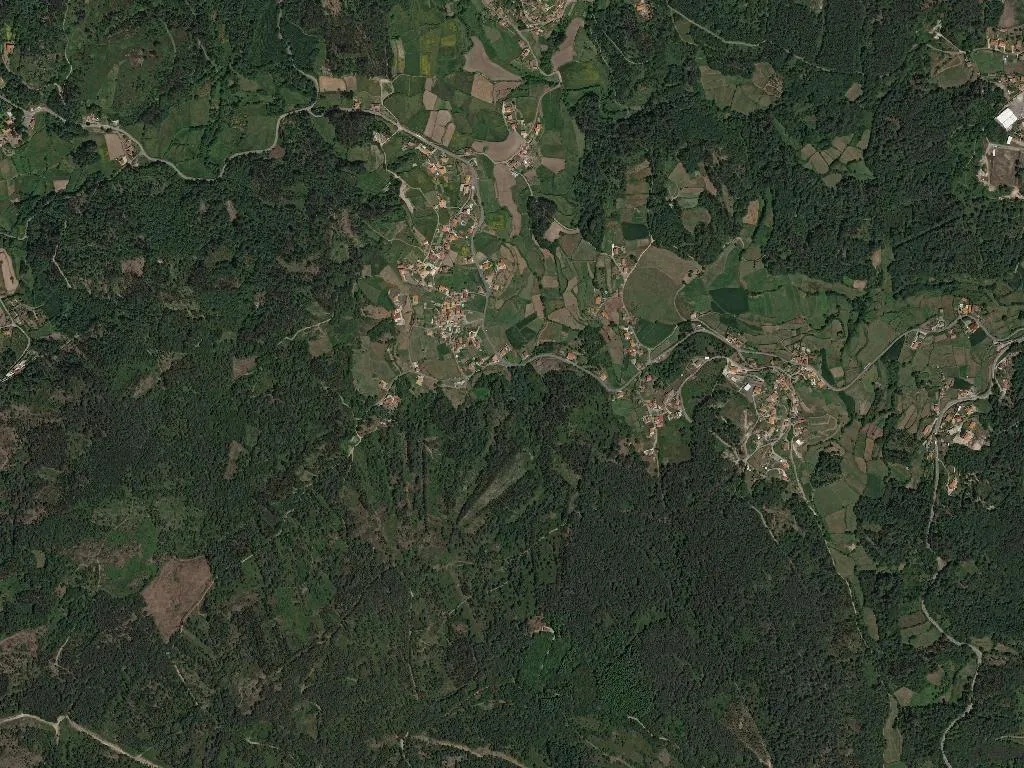
Cunha, Paredes de Coura: granite village at 477 m, cobalt doors, chestnut smoke, Loureiro vines and Barrosã beef
Hide article Read full article
The Bell, the Eucalyptus and the Vine
At half-past seven the church bell sends a single bronze note over the granite houses; it slides down Rua do Cruzeiro and expires among the chestnut trees where the magusto bonfires will roast the first autumn chestnuts. Cunha perches at 477 m, high enough for the air to arrive washed, but still laced with resin from the eucalyptus plantations that the Celbi pulp mills seeded decades ago and with the tang of October vineyard prunings smouldering in back-garden heaps. Granite houses—some cut in 1920 when the village counted 1 052 souls—now number 348; 111 are home to pensioners, only 42 to children. Front doors have been painted the same cobalt blue once thought to ward off the evil eye, and scarlet geraniums survive on iron balconies even when frost feathers the roof slates.
Water-meadows and DOC vines
Within its 994 ha the parish cradles a bend of the River Coura at 220 m and rises to the Malhada do Judeu crag at 537 m. In the water-meadows of Vale de Nogueira farmers still cut hay to feed 180 registered Barrosã cattle—120 of them supplying the Paredes de Coura co-op created in 1996 to protect the DOP-status beef. Every Tuesday and Friday the animals travel 9 km to the municipal abattoir; champion bull “Bastiano”, national prizewinner in 2018, grazed these fields before catching the lorry to Ponte de Lima’s autumn fair.
Vines occupy barely 28 ha, yet the cadastre lists 450 separate plots—an average of 600 m² each. Loureiro claims 65 % of the surface, followed by Azal (20 %) and Pedernã (15 %). In the old lagar—stone-pressed until 2004—Sr Arménio now runs a modest garrafeira, buying must at harvest, bottling it simply and selling it for €3 a litre to neighbours who will drink it within the year. Annual production hovers around 90 000 L, rarely leaving the municipality.
Emigrants, Assumption and All Souls
A laminated A4 sheet taped to the parish-council door is the only poster needed: 15 August, 10 a.m. mass, midday turnip-top soup with smoked meats, 3 p.m. procession of Nossa Senhora do Livramento (an 18-century gilded image restored in 1997), 5 p.m. concertina set by Alberto Lima, 10 p.m. dance under the 2003 sports-hall roof. One hundred and twentyémigrés return from France and Switzerland; they sleep in unchanged bedrooms—clocks still set to 1974—and spend three days speaking Minhotto dialect louder than their children remember.
Two months later, on 2 November, the priest rings three times at dawn. Families file into the cemetery—extended in 1958 and again in 2009—carrying bolinhos de Deus, small olive-oil-and-sugar breads broken and left for the departed. After a requiem mass comes sopa dos mortos: white beans, Galician kale and beef chouriço ladled out in the parish hall.
Who stays, who arrives
Of the 42 youngsters, 35 take the yellow bus to the consolidated school in Paredes de Coura; seven study vocational subjects 40 km away in Valença. Thirty-eight pensioners receive the €212 social pension; 23 qualify for supplementary income support. The GP consults Tuesday at 2.30 p.m. in the council’s former store room; the nurse is here every weekday morning. Café O Cruzeiro unlocks at 7 a.m. for the herdsmen’s bica and shutters down at 8 p.m. when the television news ends. Wi-fi arrived in 2016, fibre in 2021.
Six cottages have been rebuilt with EU PRODER money (2007-2013): three offer salt-water pools, two sport restored wood-fired ovens, one keeps its original maize loft as a reading nook. August rate: €80 a night; February: €45. Walkers can follow the PR3 loop—“Cunha–Fonte da Pipa–Couto de Cima”—6.2 km way-marked in 2018 through gorse and small oak, or drive 3 km to the river-pool where the Coura holds a July temperature of 20 °C.
At 10.30 p.m. the LED streetlights switch off. The village dissolves into eucalyptus scent, cooling granite and the occasional bark of Sr Joaquim’s dog answering owls invisible in the dark. By 5.30 a.m. the first tractor coughs, and the daily cycle begins again.