Full article about Dawn bread & Barrosã beef in Formariz-Ferreira
Formariz-Ferreira parish union bakes corn-bread at dawn, grazes Barrosã cattle on Corno do Bico and serves paprika-laced rojões in Paredes de Coura
Hide article Read full article
Stone, Wood and Fire
The communal oven in Ferreira is already exhaling the first warm breath of corn-bread at dawn. Logs are fed in from six; the bakers read the stone’s temperature by instinct, the way a vintner tastes for tannin. By the time the loaves blister to an umber crust, the Coura valley fog has climbed the 501 m contour and beads the skin with Atlantic damp.
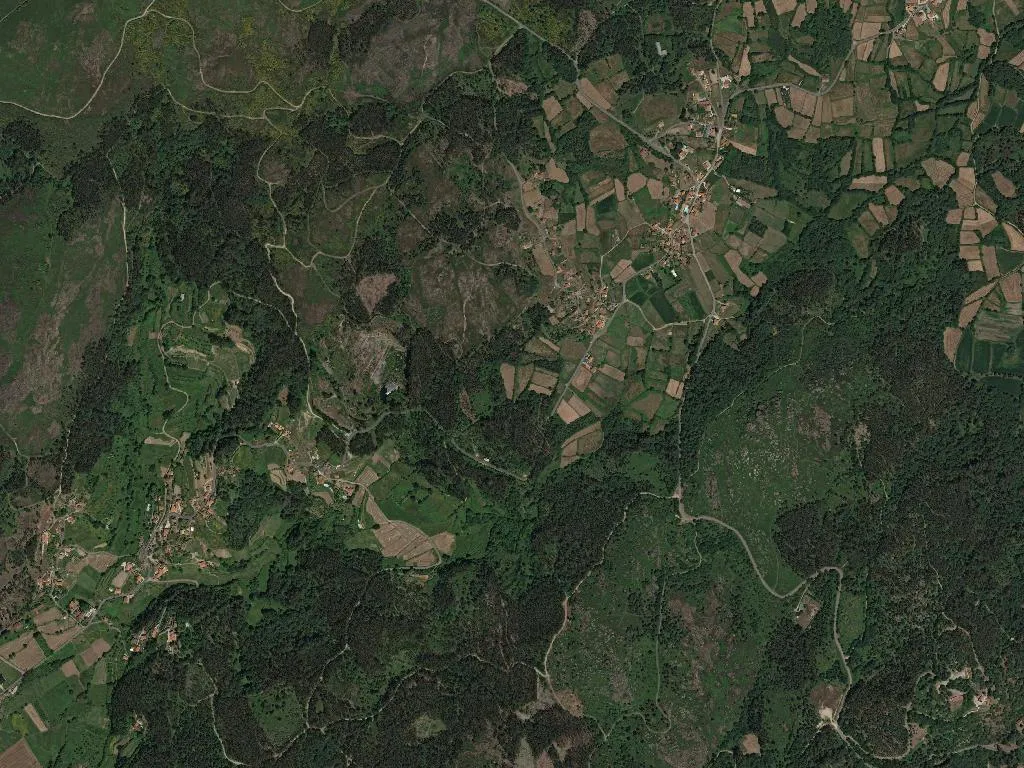
This parish pairing—Formariz fused administratively with Ferreira in 2013—spreads across 1,947 ha of schist-walled terraces carved long before cartographers drew lines. Formariz keeps the grid of medieval repopulation; Ferreira took its name from the smithies that once rang with iron. Between them live 915 people, enough to keep the streams whispering and the eighteenth-century water-mills turning.
Altars and Acantus
Inside Formariz’s parish church the façade gives nothing away: granite block, no fripperies. Push the oak door and 1743 flares into life—Braga craftsmen gilded every curl of a baroque high altar until candlelight pools like molten honey. Three kilometres away, Ferreira’s chapel of Nossa Senhora do Livramento barely bulges above the cottages, yet on 15 August it swells with processional polyphony and the metallic tang of chanfana—goat stewed in black clay until the spoon collapses the meat into paprika-stained sauce. Manueline stone crosses still punctuate crossroads; grandparents once touched them for luck before descending to the fields.
Beef that tastes of heather
Up on Corno do Bico the Barrosã cattle graze slowly, coats the colour of winter gorse. Their DOP-labelled meat—dark, close-grained, veined with sweet fat—returns as rojões à minhota, the cubes seared so the edges caramelise, then flooded with smoked paprika and a splash of Minho wine. In winter it becomes cozido: shoulder, shin, farmhouse blood-and-flour farinheira, a curl of wild-boar chouriça, all tamed by galega cabbage that tastes faintly of the rain that fed it. Corn-bread, still warm from the communal oven, is both plate and utensil; its yellow crumbs freckle the linen like fallen leaves. Locals pour vinho verde from Monção and Melgaço in squat glass flagons—the sharp, lime-edge acidity slices cleanly through fat. Dessert appears without ceremony: pumpkin filhós, sugar and cinnamon snowing over the fried dough.
Where the mills still murmur
The Rota dos Moinhos threads four kilometres beside permanent streams. Six granite mills—Carril, Souto, Outeiro, Rego, Moinho Novo, Cabril—stand in descending order; some still grind the maize their own slopes produce. You hear the wheel before you see it: a low groan when the current slaps the paddles, like a cello bow drawn across wet wood. Schist walls funnel the path, emerald with moss on the north face; cork oaks open skylights where late sun scatters gold doubloons across leaf-litter. Higher up, oak and chestnut close ranks, folding the walker into a hush broken only by water and boot-step.
Night erases the last colour from the sky at 8 p.m.; without distant sodium glow the Milky Way feels almost intrusive. Below, the bakery embers pulse against black stone, holding tomorrow’s heat the way these villages hold onto themselves—slowly, stubbornly, and with no intention of going out.