Full article about Infesta: Dawn mist over Paredes de Coura’s granite folds
Wake to woodsmoke, Vinho Verde and Barrosã beef in a 400-soul Minho hamlet
Hide article Read full article
A Morning Air of Moist Earth and Smoke
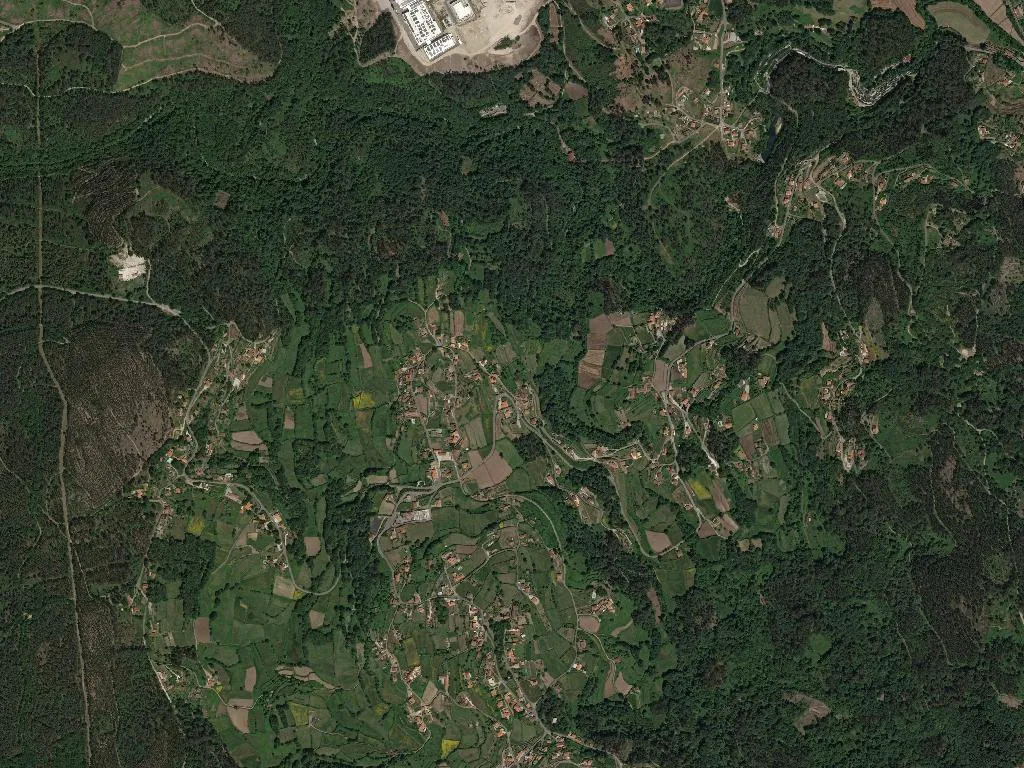
The morning air carries the scent of damp earth and the faint smoke rising straight from the chimneys. Infesta awakens slowly, nestled between the gentle slopes that stretch to 288 metres above sea level, where the green of the fields blends with the grey of granite on the walls of the stone folds. Silence is broken only by the distant bark of a dog and the murmur of water running, invisible, somewhere among the marshy fields.
This small parish of Paredes de Coura, home to just over four hundred souls, lives to the rhythm of a rural life that endures without fanfare. Houses are scattered across 588 hectares of undulating land, where the minifúndio shapes the landscape — narrow strips of maize, vines and vegetable plots succeeding one another like patches on a green quilt. Here, every square metre of fertile earth counts.
Faith that binds
In the parish calendar, the Festa de Nossa Senhora do Livramento marks the moment when Infesta puts on its Sunday best. Streets fill, the churchyard comes alive, and the image of the patron saint is carried in procession amid hymns and the scent of incense hanging in the humid air. It happens on the weekend closest to 15 August — a date circled by those with family here, or by travellers who took a wrong turn on the N101 and decided to stop.
The chapel stands simple, with that quiet solidity of buildings that need no ornament to command respect. Whitewashed walls reflect the clear northern light, and the bell marks the hours with a resonance that carries across the valley. It isn’t the main church of São Pedro de Cristelo — that lies 3 km away — but this is where the priest comes “to the house”, as they say around here.
The taste of place
At the table, Infesta shares the best of the Alto Minho. Vinho verde — that light white wine, almost prickling the tongue, with the fresh acidity that demands robust food — accompanies Carne Barrosã DOP, slow-roasted until the marbled fat melts and the crust turns golden. Chanfana, stewed in red wine and spices until the meat falls apart, warms winter afternoons. These are flavours that don’t lie, born from the Barrosã cattle grazing the slopes and from the patient work of those who understand fire.
Between generations
Walking through Infesta you meet mostly weather-worn faces — 153 elders to just 43 young people, according to the latest census. Conversations happen at the doorway, gestures are slow but precise, and accumulated knowledge about the weather, the land and the animals still passes from mouth to mouth, though fewer young ears collect it.
The eight guesthouses scattered across the parish — cottages and small lodgings — offer quiet shelter to those seeking Minho far from the crowds. There are no obligatory itineraries or Instagram hotspots here: just the simple pleasure of waking to a cock’s crow and falling asleep to the absolute silence of the mountain. Café Missula, at the crossroads, serves an honest espresso and stocks those packets of Maria biscuits that never run out — the sign you’re in the right place.
What lingers from Infesta is precisely this: the weight of silence, dense as the fog that descends at day’s end and wraps everything in a whiteness that erases outlines. And the persistent smell of woodsmoke that, even after you leave, clings to your clothes like a tactile memory of the place.