Full article about Rubiães: Where Granite Meets Schist in Morning Mist
Walk Rubiães’ medieval freight path, taste Loureiro vines draped over apple trunks, sip granite-cool
Hide article Read full article
The scent of wet earth and stone
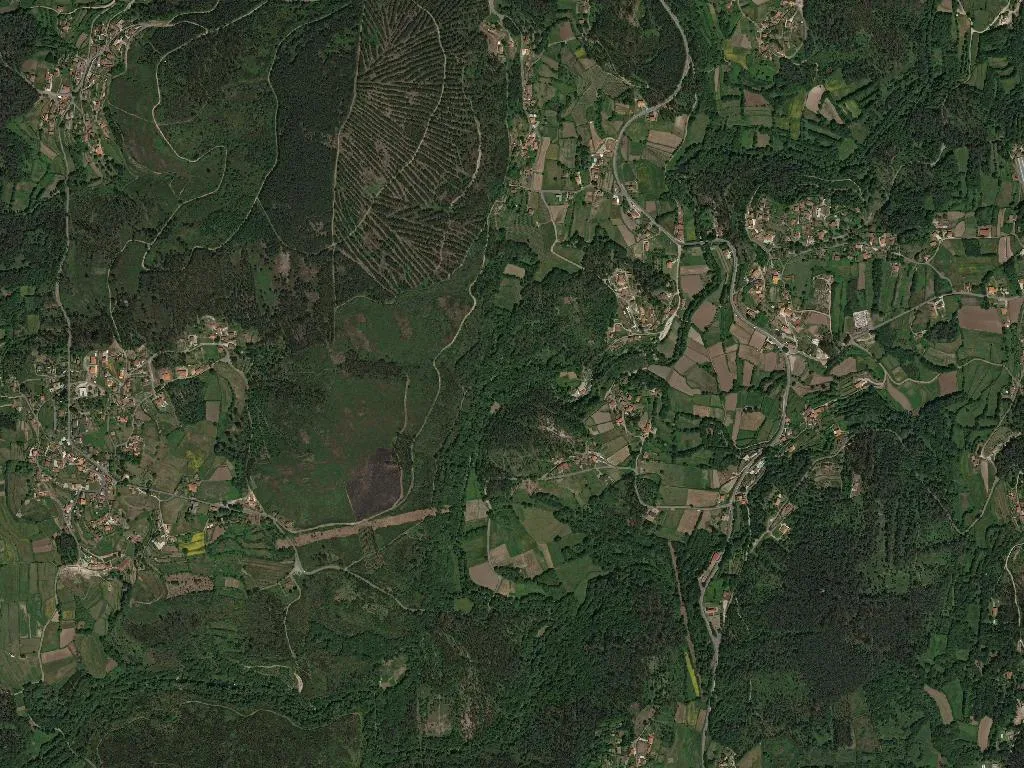
Fog lifts from the valley like a slow curtain, releasing the smell of moss, granite and schist. In Rubiães, two lithologies share the same slope: pale granite to the west, gun-metal schist to the east, split by a seam you can trace with your thumb. Pine and oak ascend in alternate bands until the canopy thins and the River Coura glints below, hidden by willow but dictating every terrace, every wall, every plot of kale still hoed by hand.
The dye plant that baptised the village
The name comes from Rubia tinctorum, once cropped for Turkey-red dye. Inside the eighteenth-century parish church—Nossa Senhora do Livramento—an exuberant gilded altarpiece is lit only by wax candles; outside, a stone crucifix marks the spot where processions once paused to pray for the plague-dead. The settlement belonged to the bishops of Tui, and the medieval freight route into Spain still survives as a footpath flanked by shale walls and gates warped into abstract sculpture.
Wine hung from trees and Barrosã beef
Order sarrabulho rice—inky, clove-scented, thickened with pigs’ blood—or rojão pork belly punched into roast potatoes. In autumn, pumpkin porridge sweetened with mel de abelha appears on café counters. The local Loureiro vines are still trained up apple and chestnut trunks, a pre-phylloxera pergola system that keeps the grapes ventilated in the humid Coura valley. Pair the resulting Vinho Verde with DOP Barrosã beef, long-simmered in chanfana or cozido, the meat collapsing into its own marrow.
Calendar of drumbeats and brass
The first Sunday after 1 September: the parish carries Nossa Senhora do Livramento’s canopy along cobbled lanes, followed by an open-air mass and a night-long street party. In late June, the municipality’s Festas do Concelho fills the river beach at Tabuão with folk dance, hand-loomed stalls and bifana sandwiches soaked in garlicky pork jus. Return visitors book the same rooms year after year; nothing new arrives except the date.
Trails where shale meets granite
Climb the Monte da Costa and the valley tilts like a green wing: eucalyptus on the ridges, rye terraces below, the Romanesque arcade of the Codeceda aqueduct half-drowned in ferns. Abandoned watermills still turn when winter spates race through. Wayward pilgrims leave the official Portuguese Camino here, trading scallop shells for silence. At dusk the stone walls divide into two distinct hues—buff and charcoal—an unresolved argument the earth never settled.