Full article about Vascões: Where the Bell Splits Atlantic Fog
Granite hamlet above Vinho Verde, 218 souls, vines on schist, frost in August
Hide article Read full article
The bell that measures the day
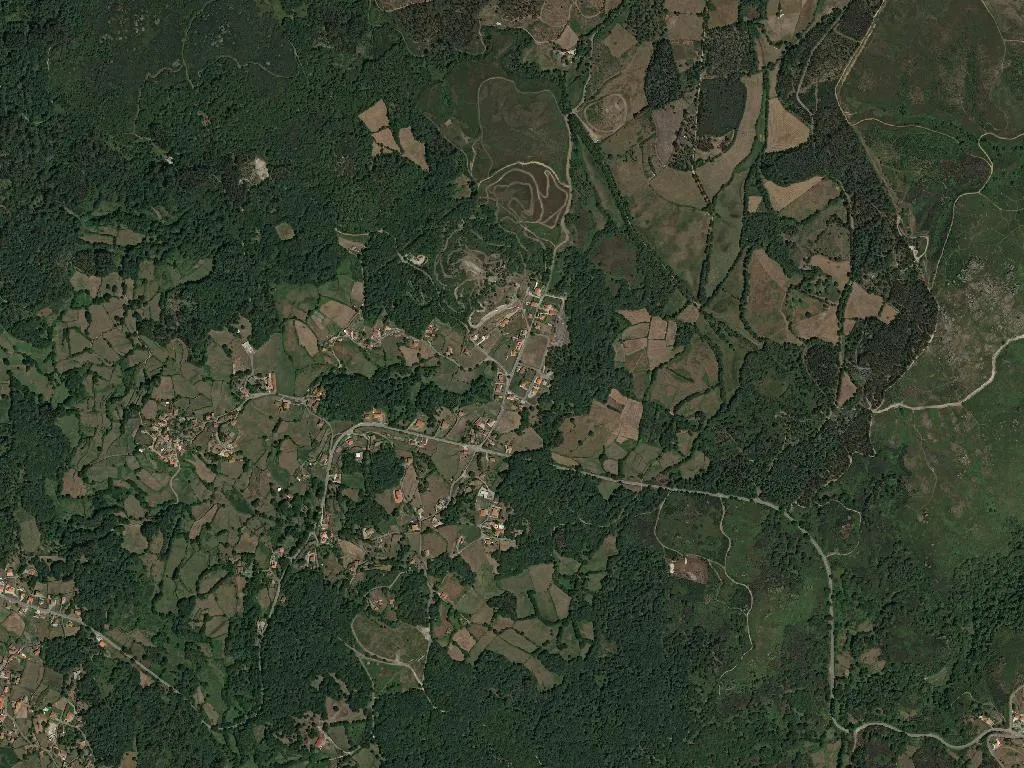
At 604 metres the church bell releases a single note that rolls across the valley and is answered by granite. In Vascões, the northernmost scatter of stone in the municipality of Paredes de Coura, the land breathes vertically: vineyards climb schist terraces, oak-dark waterlines slice downhill, crests of gorse and heather catch the Atlantic weather that slips across the Spanish border only 20 km away. You are still inside the demarcated Vinho Verde region, yet the altitude hauls in nights cold enough to silver the grass even in August and a morning fog that loiters until the sun clears the ridge.
A census you can read with your eyes
Two hundred and eighteen people share 6.17 km² of slope – a density of 35 souls per square kilometre, lower than the Scottish Highlands. Two-thirds are over 65; just 23 children appeared in the 2021 roll. Shutters stay closed Monday to Friday, gates open only when the weekend brings back offspring who now work in Porto or Toulouse. Every parcel of earth is known by the hands that first turned it, and the silence between chimneys is measured in generations, not minutes.
Climate as clockwork
Thermometers here have bottomed out at –7.5 °C (January 1983, the coldest spot in the entire council). In high summer the same gauge can swing 18 °C between noon and nightfall, tightening the skins of late-ripening Loureiro and Trajadura grapes. Old vines, trained high on pergolas or low on single cords, root into a sandwich of draining granite and water-retentive schist; the resulting wine carries the tense, stony spine that sommeliers call “Atlantic tension” and local cooks match with Barrosã beef grazed on the same windy plateaux.
Two Sundays that repaint the year
Community life condenses into two dates. On the last Sunday of August the parish honours Nossa Senhora do Livramento – a 19th-century procession that now doubles as a home-coming festival for emigrants who drive south from French suburbia along the A28 and up the N203 from Cunha. Populations triple, makeshift grills appear in doorways, and the village brass band rehearses marching songs that echo off the same granite that once rang with smithies. Twelve weeks earlier, during the first fortnight of June, the municipality itself throws a twin-saint party for Santo António and Nossa Senhora das Dores; rockets snap across the valley, then the quiet returns with the wind.
The privilege of not being listed
There is only one licensed rural guesthouse in Vascões – no boutique restoration, no viewpoint signposts, no Instagram geotag. To stay you must be invited or deliberately seek isolation. Dawn begins with the bell of the 1866 mother church (itself built over a 16th-century hermitage) and a mist so thick the valley feels like a held breath. By the time the fog lifts, the day is already half written in the smell of wood smoke and the lowing of cattle heading up to the high pastures.