Full article about Azias
Terraced vines, russet Barrosã cattle and 303 villagers on the lip of Peneda-Gerês
Hide article Read full article
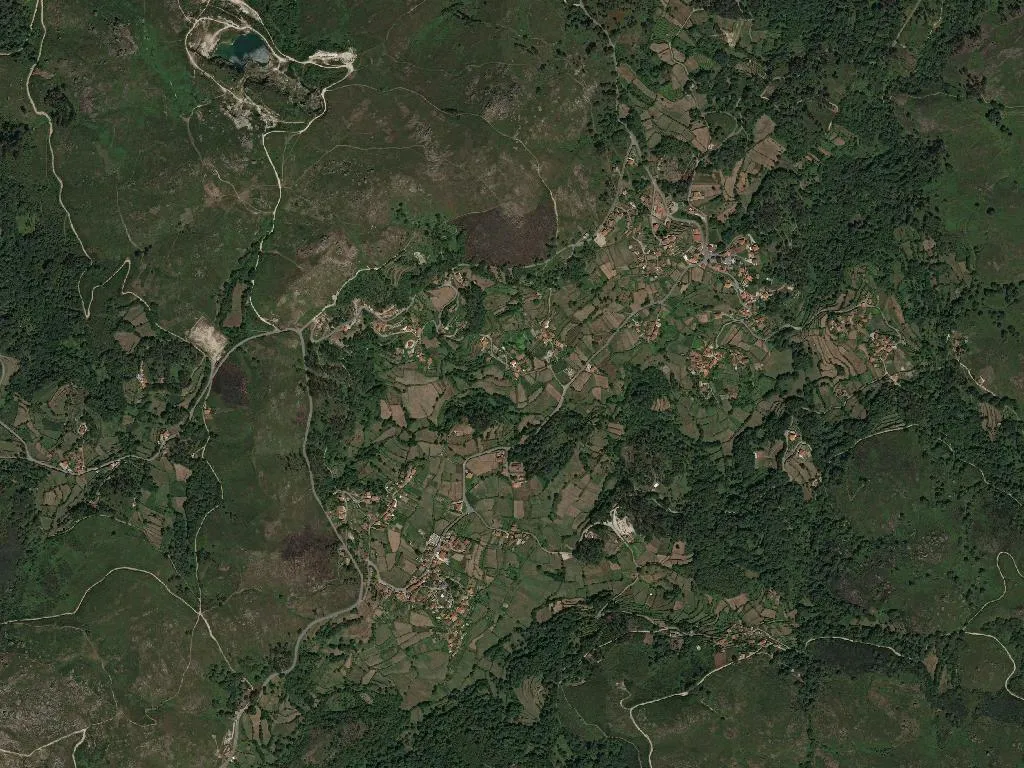
Granite shoulders its way to the roadside just above the Lima valley, blotched with acid-green lichens that only colonise air NHS-clean – in other words, almost nowhere else on the continent. The lane roller-coasters between waist-high walls of stacked schist, oak boughs meeting overhead like net curtains in a grandmother’s parlour. At 427 m Azias slips into the buffer zone of Peneda-Gerês National Park; the mountain begins to call the shots – first in the terraced smallholdings, then in the spring chill that still grips the ribs at breakfast time.
The parish folds across 844 ha of south-facing slope given over to high-wire vines whose sharp, lime-tinged Vinho Verde can slice through the fat of a chanfana stew, and to meadows where Barrosã and Cachenha cattle – russet, lyre-horned, officially protected – graze within sight of their abattoir appointment. The meat is dark, close-grained, tasting faintly of wild bilberry and broom.
Between valley and ridge
Last census: 303 souls. One glance around confirms it – 123 are over 65, only 18 under 14. Arithmetic, not tragedy. Granite cottages still glow evening-light pink behind lace curtains of kale and beans; smoke curls from winter chimneys curing chouriço; vegetable plots shrug off late frosts without complaint.
On 24 August the Festa de Nossa Senhora da Peace and, a week later, the Romaria de São Bartolomeu double the head-count. Emigrants fly in from Lyon and Newark, the churchyard fizzes with gossip, sardine smoke drifts through the chestnuts. By Tuesday the silence returns – not emptiness, but the habit of listening to wind in pines and a neighbour’s tractor two kilometres away.
Stone gateway to the high country
The park begins without sign or ceremony. No fences, just a sudden density of oak and holly, schist replacing dressed granite. Azias is the last place with a shop and a café where you can still buy a loaf before the serious ascent.
The Portuguese Coastal Camino cuts through the village. Pilgrims in scallop-shell stitched packs refill at stone spouts whose water is cold enough to make a molar ache. A single house rents two attic rooms: wake to cockerel and woodsmoke, step outside and someone will wish you “Bom Caminho” before you reach the corner.
Late afternoon light ricochets off west-facing façades; the granite hoards heat like a secret. On stone threshing floors maize cobs dry to the colour of burnt butter – later they’ll be milled for the weekly broa. Azias makes no promise of spectacle or soft edges. It offers the rasp of granite under fingertips, the iron tang of spring water, the lung-stretching tug of altitude. When you leave you carry, along with dusty boots, the thin mountain air and the faint smell of woodsmoke that says you were, for a moment, admitted.