Full article about Boivães: Dawn Drums Echo in Stone-Cold Silence
Chestnut mist, granite granaries & thunderous bombos at 373m in Lima’s last ripple
Hide article Read full article
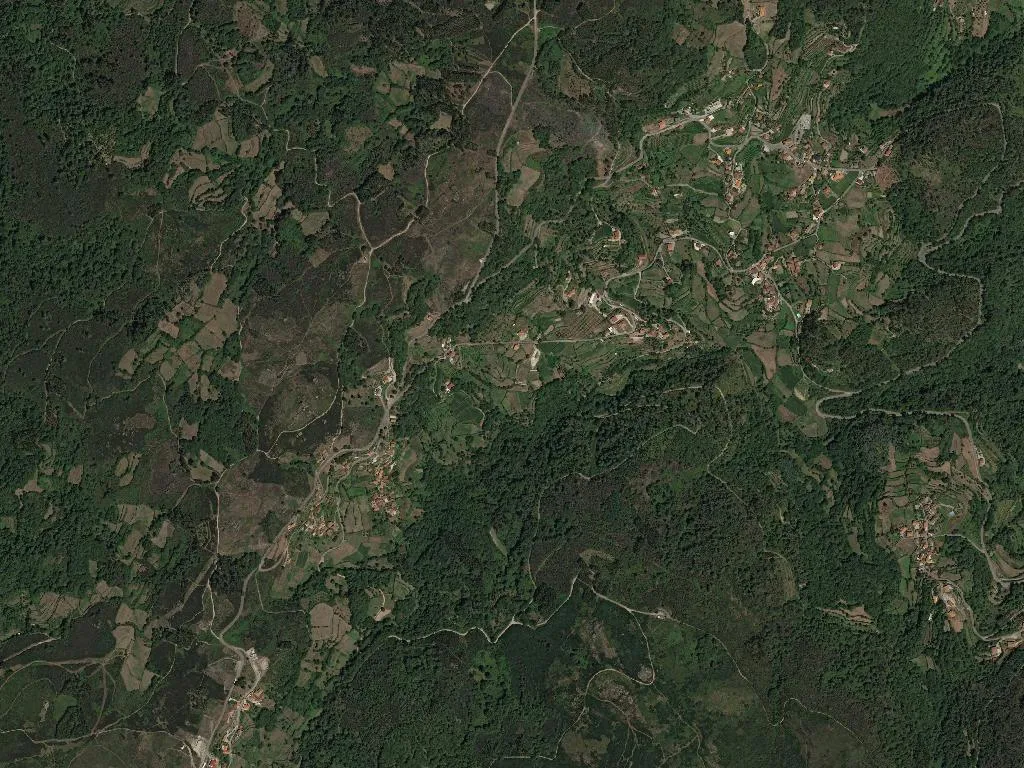
The bass drums arrive before the procession does. At dawn in early September, when the Lima valley is still muffled in chestnut-mist, the bombos roll downhill like distant thunder, announcing that Boivães is waking for Nossa Senhora da Paz. The village — 264 souls scattered across 38 sq km of granite and green — sits at 373 m, the last ripple of land before the Peneda massif. With fewer than seven inhabitants per square kilometre, the silence between houses is almost architectural; stone granaries and schist-walled lanes remain exactly where labourers left them a century ago.
Stone that speaks, stone that prays
The parish church, rebuilt in the 1700s but rooted in a medieval core, rises from a granite outcrop at the village’s highest point. Inside, gilt-carved angels spiral round a baroque high altar, while 18th-century blue-and-white azulejos narrate the life of the Virgin in glazed panels — the reason the building is listed. Outside, a 16th-century cross keeps watch over the graveyard, its Celtic knot-work half-erased by rain. A twenty-minute walk south, on the hill that surveys the Lima, the chapel of São Bartolomeu has stood since 1653. Legend claims the saint’s image was hidden here during the Moorish campaigns; what is certain is the view — a 270º sweep of oak and chestnut that flames rust-colour by late October. On 24 August, villagers carry the statue down to the square, ladling out turnip broth with rojões (cumin-spiced pork belly) while accordions launch the vira, Portugal’s answer to a brisk ceilidh.
Highland beef, slope-borne wine
Boivães tastes of altitude. Barrosã and Cachena cattle — both DOP-protected breeds with sweeping horns and chestnut coats — graze the surrounding bogs and granite meadows, walking to the village butcher twice a week. The meat turns up as rojões à moda de Ponte da Barca, flash-fried then simmered in smoked-garlic lard, or as kid goat slow-roasted over chestnut embers. Each plate demands a glass of Loureiro-based Vinho Verde from the south-facing terraces that step down to the Boivães stream: light, lime-edged, faintly spritzed. In January, the Cantar das Janeiras choir threads from door to door, trading carols for bolo rei, smoked salpicão sausage and glasses of the same wine, now a year older and rounder.
Pilgrim path, granite horizon
The Northern Way of the Camino slips through the village, way-marked with yellow arrows and scallop shells. After crossing the 1785 five-arch bridge, walkers pass stone espigueiros raised on mushroom-shaped feet, then climb into oak forest where the only soundtrack is the Lima’s undertone. Ten kilometres on, the gates of Peneda-Gerês National Park open onto trails that zig-zag past the Preguiça ridge and the Senhora da Peneda viewpoint. Tiny subsistence plots of maize and potatoes interrupt chestnut stands, their leaves already yellowing when the first magusto bonfires spit in November.
Dusk empties the hill of São Bartolomeu. What remains is the scent of wood-smoke drifting from chimneys, the cold wind that funnels up-valley, and, somewhere beyond the ridge, the bell counting out the Angelus. The chapel granite still holds the day’s heat — stone warming fingertips, reminding you that in Boivães the landscape outlives its people, and the drums will sound again next September.