Full article about União das freguesias de Crasto, Ruivos e Grovelas
Hear the bell roll over rye terraces, smell oak-wood and fresh loaves in Crasto, Ruivos e Grovelas, Ponte da Barca’s hidden triple-village
Hide article Read full article
The Bell’s Echo
The church bell strikes three; its bronze note rolls downhill, skims the rye terraces and dissolves beside the granite calvary. In Ruivos no one lifts a curtain to count the chimes – the valley already knows it is mid-afternoon. What follows is a silence you could lean against, thick as the slope itself, broken only by a blackbird rinsing its song in the ruined mill and by the scrape of Celestino’s gate as he fetches logs. The air smells of green oak, and if the breeze shifts it carries the yeast-breath of D. Rosa’s Thursday loaves sliding from her wood-fired oven.
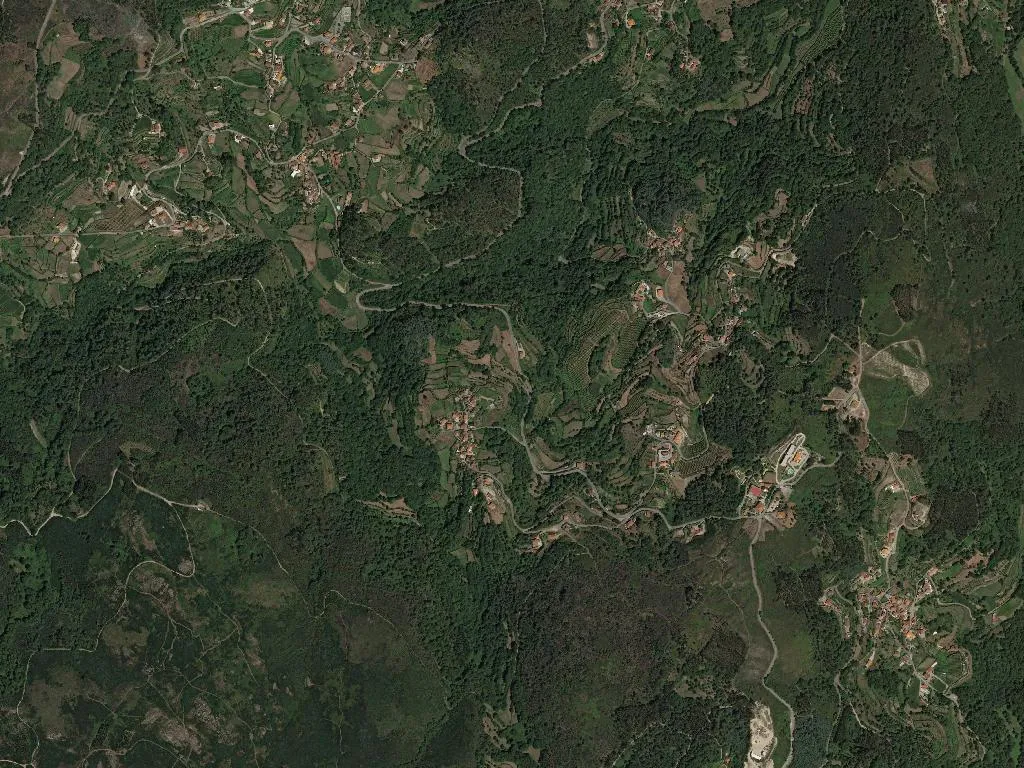
Crasto, Ruivos and Grovelas were knitted into one civil parish in 2013, yet the maps have always been wrong: a single stream waters all three, the same medieval pilgrim shortcut to Santiago cuts across them, the same Atlantic wind lifts the smell of manure from one hillside to the next. Cartographers insist on 954 hectares; locals measure distance by the slow walk from the chapel of Nossa Senhora da Paz to Crasto’s wayside cross, allowing a pause to drink at Póvoa spring.
Stone, water and what remains
Crasto grew where the stream slackened enough to build. Schist cottages climb the slope like limpets, one roofline treading on the next so no arable inch is lost. The watermills still stand – wheels frozen mid-spin, paddles locked to axle – yet after January’s cloudbursts the Pimenta mill sometimes creaks a half-turn, as if remembering the day it ground the valley’s rye.
Ruivos’ church door is pure Manueline lace, carved so thin the granite seems folded rather than chiselled. At noon the stone blanches and you can pick out the bullet nick French dragoons left in 1809. Inside, the air is beeswax and centuries of candle-smoke sunk into oak. In Grovelas the gilded altar is flaking; an angel is missing an eye, the Virgin smiles as though she knows the restorer’s ladder will never arrive.
Cattle that keep the clock
At seven o’clock sharp the Cachena cattle leave for the high branas without a herdsman. June takes them up, October brings them down; in between they graze where they please. After three days in an oak-smoke shed the beef wears a scent that clings to your jumper for a week. The ensuing stew is thickened with wild thyme torn from the cistern wall and sharpened with a drizzle of so-green olive oil it burns the throat.
Tavern menus do not exist. You ask what there is; you eat what appears – lamprey lifted from the Lima when the river allows, crackling the day the pig is slaughtered. Wine is white, poured into clay cups that leave a chalk film on your lips.
A path that climbs without haste
The PR3 trail begins below Crasto’s mill and climbs a loose-schist footway. First stop: a chestnut grove fruiting since before your grandmother’s war. Next, the levada that once fed the millrace; the water has gone, but the stone channel keeps its promise. At the top a slab of granite serves as lookout – enough to watch the Lima bend at Gaio and the ridge dissolve into villages whose last inhabitant died of old age.
The descent into Grovelas threads walls where thyme sprouts and children sign their names in graphite shale. A river-beach of overnight sand curls beside the stream; in August it smells of Ambre Solaire and charred sardines, by September only of cold water and moss.
What stays
When the sun drops behind Ruivos’ cross the valley slips into shadow and the wind lifts the peppery scent of star-of-Copper, a night-opening flower. D. Rosa gathers her sun-bleached linen, Celestino latches the byre gate, the bell stays still – weekday, no Mass. Silence returns, a dog barks somewhere across the rye, wood-smoke leaks from one chimney, and you know that tomorrow the Cachenas will climb alone, the stream will roll another stone downstream, and the three-o’clock bread will be lifted from the oven as always.