Full article about Granite Eyrie of Sampriz, Where Lima Valley Rolls Below
Stone terraces, stubborn Cachena cows, churchyard silence: Sampriz lives 427 m above the Lima.
Hide article Read full article
A granite balcony that stares down the Lima valley
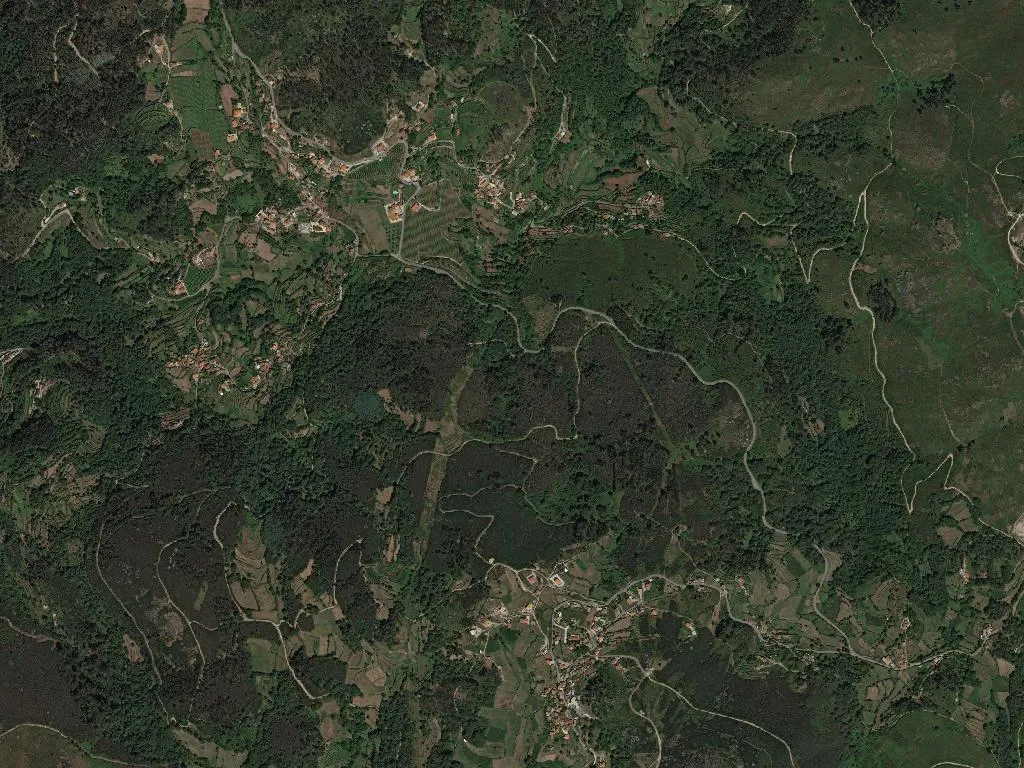
The churchyard in Sampriz is less a square than a surveying platform. Stand at the coping and the village tilts away to the left, the Sequeiro vines drop in disciplined rows dead ahead, and, on the clearest days, the Gerês massif lounges on the horizon like a dozing elephant. Four hundred and twenty-seven metres above sea level sounds precise; what matters is that the stone beneath your feet is the same granite left over when earlier generations hacked terraces wide enough for a row of potatoes.
What keeps the lights on
“We live off the cattle” is shorthand for spending half the year persuading them that barbed wire is not a polite suggestion. The Barrosã cow is family-stubborn: if she decides the next field tastes better, negotiation is pointless. The smaller Cachena, on the other hand, was engineered for these gradients—compact, sure-footed, able to winter on the narrowest socalco while the Atlantic wind slips through every seam in the mountain.
Below the stonework are vegetable plots that could illustrate a seed catalogue and a scatter of vines whose fruit becomes the single red bottle opened at Christmas and again at the seventh-day mass. Maize dries on the threshing floor until late September; once transferred to the loft the hens inspect every grain before we do.
Where even Google keeps quiet
The parish roll lists 307 souls. Reality hovers nearer 280, since José from Lameiro is still technically registered despite having relocated to Ponte da Barca’s prison wing three years ago. Either figure is enough to make silence audible: on windless afternoons you can convince yourself you hear Dona Emília’s cornbread rising—though it might simply be tinnitus arriving ahead of the postman.
Pilgrims pause, locals stay
The Portuguese inland Camino funnels a trickle of Germans in Goretex through the village every morning. They photograph the stone cross, refill bottles at the spring and ask automatically for “coffee?” There isn’t a café. There is the cistern, there is D. Rosa’s porch where two spare rooms come with brown bread and honey for breakfast, and there is the slow clank of cowbells reminding everyone that this operating system predates Wi-Fi.
Days when the place exhales
Festa da Paz, the Sunday closest to 6 August, summons people who had forgotten they belonged. Sardines blacken over laurel sticks, Super Bock Mini—sold only north of the Douro—appears in crates, and the village dances vira until the churchyard flagstones squeak. São Bartolomeu’s pilgrimage later in the month is smaller but louder: Simões drives his BMW to Galicia for contraband fireworks and sets off most of them between the first bell and the opening hymn.
When the sun drops behind the Corno de Bico ridge the granite warms to honey and the scent of sweet cistus drifts uphill, promising that tomorrow will feel identical—an assurance, not a threat, to those who call Sampriz home.