Full article about Mossy Mills & Flax-Scented Lanes of Vade (São Pedro)
Vade (São Pedro), Ponte da Barca hides a medieval ford, baroque pipe-organ echoes and Peneda-Gerês linen traditions alive in 240 souls.
Hide article Read full article
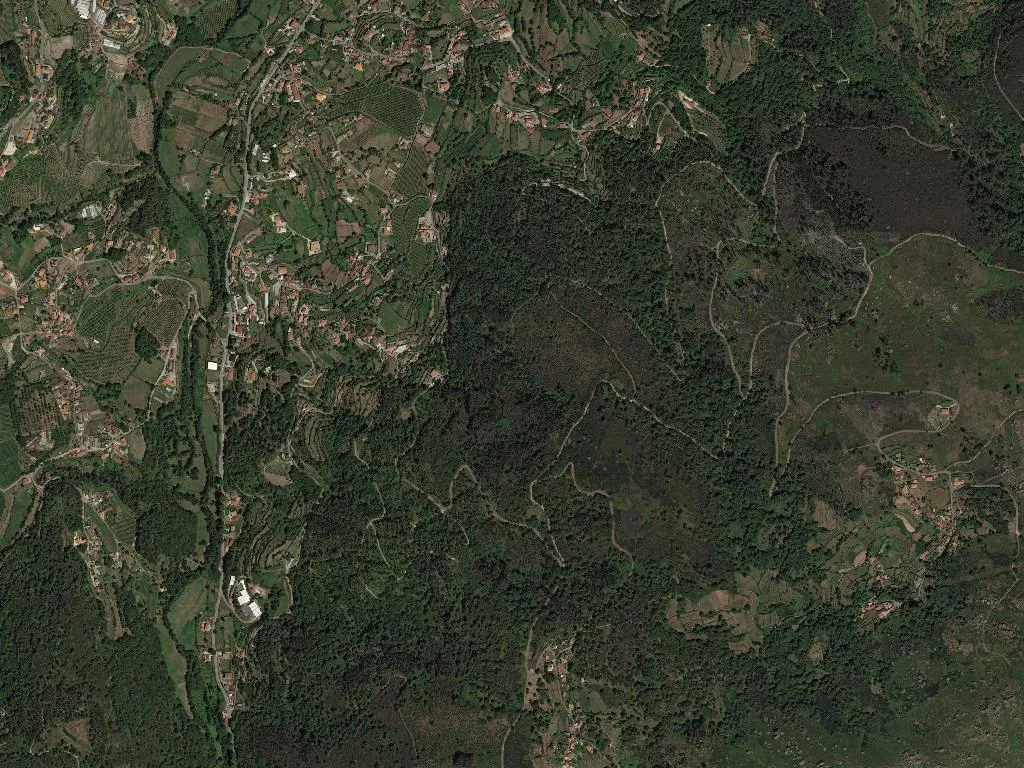
A moss-lined channel squeezes the stream until it hisses; the only reply is the slow creak of the Carrasco water-mill, its cracked paddles turning like an asthmatic clock. Inside, the granite walls exhale a breath of cold damp, bruised soil and the ghost of crushed flax. This is Vade (São Pedro), 248 m above sea-level, where 240 inhabitants keep a landscape on life-support inside Peneda-Gerês National Park.
From ford to parish
The name is a fossil: vadum, a shallow place where medieval pack-trains forded the Lima before bridges existed. A 1125 charter of Countess Teresa—Afonso Henriques’ mother—already orders freight to cross “apud Vado de Lymia”. By 1258 the parish registers its first tithes; between 1563 and 1617 the village raised a church whose 1693 baroque altarpiece, attributed to José de Santa Bárbara, still glitters with gilt cherubs. On summer feast days the 1867 pipe-organ by Manuel de Sá Couto vibrates the nave with bass notes you feel in the ribs. Outside, a 1742 granite crucifix greets modern pilgrims on the resurrected Northern Way of St James; yellow scallop way-marks lead them uphill and away.
Spinning stories
Flax blue flowers for a fortnight in June between Rua da Costa and Cimo de Vila; in July the “Dia do Linho” revives every step of the linen chain. At the Interpretive Centre, wheels dated 1942—once owned by the late Maria da Conceição Gomes—still twist raw stalk into gossamer thread, then fling it across a 1960 walnut loom imported from Soajo. Grandmother Emília’s 1903 recipe for broa de linho—yellow-corn dough studded with toasted seeds—appears on plastic-printed paper only because inspectors insist; the taste is still of field smoke and honey. On the same table you’ll find rojões à Minhota (pork shoulder flash-fried with blood-rich sarrabulho stew) and kid goat that has slow-roasted overnight in a wood oven, the skin blistered to rosemary-scented glass.
Stone granaries and oak groves
Signpost PR15 “Vade–Vilarinho” strings eight kilometres of dry-stone terraces, abandoned mills and 17 granite granaries classified since 1982. In autumn short-toed eagles hang above Portuguese oak while wood pigeons clatter out of strawberry trees. Down on the riverbank, a 2017 cycle track unrolls 12 km of asphalt as flat as ribbon to Ponte da Barca; on August afternoons families colonise the fluvial beaches of Fonte Coberta and Barroselas, diving into water the colour of green glass.
Starlight suppers
Barrosã beef—PDO-protected since 1996—arrives either pot-roasted with white beans or simply grilled, chewy and mineral. Cachena ox, mountain-bred and equally certificated, is simmered until it collapses into its own marrow. At Quinta do Carneiro (in the Abreu family since 1834) the 2022 Loureiro Vinho Verde snaps with lemon-peel acidity, while the 2020 Vinhão red carries enough tannin to stand up to the beef. Move uphill to Quinta da Peneda, 42 ha bought in 1998 by Joaquim Lima, and dessert is sheep’s-milk requeijão crowned with “Menina Preta” pumpkin jam, the squash variety planted here for three generations. When the plates are finally cleared, the sky takes over: Vade lies inside the 2019 Starlight reserve, where the Milky Way still throws shadows.
The mill wheel keeps its own heartbeat. If you linger on the threshold you carry away its rhythm—wood on stone, grain on grain—proof that some clocks refuse to stop.