Full article about Granite, vines & silence above Ponte de Lima
In Bárrio e Cepões stone terraces shoulder Vinho Verde vines, maize-granaries and pilgrim chapels
Hide article Read full article
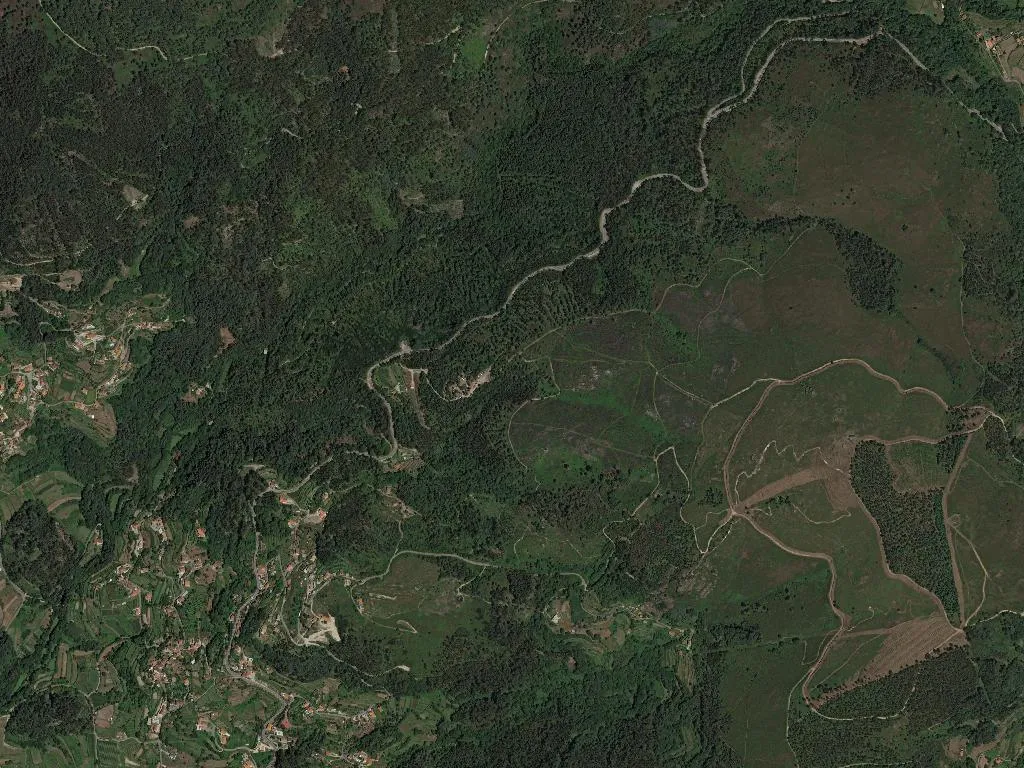
Granite is everywhere in Bárrio e Cepões. It shoulders the terraced vineyards that stagger up the slope, shoulders the stone maize-granaries on stilts, shoulders the low walls that keep centuries-old lanes in place. At 303 m the parish plateaus, and the view unrolls in a set of green staircases—pergola-trained vines, shoulder-high maize, water-meadows whose emerald shifts with every passing cloud. This is Vinho Verde country; the vines are hoisted shoulder-high on granite-and-timber trellises that sketch geometry against a changeable Atlantic sky.
Bárrio and Cepões were two separate villages until the 2013 municipal shake-up fused them into one civil parish. They still feel distinct—Bárrio’s houses clustered around the 18th-century chapel of Senhor da Saúde, Cepões dominated by its squat Romanesque tower—but both tilt toward the same ravined topography and share a border with the Lagoas de Bertiandos e São Pedro de Arcos Natural Monument four kilometres away. The wetland’s breath lingers here: a constant humidity, a coolness that rises from the Bertiandos and Pego streams, their banks laced with alder and willow. Even when you can’t see the water you hear it—an undertone that follows every rural road.
Pilgrims & patron saints
Two branches of the Portuguese Camino bisect the parish. The Central and the Nascente routes climb steadily toward Ponte de Lima, still 23 km distant, rucksacks swaying. They pause at three roadside chapels whose names read like a medieval medical chart: Senhor da Saúde (Lord of Health, 1700s), Senhor do Socorro (Lord of Help, 1742) and Senhora da Boa Morte (Our Lady of the Good Death, 1687). Each feast day—15 August, 14 September, 15 August again—triggers a burst of bells, rockets ricocheting off the valley sides, and long communal tables in the churchyard where Barrosã beef is roasted over vine prunings, salted only coarsely, the DOP meat speaking for itself.
With 26 residents per km², silence is the default soundtrack. Forty-two per cent are over 65, a figure that explains the shuttered cottages dating from the 1980s rural exodus. Yet seven granite houses have been reclaimed as small guesthouses—no boutique clichés, just thick walls, wood smoke and the absence of mechanical noise.
Working stone, working land
Daily life still follows the agricultural calendar. Locals train their vines high, harvest in early September and deliver the grapes to the Ponte de Lima cooperative for a few extra euros. Dark-stained maize granaries—about fifty remain—stand like tiny timber temples above the threshing floors whose granite slabs have been polished by decades of flails. Nothing is ornamental: every terrace wall, every pollarded willow, every stone water trough has a function.
Late afternoon light strikes the slope sideways and the granite glows bronze. The wind carries the smell of damp earth, bruised grass and wood smoke. Somewhere a bell tolls—metal travelling across the valley, swallowed by the maize stalks. Bárrio e Cepões lingers between mountain and wetland, obeying a clock set by seasons and saints rather than smartphones. What endures is tangible: stone, water, vine, the slow toll of a bell that marks time without haste.