Full article about Beiral do Lima: granite breath & river light
Beiral do Lima, Ponte de Lima: stone lanes, walnut-leaf air, river-loop views, three scent-soaked feasts and Friday eel stew.
Hide article Read full article
The granite keeps the sun
By five o’clock the village stone is still hoarding heat. Lay a palm on the low wall beside the lane and the granite releases the afternoon, slow as a coal. The bell—cast in 1892—strikes the hour; the note rattles the casements, most still fitted with their original timber boxes. From the churchyard you see the Lima river complete a lazy oxbow, the water so polished it might be molten glass. The smell is not the vague “countryside”; it is crushed walnut leaf, sour smoke from a bread-oven being scoured, cow manure spread on a Wednesday and still clinging to Friday.
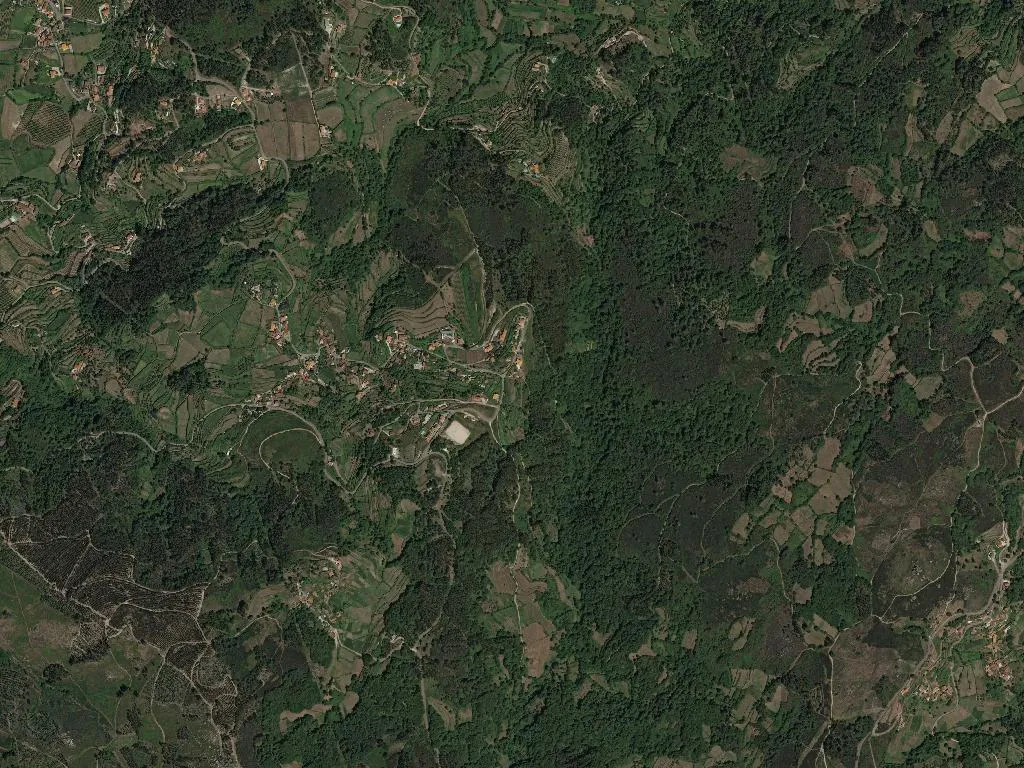
Beiral do Lima does not sprawl—it clings. Perched at 362 m, the hamlet announces every metre gained on the climb from the valley floor. The parish roll lists 495 souls, though the priest still counts José Brites who only appears in August. Thirty-seven children and 172 pensioners leave gaps like missing teeth: whole sections of alley vanish under bramble and silence. Still, five of the ruined houses now wear “AL” plates and patchwork curtains; on Sunday mornings the scent of Vianan laundry soap drifts out while barefoot Germans photograph vegetable plots.
Three feasts, three fragrances
Our Lady of the Good Death (first Sunday in September) smells of basil freshly uprooted for bouquets and of wax dripping onto granite, pooling into small gold coins. The Lord of Health (January) reeks of sardines grilled inside the churchyard on the farrier’s iron grids; fat spatters the flagstones and dogs wait for the procession to turn the corner. The Lord of Help (July) is a pocket-sized affair: two candles, one accordion, and the firewater that Aníbal keeps in his white smock pocket. No brass band, no karaoke. Just the priest mounting the altar steps with the furrowed brow of a man who has already carried the litter down the upper street.
What you eat (and drink) without asking
On Fridays Dona Lúlia pins A4 to her gate: “Fish today. Bring bread.” The eel stew arrives in a black clay bowl, turmeric-red, dyeing lips like cheap lipstick. Barrosã beef is never on a menu; it appears when Silvestro slaughters a steer and rings the village. Take a dinner plate, return with two hunks and a bone for the dog. The wine is this year’s white, served in 200 ml tumblers that a Lisbon bistro would call a “water glass”. It crackles with dissolved CO₂ and has the acidity to make your earlobes tingle; after the second you speak louder, after the third you belt out the “Hino da Maria da Fonte” even if it isn’t 15 August.
Ponds you hear before you see
Serious walkers continue to Bertiandos, but the lazy stay on the Levada do Castanheiro. Streams are invisible under alder scrub, betrayed by a champagne-cork “tchic” followed by cool air rolling off the Serra de Arga. There are no boardwalks, no selfie decks, only terrapins the size of soup plates craning from the grass. Kick off your shoes and the sand is cold, almost black, hiding last winter’s plastic. Yet the water is clean enough for shepherds to drink from cupped hands.
The sun drops behind the church gable where swallows make their final swoop before tucking themselves under the eaves. The bar shutters at 19.30; the iron grille screeches, then silence hums like a disconnected phone. What remains is the scent of green wood burning in Sr Albano’s chimney, a dog barking at its own shadow, and stone surrendering the heat it stored all day. The village does not sleep; it waits in half-light for the bell to strike seven and start the cycle again—veg plot, manure, bread, stew, procession, wine.