Full article about Boalhosa: Where Silence Weighs on the Neiva Ridge
Stone lanes, ox-stall hamlet and three summer feasts 532 m above Ponte de Lima
Hide article Read full article
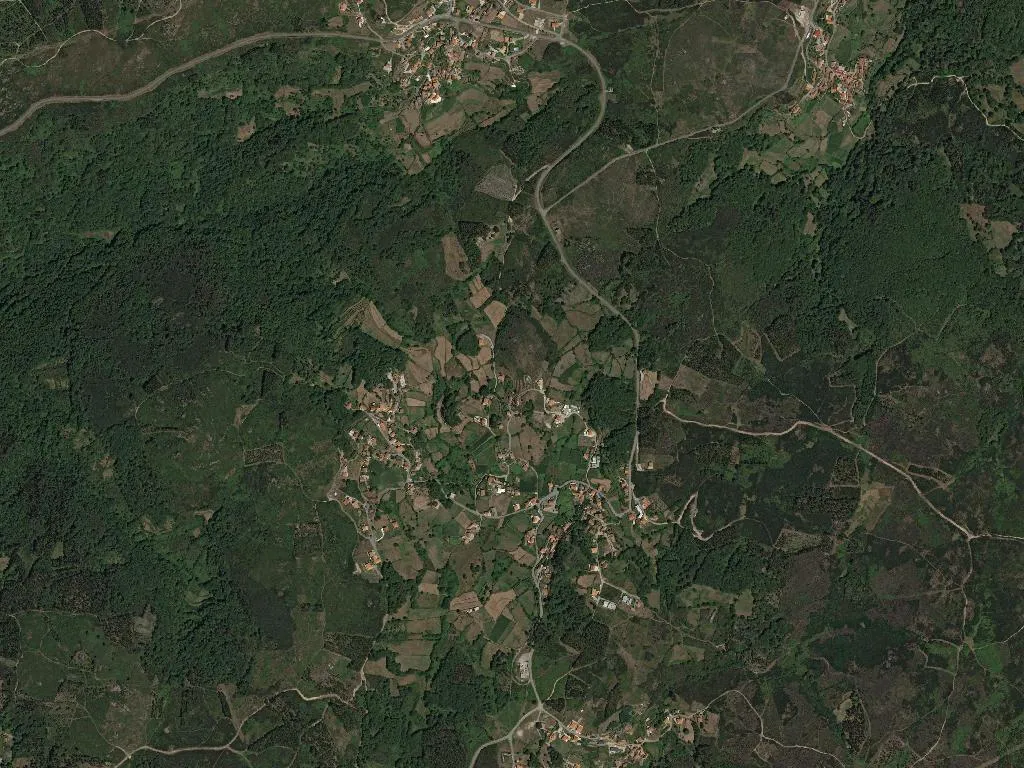
A single bell tolls across the Neiva valley, its note thinning as it climbs the oak-lined slopes and dissolves into pasture. The lane twists between dry-stone walls, occasional stone houses and smoke-blackened porches where chouriços hang like burgundy batons. Boalhosa never announces itself; it surfaces in slow fragments—gate, granary, meadow—at 532 m above sea level, where August air still carries a cool blade and silence has measurable mass.
Of oxen and wayfarers
The name is documentary evidence: “boal”, ox-stall. First recorded in the thirteenth century, the settlement belonged to the riverbank “coutos” of the Knights of São João de Barcellos. Feuds between the Dukes of Bragança and the Curutelo lords once scarred these fields, yet what endures is the husbandry: cattle in the damp meadows, rye on the ridges, the ghost-ruts of the old Santiago road. Two separate routes of the Portuguese Camino now cross the parish—the Central and the Nascente—so a scatter of scallop-shell waymarkers has joined the granite milestones. Pilgrims refill plastic bottles at the stone font, ask how far to the next coffee and are directed five kilometres down-valley to the nearest espresso.
Three feast days, three liturgies
Our Lady of the Good Death, the Lord of Health, the Lord of Succour: each invocation earns its own calendar page. On the eve of Boa Morte men leave their beds at five to split oak for the pyre; women knead corn-bread in the dark. By ten the lane is a conveyor of processional candle smoke and gossip, the night air lacquered with spit-roast kid and the rasp of concertinas. No municipal commission stages this: the parish council simply unlocks the chapel and the villagers supply the theatre. Outsiders who wander in wonder how 117 inhabitants can conjure a crowd, then notice the parked hire-cars with German plates and remember the diaspora returns every August.
Barrosã beef and meadow butter
The cattle grazing the Neiva water-meadows are the same mahogany-coloured Barrosã breed that supplied Roman legions. Their DOP-protected meat appears on local tables as crimson cubes of colour-stained rojões, slow-braised shins, or a one-pot stew whose potatoes drink the gravy like sponges. There is no restaurant sign, but if you knock at the house with the green wicket gate Senhor António will emerge from the adega, wipe his hands on hemp trousers and reappear twenty minutes later with a clay bowl of pork that collapses at the touch of bread baked by Dona Rosa in her wood-fired oven. The wine is the local loureiro—sharp enough to slit the fat—poured from an unlabelled demijohn.
Between lagoons and hoof-polished granite
Boalhosa sits inside the buffer zone of the Bertiandos and São Pedro de Arcos lagoons, a Ramsar wetland where herons stall above the reeds and hawkers stitch the dusk. An old drove-road, now way-marked as the Trilho do Neiva, skirts the chapel of the Lord of Succour and climbs through gorse and small-holdings until the valley unfurls below like a green bolt of cloth. On fog-days the world shrinks to a 30-metre radius: only the bell, a distant cow-protest and drip of condensation from oak leaves. Children once used this path barefoot to reach the primary school that closed in 2012; the stones are saddle-smooth, the routine unchanged except for the absence of satchels.
Night arrives early. Lights switch on one by one, orange squares in the darkness. Wood-smoke rises straight up, carrying the scent of oak, and the mountain’s damp cold slips between jacket and skin. Boalhosa asks nothing of visitors; it simply offers what it has always had: earth, water, and a silence that tastes of granite dissolved by time.