Full article about Brandara: Where Lima Valley Bells Still Ring 1891 Iron
Three-saint Saturdays, Ramsar lagoons and granite chapels shape this Ponte de Lima hamlet.
Hide article Read full article
When the Bells Call across the Lima Valley
The bells of Brandara begin at six. Not the recorded peal you hear in tourist-fatigued towns, but iron cast in 1891 that still remembers the priest’s pulse as he hauled the rope. Sound carries here because the land is a shallow saucer at 54 m above sea level; each toll rolls over corn tassels and low-wire vineyards until it bumps against the granite of the Capela da Senhora da Boa Morte. Inside, the nave is barely twelve metres long—smaller than a London gastropub—yet it is listed with the same protection grade as Lisbon’s Jerónimos. Wax pooled on the floorboards records every frightened prayer for a good death since 1755.
Three Saints, Three Saturdays
Four hundred and twenty souls share the parish calendar with three saints who demand absolute fidelity. On the first Saturday of May the statue of Our Lady of Good Death is shouldered through lanes narrower than a Morgan three-wheeler; brass bands from Ponte de Lima compete with firecrackers and the hiss of sardines hitting hot iron. July brings Christ of Health, September the Lord of Rescue—each romaria a carbon-copy rehearsal for the next, down to the same auntie ladling sarrabulho rice from a pot blackened by three generations. Outsiders assume repetition equals monotony; locals know it is insurance against forgetting.
Where the River Stops to Breathe
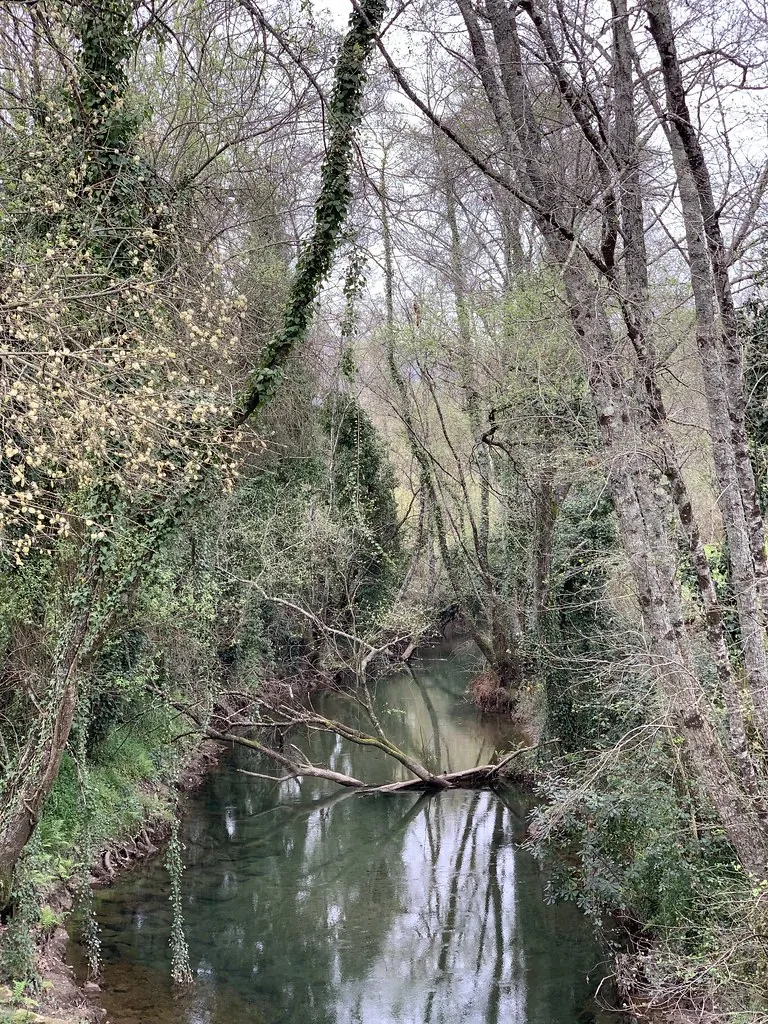
Ten minutes east the Lima forgets it is Atlantic-bound and stalls into the Bertiandos lagoons, a 350-hectare Ramsar wetland stitched with boardwalks. Kingfishers stitch fluorescent seams above the mirror-water; otters leave chevron wakes at dawn. Brandara’s section of the Portuguese Central and Coastal Caminos cuts straight through—yellow arrows sprayed on schist walls guide hikers past corn cribs and pergola-trained vinhão grapes. Walk south for an hour and you’ll meet pilgrims debating whether the river’s bend really fooled the Romans into thinking they’d reached the mythic Lethe.
A Blade, a Skillet, a Galician Kale Leaf
There is no tasting menu, only the day’s certainty. Barrosã beef—PDO-branded, chestnut-finished—arrives in rough cubes, tossed with smoked paprika and enough pork fat to glaze the potatoes. The sarrabulho rice is stirred with fresh blood, cumin and a splash of the same red that will later wash it down; the colour is deep enough to reflect your appetite. Caldo verde finishes the performance: kale shaved so thin it could pass for Victorian lace, bobbing with olive-oil slicks and slices of chouriço that snap like autumn twigs. The wine is loureiro, poured from a misted jug, sharp enough to reset your palate and start the cycle again.
Twilight without a Filter
Dusk is a mechanical process. The sun slips behind the Serra d’Arga, vineyards ignite briefly the colour of Barrosã fat, and house-granite warms to honey. At 19:00 the Angelus rings—not for mass, merely to remind the fields that time still exists. Children chase through maize stalks; sixty of them still attend the primary school, the one building whose lights stay on long after the tractors have gone mute. Eight guest rooms are scattered among the lanes: no key cards, no breakfast buffet, only the certainty that tomorrow the same bells will pull the valley back into focus.